

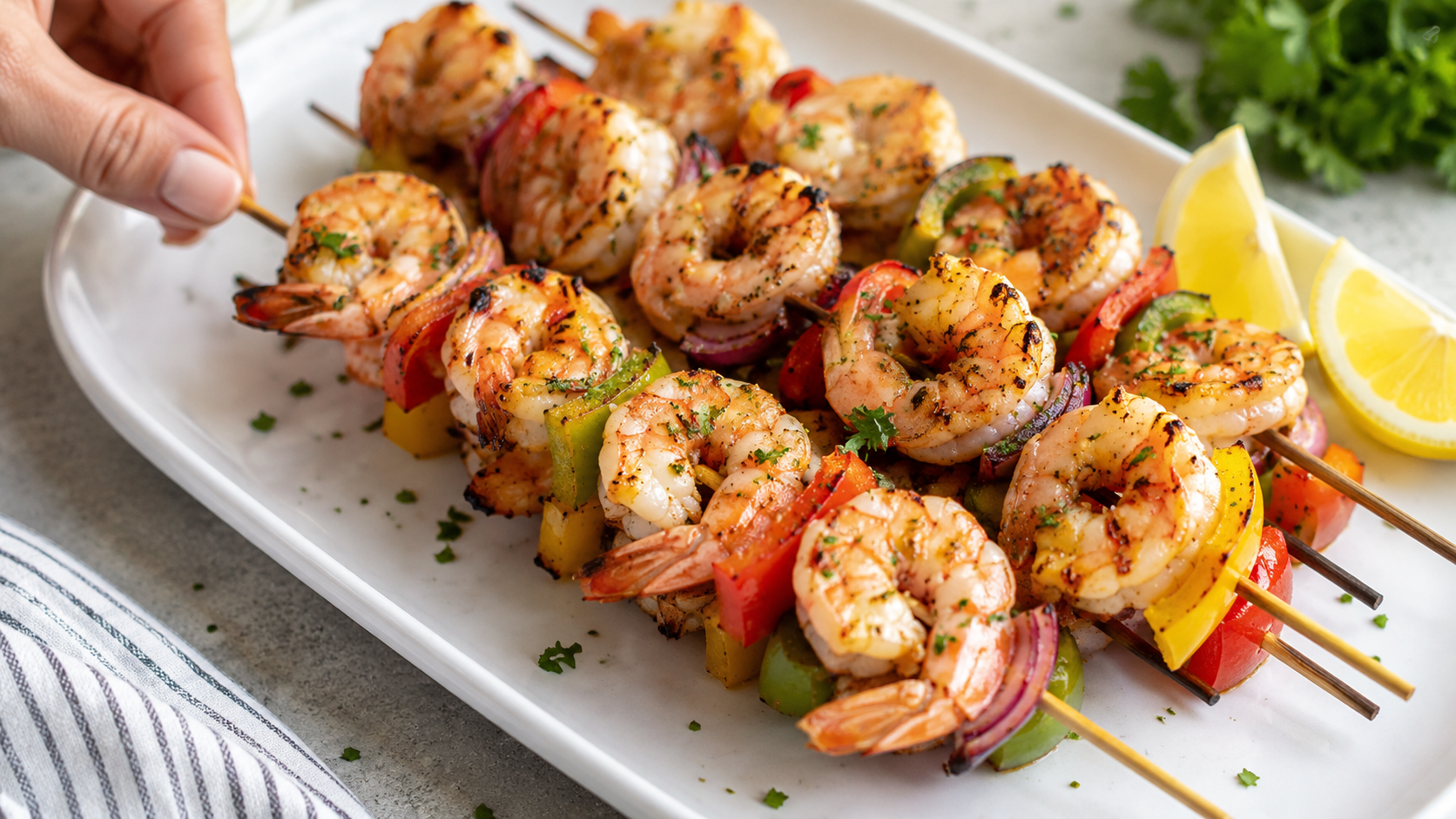
So the first time I made shrimp kebabs for a backyard cookout, I did everything wrong. I used small shrimp that fell through the grate. I forgot to soak the wooden skewers, so they caught fire—actual fire—and I marinated the shrimp for two hours, thinking more time meant more flavor. What I got instead was mushy, rubbery shrimp that tasted like the marinade had swallowed them whole. Dan was very diplomatic about it. The kids ate hot dogs. I stood at that grill and made a list of everything I was going to do differently next time, you know?
Here’s the thing about shrimp on the grill—it’s genuinely one of the fastest, most forgiving proteins you can cook over fire, but it has a very specific set of rules that you can’t ignore. Big shrimp, short marinade, very high heat, and the confidence to walk away from them the second they’re done. That last one is the hardest part for most people because it goes against every cooking instinct we have. But overcooked shrimp is the single biggest shrimp crime, and I’ve made it my personal mission to talk everyone I know out of committing it, you know?
This is the version I’ve been making for years now. The marinade is bold and bright and takes about five minutes to throw together. The actual grill time is under ten minutes. It’s the kind of recipe that makes a weeknight feel like a backyard party and a backyard party feel like you actually know what you’re doing out there.
Prep time: 15 minutes Marinating time: 20 to 30 minutes maximum Grill time: 6 to 8 minutes Serves: 4
What You Need
For the shrimp: 2 pounds of large shrimp — 16/20 count is the size you want, meaning 16 to 20 per pound. Jumbo. Don’t go smaller or they’ll overcook before you blink. Peeled and deveined, tails on—the tails give people something to hold, and they look beautiful on the skewer. Metal skewers or wooden skewers soaked in water for at least 30 minutes—I learned that one the hard way.
For the marinade: 4 tablespoons of olive oil 4 cloves of garlic, finely minced Juice and zest of one large lemon 1 tablespoon of honey 1 teaspoon of smoked paprika 1 teaspoon of dried oregano Half a teaspoon of red pepper flakes—adjust to your crowd. Half a teaspoon of onion powder, salt, and black pepper—be generous.
For the garlic herb butter (the finishing touch that makes everything better): 4 tablespoons of unsalted butter, 3 cloves of garlic, minced; 2 tablespoons of fresh parsley, finely chopped; 1 tablespoon of fresh lemon juice; a pinch of salt
For serving: Lemon wedges, extra fresh par, warm, crusty bread or rice, or a big green salad—all completely valid
Let’s make it.
First, the marinade.
Whisk together the olive oil, minced garlic, lemon juice and zest, honey, smoked paprika, oregano, red pepper flakes, onion powder, salt, and pepper in a large bowl. Taste it before the shrimp goes anywhere near it—it should be bright, garlicky, and just a little smoky. Adjust anything that feels off. This is your one real shot at the flavor foundation, you know?
Add the shrimp and toss until every single piece is well coated. Now — and this is important — set a timer for twenty minutes. Not an hour. Not overnight. Twenty to thirty minutes maximum. Shrimp are delicate, and the acid in lemon juice can chemically cook the proteins if you leave them too long, giving you a mealy, mushy texture before they even touch the grill. Twenty minutes gets you all the flavor without any of the damage.
While the shrimp marinates, make the garlic herb butter.
Melt the butter in a small saucepan over medium-low heat. Add the garlic and cook gently for two minutes until fragrant—not browned, just softened and sweet. Add the parsley, lemon juice, and a pinch of salt. Stir to combine, then remove from the heat. Keep it warm or reheat it gently right before the shrimp comes off the grill. This butter is what you’re going to brush over the finished kabobs, and it’s the detail that takes the whole thing from good to OH MY GOSH, you know?
Now thread the skewers.
Thread the shrimp onto your skewers, running the skewer through the thick end and the tail end of each shrimp so it forms a gentle C-shape. This keeps the shrimp from spinning when you flip the skewer. Thread them snugly but not crammed together—a little space between each shrimp means more surface area touching the grill and more caramelization happening, which is always the goal.
Now here’s the double-skewer trick that changed my kabob life—run a second skewer parallel to the first through the opposite side of each shrimp, about half an inch away. Two skewers per kabob. What this does is hold the shrimp completely flat against the grill so both sides get even contact, and it makes flipping infinitely easier because nothing spins or wobbles. It looks fancier, and it actually makes the cooking more controlled. Win-win, you know?
Now grill them.
Get your grill as hot as it will go—high heat, preheated for at least ten minutes. Clean the grates and oil them right before the shrimp goes on. Use tongs and a folded paper towel dipped in oil—swipe it across the grates twice. This prevents sticking and gives you cleaner grill marks.
Place the kabobs on the grill and close the lid. Don’t touch them for three minutes. I know the instinct is to check, to poke, to move them around. Resist it completely. Three minutes, then flip, then two to three more minutes on the second side. The shrimp are done when they’re pink and opaque throughout, and they curl into a loose “C” shape. If they curl into a tight O, they’re overcooked. Pull them the second they hit that C, every single time.
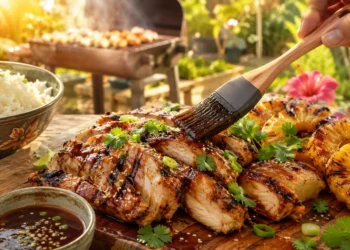
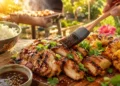
The moment they come off the grill, brush them immediately and generously with the warm garlic herb butter. The heat from the shrimp will absorb that butter right in, and the garlic and parsley perfume the whole thing in a way that’s seriously amazing. Serve immediately with lemon wedges and extra parsley scattered over the top.
Julia’s Real Tips from Fifteen Years of Doing This
Dry the shrimp before marinating. Pat them completely dry with paper towels before adding them to the marinade. Excess surface moisture dilutes the marinade and prevents the caramelization you’re looking for on the grill. Dry shrimp: maximum flavor, better sear. Every time.
Don’t skip the soaking if you’re using wooden skewers. Thirty minutes minimum in cold water. I keep a tall glass of water on the counter and drop ice in while I prep everything else. Unsoaked wooden skewers will catch fire at the edges, and you’ll end up with burnt-skewer flavor on your shrimp, which is nobody’s idea of a good time.
High heat is non-negotiable. Shrimp on a medium or low grill are juicier, and you lose all the beautiful charring and caramelization. You need that high heat to work fast — the whole cooking process should feel almost urgent. That intensity is what gives you the texture and flavor you’re after.
Pull them one second earlier. Shrimp carry-over cooked off the grill. If they look perfect on the grill, they’ll be slightly overcooked by the time they hit the plate. Pull them when they’re just barely opaque in the very center and let the residual heat finish the job. This is the single most important thing I can tell you about cooking shrimp, you know?
Double skewer everything. I said it above, but I’ll say it again because the first time you try it, you’ll wonder why you ever did it any other way.
Variations Worth Trying
Cajun style: Replace the Mediterranean marinade with Cajun seasoning, smoked paprika, garlic powder, onion powder, cayenne, and a squeeze of lime. Finish with the garlic-herb butter and serve over dirty rice. Dan’s personal favorite variation comes out every single summer.
Teriyaki shrimp kabobs: Marinate in soy sauce, sesame oil, honey, fresh ginger, and garlic. Skip the finishing butter and drizzle with extra teriyaki glaze straight off the grill. Serve over steamed rice with sesame seeds and sliced green onions. Maya requests this version at least twice a summer.
Surf and veggie kabobs: Thread the shrimp onto skewers, alternating with chunks of zucchini, bell pepper, red onion, and cherry tomatoes. Use the same marinade on everything. The vegetables take a minute or two longer than the shrimp, so push them toward the hotter part of the grill and keep the shrimp toward the edges for more control.
Coconut lime shrimp kabobs: Add coconut milk, lime zest, fresh ginger, and a pinch of turmeric to the base marinade. Finish with toasted coconut flakes and a drizzle of sweet chili sauce instead of the herb butter. Serve with mango salsa on the side for a full tropical summer situation.
What to Serve Alongside
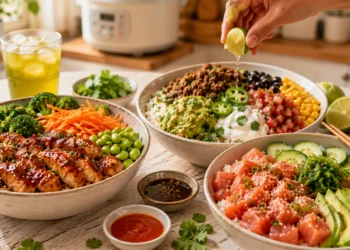
So in our house, these kabobs are flexible enough to anchor about six different meals depending on what else is on the table. For a full cookout spread, they go next to the coleslaw and the grilled corn, and everyone’s happy. For a weeknight dinner, I’ll serve them over a simple rice pilaf with cucumber slices and a big squeeze of lemon—dinner in under 30 minutes total, and it feels genuinely special for a Tuesday. For a lighter summer meal, a bed of arugula with shaved parmesan and a lemon vinaigrette under the kabobs turns the whole plate into something that feels almost restaurant-quality, you know?
The garlic herb butter, for what it’s worth, is also incredible on crusty bread. I always make extra and put a small bowl of it on the table alongside some warm bread, and it quietly disappears before anyone even notices it’s there. Consider yourself warned.
Chef’s Notes — Family Verdict
OH MY GOSH, the summer I finally got these right after that first disastrous attempt—I remember standing at the grill watching those big beautiful shrimp char and curl perfectly, smelling the garlic and lemon and smoked paprika coming off the heat, and feeling genuinely proud of myself in a way that fifteen years of professional cooking had almost made me forget was possible. Sometimes the simple things hit harder than the complicated ones, you know.
Jake eats shrimp off the skewer like he’s been doing it his whole life, tail and all, completely unbothered. Maya dips every piece into extra garlic butter before it goes anywhere near her mouth, which is an excellent instinct. Dan mans the grill when I let him, takes full credit for how they turn out, and somehow gets away with it every single time.
The double-skewer trick, the twenty-minute marinade rule, the garlic butter finish — these are the three things that transformed this recipe from something I was nervous about to something I make confidently for a crowd. Get those three things right, and the grill does the rest.
You’ve got this. Now get the big shrimp, you know?
— Chef Julia





Discussion about this post