


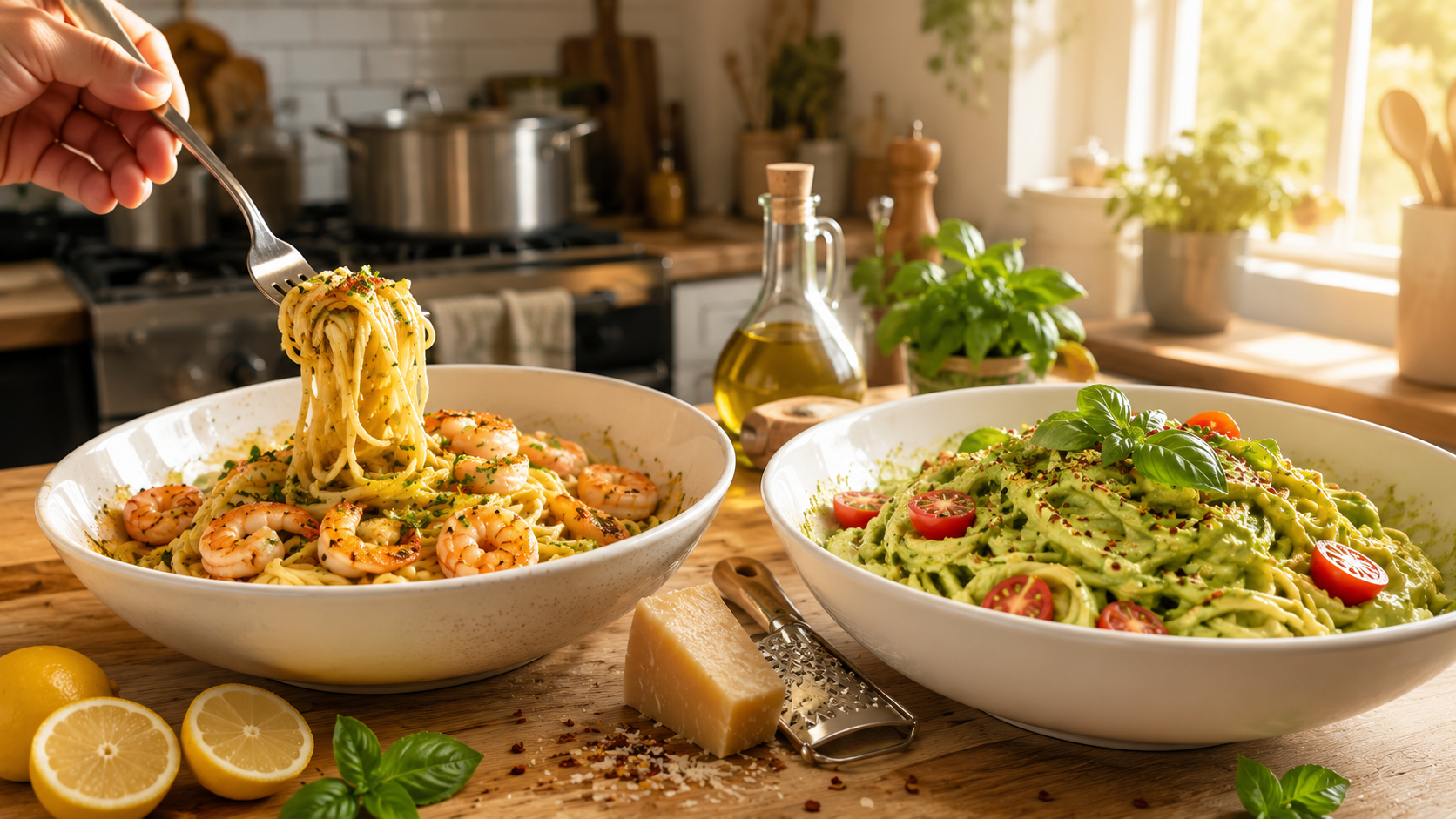
So pasta is the one food in our house that transcends every season, every mood, and every level of dinner-making energy I have on any given evening. In fifteen years of professional cooking, I’ve made pasta every single way possible—slow-braised meat sauces, intricate stuffed pastas, technically demanding carbonaras—and yet the summer versions remain some of my absolute favorites. Not because they’re simple, though they are. Because they taste genuinely of the season in a way that a rich winter ragu never could, you know?
Here’s the thing about summer pasta that I want to be upfront about from the start—the best versions use the fewest ingredients, cooked with the most attention. A pasta made in August with the best tomatoes you can find, good olive oil, garlic, and fresh basil is better than any pasta I could make with a twenty-ingredient sauce in January. Summer pasta is about restraint and quality. Get those two things right, and the recipe practically writes itself, you know?
These eight pastas have all earned permanent spots in our summer rotation for different reasons—some are weeknight fast, some are slightly more involved but absolutely worth it, and all of them taste like the best version of summer you can put in a bowl. I’ll share the technique details that matter for each one, the mistakes I’ve made so you don’t have to, and what our real-world family actually thinks about each one.
1. Fresh Tomato Burst & Basil Pasta
So I’ve written about this pasta in the Quick Tomato Basil Pasta article already. Still, it belongs in this summer pasta collection as the foundational recipe—the one everything else in summer pasta is measured against. Garlic oil, peak summer cherry tomatoes burst and simmered, fresh basil, pasta water to emulsify, Parmesan. Five ingredients. Twenty-five minutes. The best possible result when the tomatoes are right, you know? I won’t repeat the full recipe here, but I’ll say—if you haven’t made this yet this summer, start here. Start here and come back for the other seven, you know?
2. Lemon Ricotta Pasta with Zucchini & Mint
Here’s the pasta that tastes most specifically of July—bright with lemon, creamy from the ricotta, slightly sweet from the zucchini, and finished with fresh mint that makes the whole thing taste like summer in a way that’s hard to articulate but completely unmistakable once you taste it. It’s also one of the most genuinely quick pastas on this list—from fridge to table in under twenty minutes, you know?
What you need (serves 4): 1 pound of spaghetti or linguine 2 medium zucchini, thinly sliced into rounds or half-moons 3 tablespoons of olive oil 4 cloves of garlic, thinly sliced Half a teaspoon of red pepper flakes 1 cup of whole milk ricotta Zest and juice of one large lemon Half a cup of freshly grated Parmesan A big handful of fresh mint leaves, toSaltalt and cracked black pepper Extra olive oil to finish
Here’s how it goes: Start the pasta water first—well-salted, big pot, high heat. While it comes to a boil, heat the olive oil in your largest skillet over medium-high heat. Add the zucchini in a single layer—don’t crowd it or it’ll steam rather than caramelize—and cook without moving for three to four minutes until golden on the bottom. Flip and cook another two to three minutes. Remove to a plate. In the same pan, drop the heat to medium and add the garlic and red pepper flakes. Let them cook gently in the remaining oil for two minutes—just until fragrant and barely golden.
While the pasta cooks, mix the ricotta in a large bowl with the lemon zest, lemon juice, and a generous pinch of salt. When the pasta is al dente, scoop out a full cup of pasta water before draining. Add the drained pasta directly to the ricotta bowl and toss—the pasta’s heat will loosen the ricotta into a creamy coating. Add the garlic oil from the pan, the caramelized zucchini, and the Parmesan, tossing with splashes of pasta water until the sauce is glossy and coats every strand. Finish with torn fresh mint, a final drizzle of olive oil, and cracked black pepper.
Julia’s real tip: The ricotta goes in a bowl off heat—never in a hot pan directly, or it seizes and gets grainy. The pasta’s own heat warms and loosens it to exactly the right consistency when you toss it together. This is the key technique step that makes the difference between creamy and lumpy, you know?
Family verdict: Maya declared this her “summer lunch pasta” and has been making it herself. Dan ate it for three consecutive lunches from the leftovers and complained zero times. Jake eats it if I describe it as “lemony noodles with cheese” and stay vague about the zucchini and mint situation until his plate is mostly clean.
3. Summer Corn & Bacon Pasta
So here’s the pasta that surprises people the most—they hear “corn pasta” and expect something gimmicky, and then they eat it and ask why corn in pasta isn’t more standard because it’s OH MY GOSH. Fresh corn is cut off the cob and cooked in rendered bacon fat until slightly caramelized, finished with a little cream and loads of Parmesan, tossed with pasta and fresh herbs. It’s rich and sweet and savory and exactly the kind of dish that makes you grateful it’s summer, you know?
What you need (serves 4): 1 pound of rigatoni or penne—short pasta works better here than long. 6 strips of thick-cut bacon, cut into small pieces 4 ears of fresh sweet corn, kernels cut off the cob 4 cloves of garlic, minced Half a cup of heavy cream Half a cup of freshly grated Parmesan, plus more for serving A handful of fresh chives or basil, finely choppSaltalt and cracked black pepper A tiny pinch of red pepper flakes.
Here’s how it goes: Cook the bacon in a large skillet over medium heat until crispy and the fat has rendered out beautifully. Remove the bacon pieces to a paper towel and leave all the drippings in the pan—yes, all of them; the drippings are the flavor foundation, you know? Raise the heat to medium-high and add the corn kernels directly to that bacon fat. Cook for four to five minutes, stirring occasionally, until the corn gets some color and starts to caramelize slightly and smell intensely sweet. Add the garlic and red pepper flakes; cook for one more minute.
Add the cream to the corn and let it bubble and reduce for two minutes. Meanwhile, cook the pasta to just barely al dente and reserve a full cup of pasta water. Add the drained pasta to the corn cream sauce, add the Parmesan, and toss vigorously with pasta water as needed until the sauce is glossy and coats everything. Fold the crispy bacon back in, taste, and adjust seasoning generously; finish with the fresh herbs.
Julia’s real tip: The corn needs direct contact with the hot bacon fat to caramelize properly—don’t add it to a dry pan or add too much liquid too early. Those few minutes of the corn in the fat with nothing else in the pan is where the flavor of this whole dish is built. It smells extraordinary,y and it sets up everything that follows, you know?
Family verdict: This is the pasta that made Jake eat corn voluntarily and enthusiastically, which I had previously considered physiologically impossible. He picked the bacon pieces out first—classic Jake—and then ate everything else. Dan had two full bowls and then stood over the pan eating the last portion directly from it while “cleaning up.” Maya said this was “the most creative pasta you’ve ever made,” which I took as a real compliment from someone developing strong food opinions.
4. Pesto Pasta with Burrata & Roasted Cherry Tomatoes
Here’s the thing—pesto pasta is one of the most made and most mediocre pastas in home kitchens, and I say that as someone who made mediocre pesto pasta for years before figuring out why. The problems are always the same: store-bought pesto that’s oxidized and flat, pasta that’s overdressed and heavy, and no textural contrast. This version fixes all three—bright homemade pesto, pasta that’s sauced just right, and a torn ball of burrata over the top that creates pockets of luxurious creaminess against the fresh herb sauce. It’s seriously amazing, you know?
What you need (serves 4): 1 pound of spaghetti or trofie if you can find it, 1 cup of cherry tomatoes, halved and roasted at 425°F for fifteen minutes until jammy and slightly charred
For the fresh basil pesto: 2 packed cups of fresh basil leaves—no stems A third of a cup of toasted pine nuts 2 cloves of garlic Half a cup of freshly grated Parmesan A quarter cup of good olive oil—start here, add more to adjust. Juice of half a lemon, salt, and cracked black pepper.
For finishing: 1 ball of fresh burrata, extra olive oil,l and fresh basil, flaky sea salt
Here’s how it goes: Make the pesto first—blend the basil, pine nuts, garlic, and Parmesan in a food processor or blender until finely chopped. With the motor running, add the olive oil in a slow stream. Add the lemon juice and sea salt. The pesto should be bright green, thick but spreadable, and intensely flavored. Taste it—it should make you want to eat it by the spoonful, which is the test I use. Transfer to a bowl and press plastic wrap directly onto the surface to prevent oxidation until you need it.
Cook the pasta to al dente, reserving a cup of pasta water. In your largest bowl—off heat entirely—toss the drained pasta with the pesto, adding pasta water a tablespoon at a time to loosen it into a sauce that coats every strand without being heavy or gluey. Fold in the roasted cherry tomatoes gently.
Serve immediately—divide into bowls, then tear the burrata over the top of each serving right at the table. The cream from the burrata will melt slightly into the warm pasta, and it’s genuinely one of summer’s great textures. Finish with flaSaltalt, fresh basil, and a final drizzle of olive oil.
Julia’s real tip: The pesto goes off heat. Heat destroys the color and the fresh flavor of basil faster than almost anything else—warm pesto turns from bright green to dull olive very quickly once it hits a hot pan. Room temperature pasta tossed with room temperature pesto, loosened with warm pasta water, is the correct technique, you know?
Family verdict: Maya photographed this one before eating it three summers running, which is her highest form of endorsement. Dan said the burrata on top was “the best idea anyone has ever had,” which is slightly extreme, but I understand the sentiment completely. Jake ate the pasta and the roasted tomatoes and was diplomatically neutral about the burrata situation.
5. Summer Shrimp Scampi with White Wine & Herbs
Here’s the pasta that makes any weeknight feel like a special occasion—shrimp scampi is one of those dishes where the gap between the effort involved and the result you get is genuinely remarkable. The shrimp cook in about four minutes. The sauce comes together in the pan while the pasta is draining. From the first step to the table is under twenty-five minutes, and it tastes like something that took considerably longer, you know?
What you need (serves 4): 1 pound of linguine or spaghetti, 1 a, nd a half pounds of large shrimp, peeled and deveined—size matters here, large shrimp stay juicy while smaller ones overcook immediately. 5 tablespoons of unsalted butter, divided 3 tablespoons of olive oil 6 cloves of garlic, thinly sliced Half a teaspoon of red pepper flakes Half a cup of dry white wine—something you’d actually drink; cooking wine is not something I use. Juice and zest of one large lemon. A quarter cup of fresh parsley, finely chopped.d Salt and cracked black pepper. Extra lemon wedges to serve
Here’s how it goes: Pat the shrimp completely dry—this is the step that gives you a sear rather than a steam, and it matters every single time. Season with salt and pepper. Heat two tablespoons of butter and the olive oil in your largest skillet over high heat until the butter is foaming and the pan is properly hot. Add the shrimp in a single layer—cook in two batches if you need to; crowding kills the sear. Cook ninety seconds per side; remove to a plate the second they’re pink and curled. They’re not done yet, but they will be when they go back in.
Drop the heat to medium. Add the remaining three tablespoons of butter, the sliced garlic, and red pepper flakes. Cook for two minutes until the garlic is fragrant and just barely golden. Add the wine — it’ll sizzle dramatically, and that’s exactly right. Raise the heat and let it reduce by half, about two minutes. Add the lemon juice and zest. Add the cooked pasta directly to the pan — the pasta water has already been saved, right? Toss everything together with splashes of pasta water until the sauce emulsifies and coats every strand. Add the shrimp back in and toss for thirty seconds to warm them through. Finish with parsley and serve immediately.
Julia’s real tip: The shrimp go back in last, for thirty seconds maximum. They were already cooked to the edge of done when you pulled them from the pan—thirty seconds of tossing in the hot pasta finishes them perfectly. Any longer and you’re committing the cardinal shrimp crime of overcooking, and overcooked shrimp in scampi is a sadness I wouldn’t wish on anyone, you know?
Family verdict: This is Dan’s requested birthday dinner pasta. Not a restaurant, not a special occasion restaurant, our kitchen on a Wednesday evening with this pasta. I find that enormously validating. Maya eats hers with extra lemon squeezed over the top right before the first bite. Jake eats the shrimp pieces and the pasta separately and considers the garlic and parsley optional, which they are for him.
6. Pasta alla Norma—Eggplant, Tomato & Ricotta Salata
So here’s the Sicilian classic that I learned on a trip to Italy years before we had kids, that I’ve been making every summer since, and that I genuinely believe is one of the greatest pasta dishes in the world. Fried eggplant, rich tomato sauce, pasta, and crumbled ricotta salata — it’s a combination that’s been around for a very long time for very good reason. The key is getting the eggplant right, which means properly salting it to draw out the moisture before frying. Skip that step, and you get soggy, greasy eggplant. Do it properly,y and you get golden, caramelized, almost creamy eggplant that’s genuinely one of summer’s greatest vegetables at its best, you know?
What you need (serves 4): 1 pound of rigatoni or penne 2 large eggplants, cut into one-inch cubes Kosher salt for drawing out moisture Olive oil for frying—be generous. 5 cloves of garlic, thinly sliced One 28-ounce can of whole San Marzano tomatoes, crushed by hand Half a teaspoon of red pepper flakes A big handful of fresh basil 4 ounces of ricotta salata cheese, crumbled or shaved—this is a dry, firm, salty ricotta, completely different from fresh ricotta. Find it at any Italian deli or good grocery cheese counter
Here’s how it goes: Spread the eggplant cubes across a large colander, toss with two teaspoons kosher salt, and let them sit for at least thirty minutes. You’ll see moisture beading on the surface—pat them completely dry with paper towels before they go anywhere near the oil. This step is the technique that makes or breaks this dish, you know?
Heat a generous half-inch of olive oil in a large skillet over medium-high heat until shimmering. Fry the eggplant in batches—single layer, don’t crowd—until deeply golden on all sides, about five to six minutes per batch. Remove to a paper towel. The eggplant should be golden, slightly collapsed, and almost buttery-tender inside.
In the same pan with a little remaining oil, cook the garlic until fragrant, add the crushed tomatoes, red pepper flakes, and a pinch of salt. Simmer uncovered for fifteen minutes until the sauce is thickened and deeply flavored. Taste it—it should be bright and rich and properly seasoned. Add the fried eggplant back to the sauce.
Cook the pasta to al dente, reserve pasta water, and toss with the eggplant tomato sauce, adding pasta water to adjust consistency. Top each serving generously with crumbled ricotta salata and fresh basil leaves.
Julia’s real tip: The ricotta salata is non-negotiable. I know it’s a slightly less common ingredient, but it does something in this dish that no other cheese replicates—it’s salty and firm and slightly tangy in a way that cuts through the richness of the fried eggplant and the tomato sauce. Fresh mozzarella and Parmesan are different dishes. Find the ricotta salata, you know?
Family verdict: This is Maya’s “most sophisticated pasta,” in her words, and she orders it whenever she sees it on a restaurant menu to compare. She says mine is better than most restaurant versions, which I accept with appropriate humility and genuine pride. Dan eats it slowly and thoughtfully and says nothing for several minutes, which is his deep appreciation mode.
7. One-Pot Summer Vegetable Pasta
So here’s the pasta for maximum weeknight efficiency—everything goes into one pot, including the pasta, and the starchy pasta water that would normally get thrown away becomes the sauce. It’s a technique that sounds too simple to work well and produces something genuinely greater than the sum of its parts, you know? All those vegetable flavors infuse the cooking liquid, and the pasta absorbs them as it cooks, and everything becomes more cohesive than if you’d cooked them separately.
What you need (serves 4): 1 pound of linguine or spaghetti—long pasta works best for this technique. 2 cups of cherry tomatoes, halved 1 medium zucchini, thinly sliced 1 cup of corn kernels—fresh off the cob or thawed frozen One can of white beans, drained 4 cloves of garlic, thinly sliced Half a small onion, thinly sliced A big handful of fresh basil Half a teaspoon of red pepper flakes 4 cups of vegetable or chicken broth 1 cup of water—add more as needed 3 tablespoons of olive oil Salt and cracked black pepper Parmesan and fresh basil to finish.
Here’s how it goes: This is genuinely the whole technique—put everything in the pot. The raw pasta, cherry tomatoes, zucchini, corn, white beans, garlic, onion, basil, red pepper flakes, olive oil, and a generous pinch of salt all go into your largest pot or deep skillet. Pour over the broth and water. Bring to a boil over high heat, then continue cooking at a rapid simmer, stirring frequently and using tongs to separate the pasta strands, for about nine to eleven minutes. As the pasta cooks, it absorbs the liquid and releases starch, and what starts as a pot of separate things becomes a cohesive, saucy pasta where every ingredient has flavored every other ingredient.
The pasta is done when it’s al dente, and the liquid has reduced to a clingy, starchy sauce. If it gets too dry before the pasta is cooked, add small splashes of water. If there’s too much liquid when the pasta is done, raise the heat and boil it off for a minute or two. Finish with Parmesan, fresh basil, and a final drizzle of olive oil.
Julia’s real tip: Stir frequently—every two minutes at minimum. The pasta will stick to the bottom of the pot if you walk away for too long, and stuck pasta tears when you try to stir it back in. This is a pasta that needs your attention for nine minutes, which is a very reasonable ask, you know?
Family verdict: Jake’s favorite pasta in this article, which surprised me,e given how many vegetables are involved. I think the fact that everything is cooked together means the vegetables take on the pasta flavor rather than tasting assertively vegetable-like on their own. Whatever the reason, he eats it happily, and I’ll take it.
8. Creamy Roasted Red Pepper & Sausage Pasta
So here’s the one pasta in this collection that’s slightly richer and more substantial—the one I make when I want something that feels genuinely comforting on a summer evening that turned unexpectedly cool, or when I need a pasta that’ll feed a crowd and make everyone immediately happy. The roasted red pepper sauce is deeply sweet and smoky, and the Italian sausage adds richness and depth that makes the whole thing taste like someone spent considerably more effort on it than the thirty minutes it actually takes, you know?
What you need (serves 6): 1 pound of rigatoni or penne 1 pound of Italian sausage—mild or spicy, removed from casings One 12-ounce jar of roasted red peppers, drained—or roast your own, which takes thirty minutes but produces a significantly better result. 4 cloves of garlic, Half a cup of heavy cream, Half a cup of freshly grated Parmesan, 1 teaspoon of smoked paprika, half a teaspoon of red pepper flakes, a Handful of fresh basil, salt, and cracked black pepper, olive oil
Here’s how it goes: Blend the roasted red peppers with the garlic until completely smooth—a blender or immersion blender works well. The sauce should be silky and deeply colored, an intense brick-red that smells sweet and smoky.
Brown the sausage in a large skillet over medium-high heat, breaking it into small pieces as it cooks, until properly caramelized and cooked through—about eight minutes. Don’t rush this step; good browning on the sausage is fundamental to the final flavor. Add the smoked paprika and red pepper flakes to the pan and stir for thirty seconds. Add the pureed red pepper sauce and let everything simmer together for five minutes, stirring occasionally. Add the cream and simmer for two more minutes.
Cook the pasta to al dente; reserve pasta water. Add the drained pasta to the sauce and toss with splashes of pasta water until it’s glossy and coats every piece. Add the Parmesan toss again. Finish with torn fresh basil.
Julia’s real tip: Roast your own red peppers if you have thirty minutes—char them directly on the grill grate or under the broiler until blackened all over, then steam in a covered bowl for ten minutes, peel off the skins, and remove the seeds. The flavor difference between homemade roasted peppers and jar peppers is significant and worth the time on a day when you have it. On a weeknight when you don’t, the jar peppers are completely fine, and nobody will know, you know?
Family verdict: Dan calls this his “fall back favorite pasta”—the one he requests when he wants something that tastes like it required more effort than it did. Maya eats it with Parmesan on top of Parmesan in the pasta. Jake eats it happily as long as I describe it as “red sauce pasta with sausage” and don’t mention the roasted peppers, a small deception I’ve been running for two summers and see no reason to discontinue.
So eight summer pastas cover the full range of what a summer kitchen can do—quick weeknight meals, leisurely weekend cooking, light and bright, rich and comforting, simple five-ingredient classics, and slightly more involved dishes that justify every minute they take. The thread connecting all eight is the same thing that connects all good summer cooking: respect for the ingredients, attention to the technique details that actually matter, and the confidence to let peak-season produce do most of the work for you.
Save the pasta water. Salt the pasta water generously. Don’t overcook. Finish with good olive oil. Those four principles will make every pasta you ever make better, summer or otherwise, you know?
Now pick the pasta that looks right for tonight.
You’ve absolutely got this.
— Chef Julia







Discussion about this post