


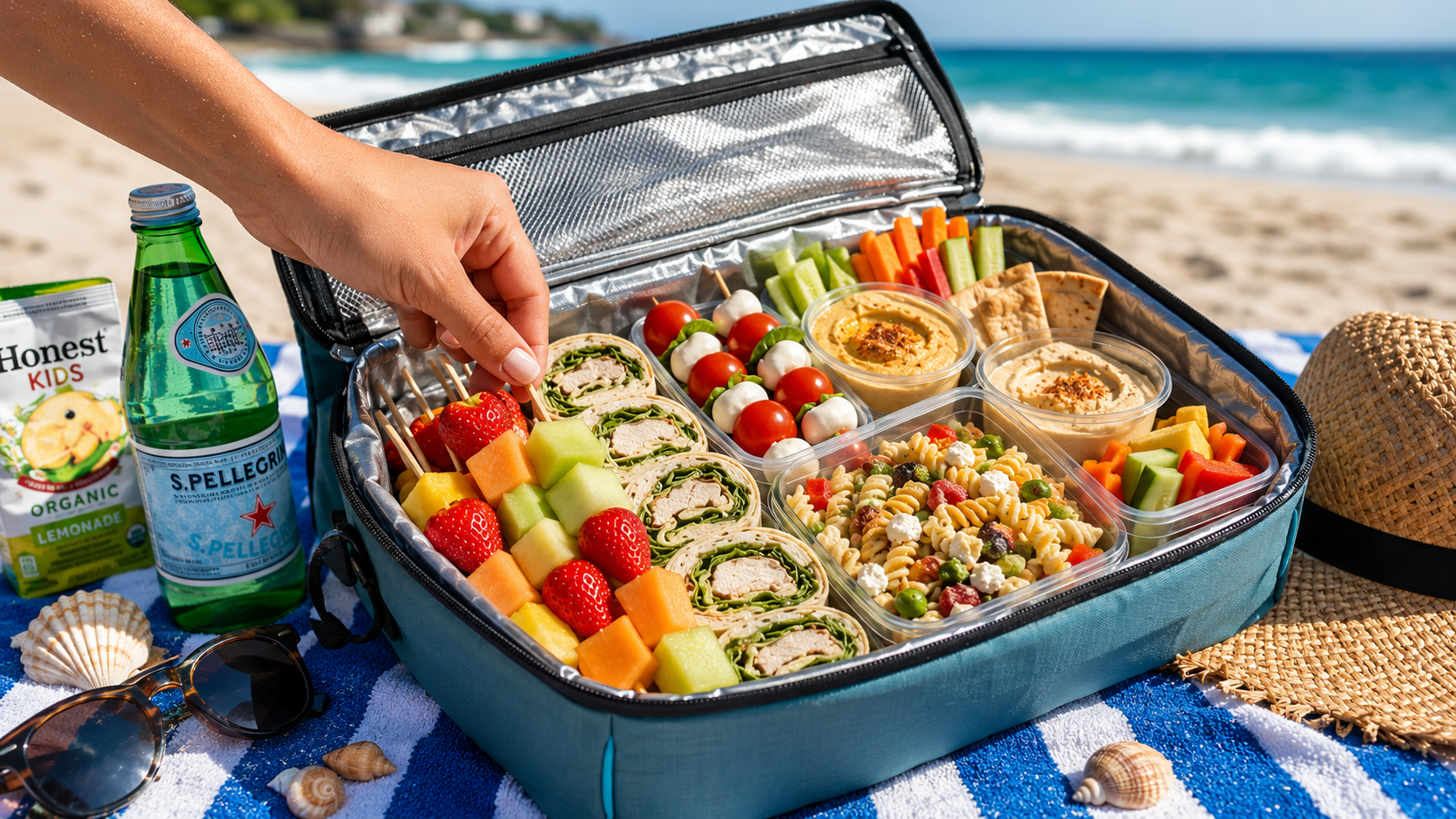
So, the summer Dan announced we were doing a full beach day—actual beach, not just the neighborhood pool—I went into what I privately call meal planning mode about forty-eight hours in advance. Because here’s what I’ve learned from years of taking two kids to the beach: hungry kids at the beach is a situation that deteriorates very fast, the food options within walking distance of the water are either wildly overpriced or deeply mediocre, and nothing ruins a perfect beach afternoon faster than someone whining about being hungry while you’re trying to enjoy exactly seven minutes of just sitting there, you know?
Here’s the thing about beach food that separates good from great—it has to survive. Not just in terms of food safety, although that matters enormously, and we’ll talk about it. It has to survive the cooler, the walk from the car, the sand, the heat, the fact that everyone has wet hands, and the reality that there’s no table, no plate, no fork, and no surface to put anything on. The best beach food is designed for all of that. It’s portable, it doesn’t need utensils, it holds together, it tastes good cold or at room temperature, and it makes everyone happy from age eight to adult, you know?
These ideas are what I pack for our family beach days and have been refining for years. Every single one has been tested in real conditions—actual sand, actual heat, actual children who have opinions about everything.
The Beach Food Rules I Follow Every Time
Before the actual food, five rules that make beach eating genuinely pleasant instead of a logistical nightmare.
Everything goes in the cooler pre-packed and ready. I don’t assemble at the beach. I don’t bring a cutting board and a knife and “put things together when we get there.” Everything that can be made, assembled, portioned, or wrapped at home gets done at home the night before or morning of. The beach is not a kitchen, and the cooler is not a prep station, you know?
Ice packs underneath, food on top. Cold air falls; warm air rises. Everything stays colder when the ice is at the bottom. Pull items from the top and keep the cooler closed as much as possible—every second it’s open, cold air is escaping, and warm air is getting in.
Food safety is not optional. Anything with mayonnaise, dairy, or meat should stay below 40°F and be eaten within two hours of being out of the cooler. I use a cooler thermometer to know for sure. This isn’t paranoia; it’s fifteen years of food safety knowledge telling me that a beach in July is genuinely dangerous territory for mayo-based dishes that sit out, you know?
Everything travels in individual portions. One container per person or per serving rather than one big shared container. Less opening and closing of containers, less cross-contamination from sandy hands, less arguing about who gets more, and no sad half-eaten communal bowls that have been sitting open in the heat for an hour.
Pack for the trip home, too. Bring a small trash bag, bring wet wipes for sandy hands before eating, and bring a small hand towel. The logistics around beach eating matter as much as the food itself.
1. Pesto Chicken Pinwheel Sandwiches
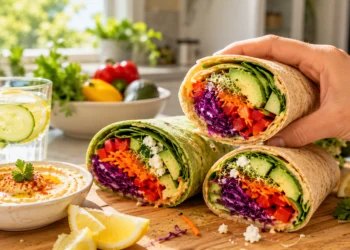
So this is the beach sandwich that became our family’s signature beach day food, and I’m genuinely proud of developing it. Pinwheels—tortilla wraps that get rolled tight, wrapped in plastic wrap, and sliced into rounds—are the ideal beach sandwich format. No bread that gets soggy. No fillings that fall out. Each round is one or two bites, eaten with sandy fingers, no problem. They look cheerful on a plate, they travel perfectly in the cooler, and they hold together beautifully for hours, you know?
What you need (makes about 24 rounds, serves 4 to 6): 4 large flour tortillas. One cup of good pesto—store-bought is completely fine. 8 ounces of cream cheese, softened. 2 cups of shredded or sliced rotisserie chicken. 1 cup of baby spinach leaves. Half a cup of sun-dried tomatoes, roughly chopped. Half a cup of shredded mozzarella or provolone. Salt and pepper.
The night before: Mix the pesto and cream cheese together until smooth and combined—this is your spread, and it’s the thing that keeps everything together and adds creaminess and flavor to every bite. Taste it, and season with salt and pepper.
Lay a tortilla flat on the counter. Spread the pesto cream cheese generously all the way to the edges—don’t leave a big border; you want the spread in every bite. Layer baby spinach leaves across the surface, then scatter the chicken, sun-dried tomatoes, and shredded cheese. Roll the tortilla very tightly from one end—the tighter the roll, the neater the slices, and the less likely anything is to fall out. Wrap the whole roll tightly in plastic wrap, twisting the ends closed. Repeat with all four tortillas. Refrigerate overnight.
Morning of the beach day, unwrap each roll and slice into one-inch rounds using a sharp knife. Pack the rounds in a flat container in a single layer if possible, or layered with parchment paper between layers. They’re ready to eat cold straight from the cooler, you know?
Julia’s real tip: The overnight refrigeration is what makes these slices clean without falling apart. Freshly rolled pinwheels are soft and slightly messy to slice. Overnight-chilled pinwheels hold their shape beautifully, and the cross-section looks gorgeous when you open the container. Make them the night before every time, you know?
Family verdict: Jake eats these faster than I can unpack the cooler. Maya photographed hers before eating, which has become her standard operating procedure with anything she deems aesthetically worthy. Dan had six rounds and then went back for four more, and then asked if there were any left. There weren’t.
2. Mason Jar Pasta Salad
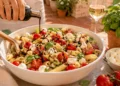
Now here’s the thing about mason jar pasta salad—the jar format is specifically designed for beach eating. Individual portions, sealed lid, no bowl required, eat beautifully with a fork directly from the container. The layering matters both for presentation and for keeping the dressing away from the delicate ingredients until it’s time to eat—you shake the jar, and everything mixes right before eating, you know?
What you need (makes 4 jars): 2 cups of cooked rotini, cooled and tossed with olive oil. One cup of cherry tomatoes, halved. One English cucumber, diced. Half a cup of Kalamata olives, hal. Add half a cup of pepperoncini, sl. Iced Half a cup of crumbled feta cheese. Half a cup of salami, diced—optional but excellent. A handful of fresh basil, torn. Four tablespoons of Italian dressing or the Greek vinaigrette from the cold pasta salad recipe—one tablespoon per jar
The layering order—this matters: Pour one tablespoon of dressing into the bottom of each jar first. Then layer in order: pasta, cherry tomatoes, cucumber, olives, pepperoncini, salami, and feta. Basil goes on the very top, added right before closing the lid. Seal tightly and refrigerate overnight or until ready to leave.
At the beach: flip the jar upside down and shake a few times before opening—the dressing that was sitting at the bottom coats everything as it moves. Open and eat directly from the jar with a fork. No bowl, no serving utensil, no mess, you know?
Julia’s real tip: Wide-mouth mason jars are essential—the regular-mouth jars are too narrow to get a fork in and out comfortably. The wide-mouth pint or pint-and-a-half size is perfect for one generous beach serving. Buy a set and use them all summer for this exact purpose.
Family verdict: Maya requests these for every single beach day and has started making her own jar the night before with whatever combination of things she wants in it. She calls it “her jar,” with real ownership. Jake eats his with a spork and doesn’t pick out the olives, which tells me the salt and vinegar flavor balance in this salad is doing something right.
3. Caprese Skewers with Fresh Mozzarella
Here’s the no-cook beach appetizer that requires five minutes of assembly and gets eaten in about three minutes at the beach because everyone descends on them immediately. Individual skewers mean no serving, no sharing conflict, no communal touching, and the combination of fresh mozzarella, cherry tomatoes, and basil with a little good olive oil and flaky salt is summer on a stick, you know?
What you need (makes about 20 skewers): One pound of ciliegine mozzarella balls—the small round ones. One pint of cherry tomatoes—mixed colors if you can find them. Fresh basil leaves—the larger the better for wrapping around the skewer. Good olive oil, flaky sea salt, and cracked black pepper. Balsamic glaze—in a small squeeze bottle for the beach. Small bamboo appetizer skewers or toothpicks
The night before: Thread each skewer: cherry tomato, folded basil leaf, mozzarella ball. Arrange in a flat container in a single layer. Drizzle the olive oil over everything, and season with flaky salt and cracked black pepper. Close the container and refrigerate. The olive oil marinates the mozzarella slightly overnight, and it becomes richer and more flavorful by morning.
Pack the balsamic glaze in a small squeeze bottle in the cooler. At the beach, take the container out, set it on the cooler lid, squeeze a thin drizzle of balsamic over the skewers, and done. That’s your appetizer while the bigger food comes out, you know?
Julia’s real tip: The squeeze bottle for the balsamic is the detail that makes this beach functional instead of difficult. Trying to drizzle balsamic from a bottle while sitting on a towel with wind and sand happening is a mess. Small squeeze bottle, controlled drizzle, no drama. Transfer it the night before, and you’ll thank yourself at the beach.
Family verdict: These are gone within minutes at every beach outing. Jake eats the tomatoes off the skewers first and then the mozzarella, in that order, every time. Maya eats them whole in one bite with the balsamic drizzle. Dan eats them standing next to the cooler before we’re even fully set up.
4. PB&J Sushi Rolls for Kids
Now I know this sounds like something I invented for Jake’s sake, and I’ll freely admit that’s exactly what happened. He was going through a phase of not wanting sandwiches in any form, and I needed portable, no-utensil beach food he would actually eat. These are the results—peanut butter and jam rolled into a tortilla and sliced into rounds exactly like the pinwheels above. He called them “PB&J sushi” the first time he saw them sliced, and that name has stuck permanently in our house, you know?
What you need (makes about 16 rounds per child): large flour tortilla, natural peanut butter—or sunflower butter if there are nut allergies. Good strawberry or raspberry jam. Optional: thin banana slices, honey drizzle, and granola scattered inside for crunch
The night before: Spread peanut butter generously across the entire surface of a tortilla. Spread a thin layer of jam over the peanut butter. Add banana slices or granola if using. Roll tightly, wrap in plastic wrap, and refrigerate overnight. Slice into rounds in the morning, and pack in a small container.
That’s genuinely it. The kids eat them cold with their hands straight from the container. They’re filling, they’re portable, they hold together perfectly, and they make zero mess, you know?
Julia’s real tip: Make these the night before, just like the savory pinwheels—same overnight chilling logic applies for clean slicing. The peanut butter firms up in the fridge, and the roll stays together much more tidily than a freshly assembled and sliced version.
Family verdict: Jake takes these so seriously as “his beach food” that he has started requesting specific jam flavors based on which beach we’re going to. I have not investigated the logic behind this system, and I don’t intend to. He eats them happily, and that’s the whole goal.
5. Watermelon, Feta & Mint Cups
Here’s the beach food that’s also the beach hydration situation—watermelon is ninety-two percent water, and at a hot beach in July, that matters a lot, you know? Individual cups packed with cubed watermelon, crumbled feta, fresh mint, and a tiny drizzle of honey kept cold in the cooler taste incredibly refreshing, and you can eat them with a fork or, honestly, just fingers if it comes to that.
What you need (serves 6): Half a large seedless watermelon, cubed into generous pieces. One cup of crumbled feta. A generous handful of fresh mint, torn. Juice of one lime. 1 tablespoon of honey—optional. A pinch of flaky sea salt. A tiny pinch of Tajín or chili lime seasoning—optional but wonderful
The night before: Cube the watermelon and pat it gently dry with paper towels—excess moisture dilutes the flavor and makes the feta go soggy faster. Divide among six individual containers or cups with lids. Scatter crumbled feta and torn mint over each one. Drizzle a tiny amount of lime juice and honey over the top, and add the flaky salt and Tajín if using. Seal and refrigerate overnight. The flavors meld beautifully, and by morning, the watermelon juice and the lime and feta have become something genuinely special together, you know?
Julia’s real tip: The individual cups are key for beach eating—one container per person with a lid means no sandy communal serving, no tipping over, and no fighting over the last piece. Pack a small fork for each cup tucked alongside in the cooler bag.
Family verdict: Maya said this was “the most refreshing thing she’s ever eaten at the beach” last summer, which I think was partially the food and partially the ninety-degree heat making everything taste better. Jake eats the watermelon and tolerates the feta and completely ignores the mint, which is practically enthusiastic agreement by his standards.
6. Loaded Hummus & Veggie Dip Containers
So this is the beach snack that handles that mid-morning or mid-afternoon moment when everyone is a little hungry, but lunch isn’t quite ready yet, and you need something to hold people over without ruining anyone’s appetite. Individual containers of good hummus topped with a little olive oil, smoked paprika, and chopped vegetables for dipping—all packed and ready, no assembly required at the beach, you know?
What you need (serves 4): One tub of your favorite good hummus—enough for four individual portions. Good olive oil for drizzling, smoked paprika, flaky salt, and cracked black pepper.
For dipping: 2 English cucumbers, sliced into spears or rounds 4 large carrots, cut into sticks 2 bell peppers, sliced into strips One bag of pita chips or crackers—packed separately so they don’t get soggy. Optional: cherry tomatoes, celery sticks, snap peas
The night before: Divide the hummus among four individual containers with lids. Drizzle olive oil over each, and dust with smoked paprika, flaky salt, and cracked black pepper. Seal and refrigerate. Pack the sliced vegetables together in a zip-lock bag or flat container. Pack the pita chips in a separate dry bag.
At the beach: hand each person their hummus container and let them dip directly from it. The pita chips come out of the dry bag and get passed around. That’s literally it, you know?
Julia’s real tip: The vegetables for dipping get cut the night before and stored in cold water in the fridge—cucumber spears, carrot sticks, and bell pepper strips in a container of cold water stay crisp and fresh for twenty-four hours, which is much better than cut vegetables stored dry. Drain and pat dry before packing in the morning.
Family verdict: This is the snack that keeps everyone civil during the “we just got to the beach and haven’t set up yet” window, which in my experience is the highest-stress five minutes of any beach day. Jake eats the pita chips and dips the carrots. Maya eats everything with equal enthusiasm. Dan uses it as lunch and supplements it with the pinwheels and considers himself fully fed.
7. Brownie Bites & Fruit Skewers,
No, dessert at the beach is a real category of thing that I take seriously, because an afternoon on the sand with two happy kids who have been swimming, playing, and running around deserves something sweet at the end of it. Individual brownie bites made the night before, paired with fresh fruit skewers—this is the beach dessert situation that requires zero additional work at the beach itself, you know?
For the brownie bites: Use your favorite brownie recipe or a good box mix—both are completely valid. Bake in a mini muffin pan for individual round brownie bites instead of a full pan. Cool completely, and pack in a zip-lock bag or container. They hold together perfectly, they don’t melt, they don’t need refrigeration, and they’re exactly two bites each, which is the right size for beach dessert, you know?
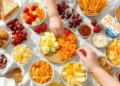
For the fruit skewers: Thread strawberries, grapes, melon cubes, and pineapple chunks onto small skewers. Pack in a flat container in the cooler. Pull them out alongside the brownie bites for a complete beach dessert situation that takes zero effort at the beach and makes the kids genuinely happy.
Julia’s real tip: The brownie bites go in a separate dry bag, not in the cooler—chocolate and cold don’t love each other, and a warm brownie bite is better than a cold one anyway. Fruit skewers stay in the cooler until serving. Bring them out together and present them as a proper little dessert moment. It takes thirty seconds, and it makes the beach day feel complete and considered, you know?
Family verdict: Jake discovered that a strawberry from the fruit skewer eaten immediately after a brownie bite is a flavor combination he considers life-changing. He has now made this his official beach dessert protocol and guards the timing of it very seriously. I find this charming and have no notes.
The Complete Beach Day Packing List
So the food is only half the battle—packing it well is what makes it survive the trip and stay safe to eat. Here’s exactly what I pack every time.
A hard-sided cooler with a good seal—soft bags lose temperature too fast for a full beach day. Ice packs on the bottom and sides. A cooler thermometer so I actually know the internal temperature rather than guessing. All food is packed in individual containers or zip-lock bags, not loose. A separate dry bag for anything that shouldn’t be cold—the brownie bites, the pita chips, the crackers. Wet wipes in an accessible outside pocket for sandy hands before eating. A small trash bag that gets opened and weighted down with something before the food comes out. Napkins in a Ziploc so they don’t blow away.
The packing sequence that works for us—everything that needs to be coldest goes in first, directly against the ice packs. The individual meal containers go in next. Drinks and fruit go on top since they get accessed most frequently, and opening the cooler less keeps everything colder longer, you know?
Chef’s Notes — Why Beach Day Food Planning Matters
The first summer I showed up to the beach completely underprepared for food, we ended up paying twelve dollars for a single hot dog from a beachside stand, and I watched my kids eat sand-contaminated chips from a shared bag that blew over twice. I went home that night and made a plan that I’ve been refining ever since.
Here’s the thing—a good beach day lives or dies on whether people are comfortable, and hungry people are not comfortable people. Fifteen minutes of food prep the night before removes hunger from the list of things that can go wrong, and that makes everything else about the day better. The swimming is more fun when nobody’s whining about food. The time in the sun is more relaxed when dinner’s already thought about. The whole day is better when the food situation is handled, you know?
Plan it the night before. Enjoy the whole day. That’s the deal.
You’ve absolutely got this. Now go pack that cooler.
— Chef Julia






Discussion about this post