


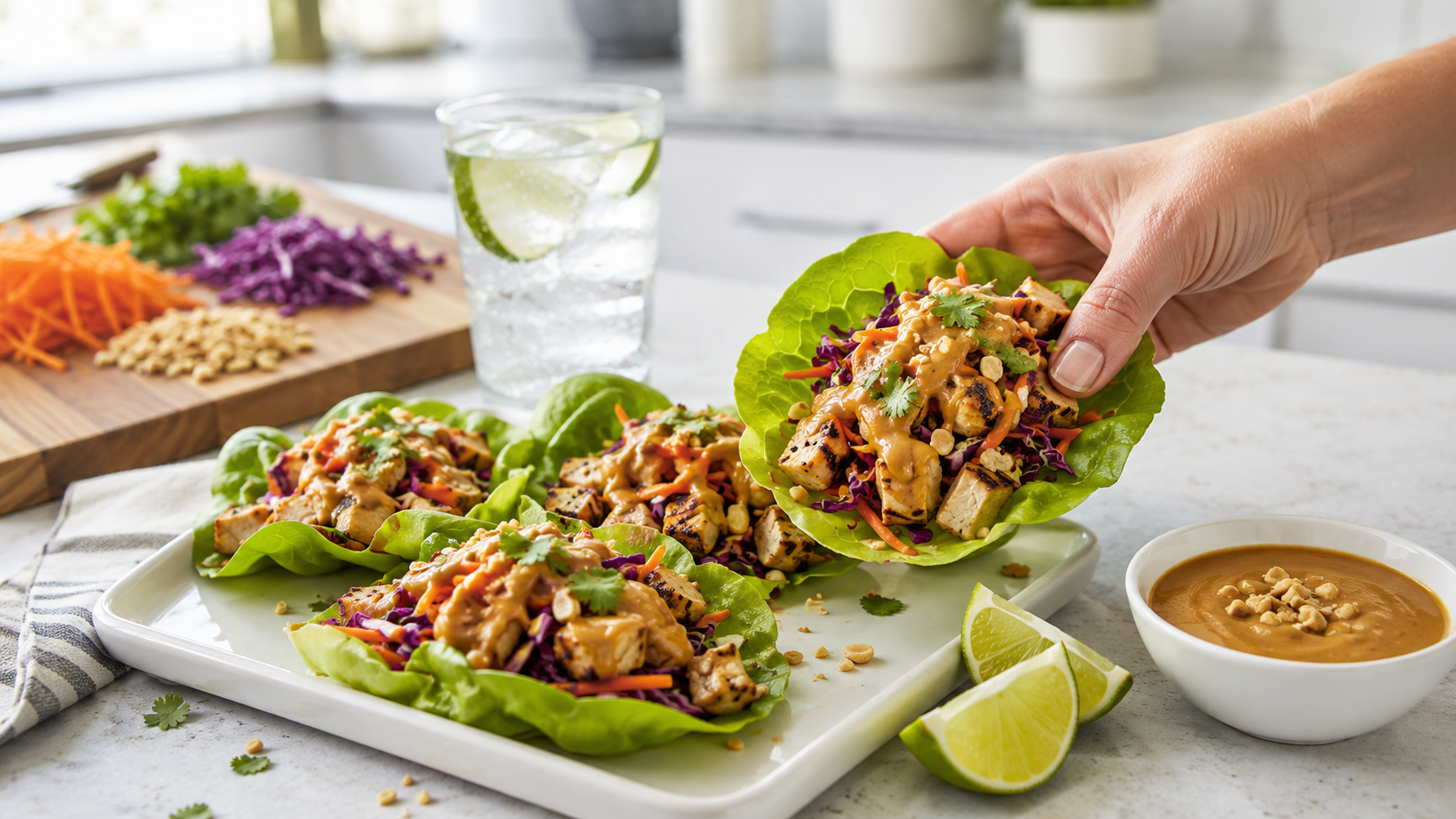
So last summer Maya went through a phase where she declared—completely out of nowhere on a random Thursday—that she wanted to “eat lighter” for dinner. She’s twelve. I don’t fully understand where this came from, but I respected it completely and started thinking about what that actually means for a weeknight family dinner. Not a side salad as the whole meal. Not a bowl of raw vegetables. Something that feels satisfying and fresh and interesting enough that an eight-year-old will also eat it without staging a protest, you know?
These grilled chicken lettuce wraps are what I landed on, and they’ve been in our regular summer rotation ever since. Here’s the thing about them that I didn’t expect—they’re fun to eat. Everyone at the table builds their own wrap, loads it with whatever combination they want, and eats it with their hands. That interactive element is genuinely more engaging than a regular plated dinner, and it solves the picky eater problem almost completely because nobody has to eat anything they don’t want—they just don’t put it in their wrap. Jake figured this out immediately and has been happily eating these ever since because he controls every component that goes into his, you know?
The grilled chicken marinade is bold and a little sweet and perfectly suited to the cool, crisp lettuce. The sauces and toppings are where the whole thing comes alive. Twenty-five minutes from fridge to table. Let me show you exactly how it goes.
Marinade time: 20 minutes minimum; overnight is better. Grill time: 12 to 14 minutes Total active time: 25 minutes Serves: 4
What You Need
For the grilled chicken: 1 and a half pounds of boneless, skinless chicken thighs—thighs for lettuce wraps every time; they stay juicy and tender and have the flavor that chicken breasts can’t quite match in a simple marinade like this Salt and black pepper
For the sesame ginger marinade: 3 tablespoons of soy sauce 2 tablespoons of sesame oil 2 tablespoons of honey 1 tablespoon of rice vinegar 3 cloves of garlic, very finely minced 1 tablespoon of fresh ginger, grated on a microplane—or a teaspoon of ground ginger if fresh isn’t available Half a teaspoon of red pepper flakes A squeeze of fresh lime juice
For the wraps: 2 large heads of butter lettuce—pull the leaves apart carefully at the base, keeping them as whole cups as possible. Butter lettuce is non-negotiable here. It has the right combination of cup shape, mild flavor, and flexibility that makes it the perfect vehicle. Iceberg breaks. Romaine is too flat. Butter lettuce is the right tool, you know?
For the toppings—set these out in small bowls: 2 cups of shredded purple cabbage for crunch and color 2 large carrots, julienned or grated 1 English cucumber, thinly sliced into rounds or matchsticks One cup of shelled edamame, thawed from frozen Fresh cilantro, roughly chopped Sliced green onions Toasted sesame seeds Chopped roasted peanuts Lime wedges
For the sauces—make both; they’re different, and both are excellent:
Peanut sauce: 3 tablespoons of natural peanut butter 2 tablespoons of soy sauce 1 tablespoon of honey 1 tablespoon of rice vinegar 1 teaspoon of sesame oil 1 clove of garlic, minced Half a teaspoon of fresh ginger 2 to 3 tablespoons of warm water to thin
Sesame lime drizzle: 2 tablespoons of soy sauce 1 tablespoon of sesame oil 1 tablespoon of lime juice 1 teaspoon of honey Half a teaspoon of red pepper flakes
Let’s Make It
Make the marinade and marinate the chicken. Whisk the soy sauce, sesame oil, honey, rice vinegar, garlic, ginger, red pepper flakes, and lime juice together in a bowl or zip-lock bag. Add the chicken thighs, toss to coat completely, and marinate for at least twenty minutes at room temperature—or refrigerate overnight, which produces noticeably more flavorful chicken. Don’t marinate longer than twenty-four hours because the soy sauce starts breaking down the texture of the chicken past that point, you know?
Make both sauces while the chicken marinates. For the peanut sauce, whisk the peanut butter, soy sauce, honey, rice vinegar, sesame oil, garlic, and ginger together. The peanut butter will resist at first; keep whisking. Add warm water one tablespoon at a time until it’s smooth and drizzleable—thick enough to coat a spoon but thin enough to drizzle over a wrap without difficulty. Taste it and adjust—more honey if it’s too sharp, more vinegar if it’s too sweet, and more soy sauce if it needs salt.
For the sesame lime drizzle, whisk everything together in a small bowl. It takes sixty seconds and produces something bright and punchy that balances the richness of the peanut sauce beautifully, you know?
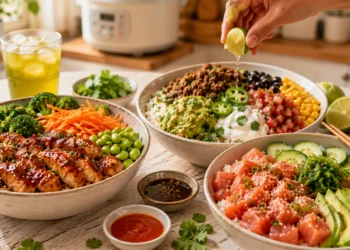
Prep and arrange all the toppings. Get everything into small bowls on the table before the chicken goes on the grill. The toppings are where individual preferences play out, and having everything visible and accessible is what makes this dinner genuinely interactive and fun rather than just a plate of food, you know?
Grill the chicken. Get the grill hot—high heat, preheated, and grates oiled. Pull the chicken thighs from the marinade and pat them very lightly with a paper towel—not completely dry; you want some marinade on the surface, just not dripping wet. The excess liquid will cause flare-ups and prevent proper searing.
Place on the hot grate and cook for five to six minutes per side without moving them. The honey in the marinade will caramelize against the grill and create a beautiful lacquered coating—watch for flare-ups from the dripping marinade; juve the chicken away from direct flame briefly if needed. The chicken is done when it registers 165°F internally or the juices run completely clear when pierced at the thickest part.
Rest the chicken on a cutting board for five minutes—this is the step that keeps all the juice inside rather than running all over the board when you cut it. After resting, slice thin on a slight diagonal against the grain for the most tender pieces, or chop into bite-sized pieces if you prefer something easier to wrap, you know?
Set up the wrap station. Arrange the butter lettuce cups on a large platter. Put the sliced chicken on a serving board or plate alongside. Everything else is already on the table in its small bowls. Set both sauces out with small spoons for drizzling.
Let everyone build their own wraps—a few pieces of chicken in the lettuce cup, a small handful of cabbage, some carrot and cucumber, a spoonful of edamame, fresh cilantro, green onions, sesame seeds, peanuts, and then a drizzle of whichever sauce or both. Squeeze of lime at the very end. Fold and eat immediately before it drips, you know?
Julia’s Real Tips — Everything I’ve Learned Making These
Overnight marinade changes the chicken completely. Twenty minutes is the minimum, and it’s perfectly good. Overnight is where the chicken becomes something genuinely special—the soy sauce penetrates deeply, the garlic and ginger infuse throughout, and the honey starts doing something caramelized and complex that you can taste in every bite. If you can plan ahead by one day, do it. If you can’t, twenty minutes still works and nobody will complain, you know?
Keep the lettuce cups cold. Wash the butter lettuce leaves, shake off the water, and keep them in the fridge in a container or bag right up until you serve. Cold, crisp lettuce against warm, savory chicken is half the appeal of this dish—warm or wilted lettuce makes the whole thing feel less fresh and less special. Cold until the very last moment, you know?
Slice the chicken thin and on a diagonal. This isn’t just aesthetics—thin diagonal slices cut across the muscle fibers and give you tender pieces that lay flat in the wrap without rolling around and falling out. Thick chunks are harder to wrap and harder to eat. Thin and diagonal, every time.
Make extra peanut sauce. Genuinely—double the batch. The leftover peanut sauce keeps in a jar in the fridge for a week and gets used on noodles, as a dipping sauce for the chicken tenders from the kids’ dinner article, drizzled over the teriyaki salmon bowls, and mixed into the cold sesame noodle lunch. It’s one of those sauces that improves everything it touches, and you’ll be glad you made extra, you know?
Toasted sesame seeds matter. Toast a small batch in a dry pan over medium heat for two to three minutes, shaking constantly, until fragrant and lightly golden. The flavor difference between toasted and raw sesame seeds is significant—toasted are nutty and complex, raw are almost tasteless. It takes three minutes and makes every wrap better.
The wrap should be underfilled rather than overfilled. This is the most common lettuce wrap mistake, and it ends with everything falling out and someone eating the filling off the plate with a fork, which defeats the whole fun purpose. A little chicken, a little of each topping, a controlled drizzle of sauce. Less than you think you need, because the lettuce is also part of each bite, and it needs to be able to fold around everything cleanly. Two wraps are better than one enormous overloaded wrap that falls apart immediately, you know?
Variations That Go in Completely Different Directions
Thai basil version: Swap the sesame ginger marinade for a mixture of fish sauce, lime juice, brown sugar, garlic, and red pepper flakes. Use Thai basil instead of cilantro, add bean sprouts to the topping selection, and serve with a sweet chili dipping sauce alongside the peanut sauce. This version tastes like a Thai restaurant appetizer in the best possible way.
Korean-inspired gochujang chicken: Replace the soy-sesame marinade with a mixture of gochujang paste, sesame oil, soy sauce, honey, and garlic. Serve with kimchi alongside the other toppings, add sliced cucumber marinated briefly in rice vinegar, and top with a fried egg if you’re feeling ambitious. This is the most flavor-forward version and the one I make for adult dinner nights when the kids are eating something else, you know?
Mango lime version: Add diced fresh mango to the topping lineup and swap the peanut sauce for a coconut lime dressing—coconut milk, lime juice, honey, and a pinch of salt whisked together. Use fresh mint alongside the cilantro. This is the lightest, most summery version, and it’s genuinely beautiful on the table with the orange mango against the purple cabbage and the green lettuce.
Hoisin chicken version: Marinate the chicken in hoisin sauce, sesame oil, soy sauce, and garlic. Serve with thin-sliced cucumber, shredded carrots, and green onions, and replace the peanut sauce with extra hoisin sauce for dipping. This is the most kid-accessible version—the sweetness of the hoisin is very approachable for younger eaters, and it’s the variation Jake will eat without removing anything from his wrap.
Make-Ahead Notes for Busy Weeknights
So here’s how I make this work on a weeknight when there’s genuinely no time to do anything elaborate at dinner time. On Sunday or Monday, I marinate the chicken in a zip-lock bag and keep it in the fridge—it can sit in that marinade for up to twenty-four hours, getting better the whole time. Both sauces get made in advance and stored in jars. The toppings get prepped—cabbage shredded, carrots julienned, edamame thawed, peanuts roughly chopped—all in separate containers in the fridge.
Weeknight dinner is then just grilling the chicken—twelve minutes—while someone sets the topping bowls on the table. The whole thing hits the table in under twenty minutes from when I walk in the door. That’s the kind of weeknight efficiency that makes a recipe earn its place in the permanent rotation, you know?
Chef’s Notes — Family Verdict
OH MY GOSH, the first time I put these on the table and told everyone to build their own wraps, the energy shifted immediately. Jake sat up straighter. Maya started strategically surveying the topping options. Dan asked, “We’re doing this ourselves?” in a tone that conveyed genuine enthusiasm. There’s something about building your own food that makes people more interested in eating it—I’ve now used this principle in about six different recipes, and it works every single time, you know?
Jake’s wrap is always the same: chicken, cabbage, peanut sauce, and sesame seeds. Nothing else. He wraps it with complete focus and eats it in approximately three bites. He always wants seconds. Maya loads hers with everything available plus extra lime and has started requesting these specifically for Friday night dinner during the school year, which tells me the recipe has officially crossed from “summer thing” into “permanent family recipe.”
Dan eats four or five wraps and then looks slightly surprised that he’s full, which happens every single time because lettuce wraps look lighter than they eat when you have that much good chicken and peanut sauce involved. He rates these among the top five dinners I make, and I tend to agree—there’s a freshness and a brightness and a fun interactivity to them that makes a weeknight dinner feel like a genuine occasion without any extra effort, you know?
These have been on our summer table every other week for the past two summers, and I don’t see that changing. The marinade is genuinely excellent. The peanut sauce is the kind of thing you want to eat by the spoonful. The whole format is inherently satisfying in a way that regular plated dinners sometimes aren’t. Light but filling. Simple but interesting. Fast but worth making, you know?
You’ve got this. Go marinate that chicken tonight for tomorrow.
— Chef Julia











Discussion about this post