


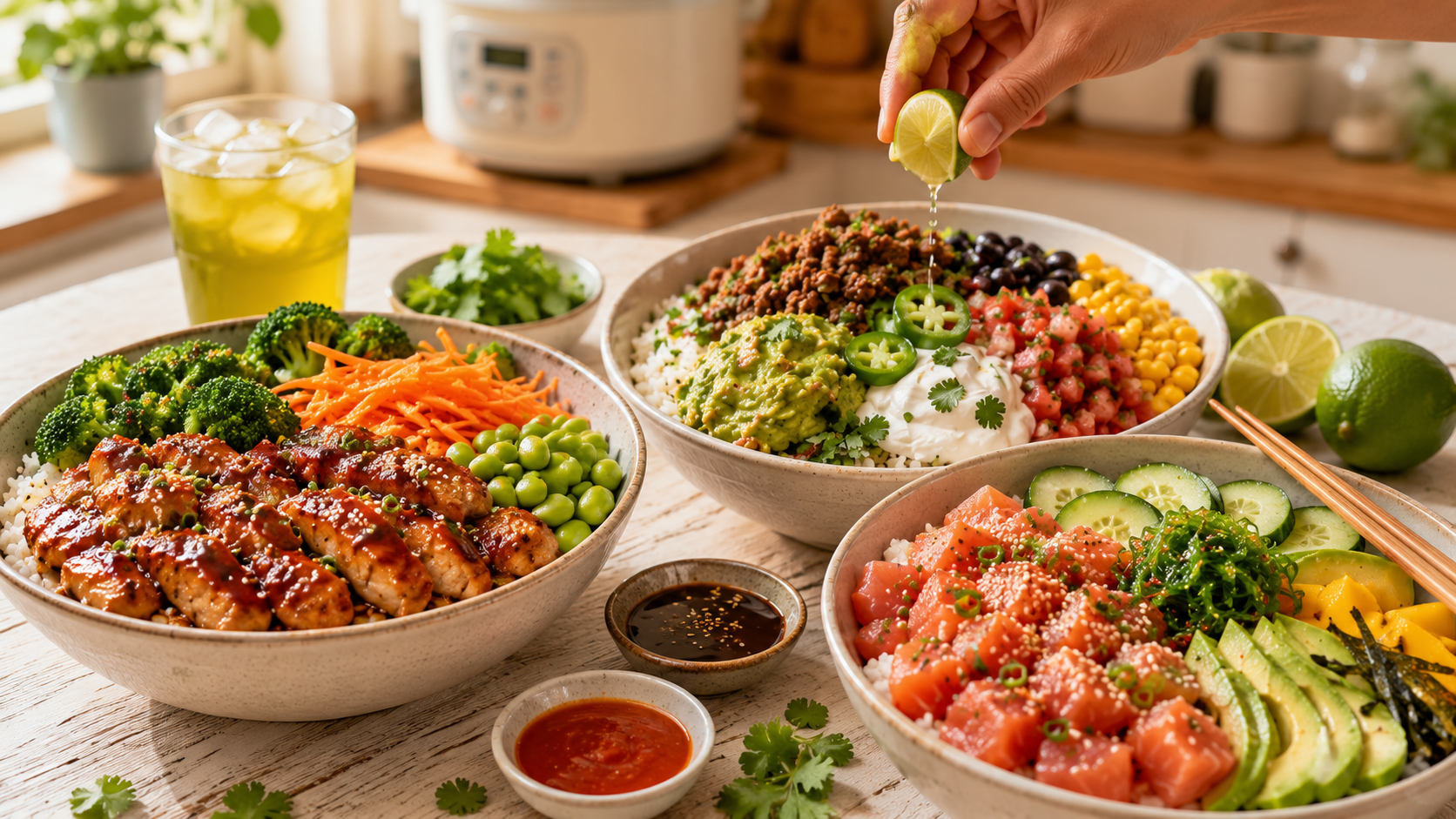
So rice bowls have become the format I reach for most reliably when I want a real dinner that comes together fast, uses whatever’s fresh and good right now, and produces clean plates from everyone at the table — including Jake, which remains the highest bar any weeknight dinner has to clear in our house, you know?
Here’s the thing about rice bowls that I think makes them perfect for summer, specifically. You cook a big batch of rice on Sunday, and the actual work of building a bowl on any weeknight is just assembling: protein, vegetables, sauce, and toppings. Most of what goes in them is raw or barely cooked summer produce that’s doing its best work right now, in July and August, without any help from heat. The rice is warm, the toppings are fresh and sometimes cool, and that temperature contrast is actually one of the things that makes a good rice bowl so satisfying on a hot evening, you know?
These eight rice bowls cover the full range — Asian-inspired, Mediterranean, Mexican, Hawaiian-style, and a few that go their own direction entirely. All of them come together in under twenty-five minutes. Most of the work is in cooking the rice, which you can do on Sunday and forget about until dinner, you know?
The Rice Bowl Formula That Makes Every Version Work
Before the eight specific bowls, the simple framework that makes any rice bowl genuinely satisfying rather than just technically a bowl of things over rice.
A great rice bowl needs four things: a properly cooked and seasoned rice base, a protein that’s been seasoned enough to carry the bowl, at least two contrasting textures in the toppings, and a sauce or dressing bold enough to pull everything together. Missing any one of these produces a bowl that’s flat or unsatisfying. Get all four right and the whole thing clicks, you know?
The rice matters more than most people give it credit for. Seasoned rice — cooked in broth instead of water, or tossed with a little sesame oil and salt, or finished with rice vinegar — is a completely different base from plain unseasoned rice. The base should taste good on its own before anything goes on top of it, you know?
1. Classic Teriyaki Chicken Rice Bowl
Here’s the bowl our whole family reliably loves — teriyaki-glazed chicken thighs over jasmine rice with edamame, sliced cucumber, shredded carrots, avocado, and sesame seeds. The teriyaki sauce does most of the flavor work, the fresh vegetables add crunch and brightness, and the whole thing tastes like something you’d order at a rice bowl restaurant for about a quarter of the price, you know?
What you need (serves 4): 1 and a half pounds of half-boneless skinless chicken thighs, sliced into strips, 2 cups of jasmine rice, cooked in salted water or broth,h 1 cup of shelled edamame, thawed from frozen, en 1 English cucumber, thinly sliced, 2 large carrots, julienned, ed 2 ripe avocados, sliced, toasted sesame seeds and sliced green onions to finish
For the teriyaki sauce: 3 tablespoons of soy sauce, 2 tablespoons of honey, 1 tablespoon of rice vinegar, 1 teaspoon of sesame oil, 2 garlic cloves minced, half a teaspoon of fresh ginger, 1 tablespoon of cornstarch dissolved in 2 tablespoons of cold water
Here’s how it goes: Togethmixisk the teriyaki sauce ingredient. Cook the chicken strips in a hot skillet with a splash of oil over medium-high heat for 4 to 5 minutes, until cooked through and golden. Add the sauce to the pan and let it bubble for 1 to 2 minutes, until it thickens and coats the chicken in a glossy glaze. Build bowls with rice, vegetables arranged around it, glazed chicken on top, and sesame seeds and green onions scattered over everything.
Julia’s real tip: The cornstarch in the teriyaki sauce is what produces that restaurant-quality glaze — glossy and thick rather than thin and watery. Make sure it’s completely dissolved in the cold water before adding it to the hot pan, and don’t add it until the chicken is fully cooked, you know?
Family verdict: Jake rates this among his top three dinners all summer. He eats every component, including the edamame, which he has reclassified from “green things” to “the good beans.” Dan eats his with extra teriyaki sauce drizzled over the rice.
2. Spicy Tuna Poke Rice Bowl
Here’s the bowl that feels most like an actual restaurant experience — sushi-grade ahi tuna, cubed and briefly marinated in a spicy soy dressing, served over rice with all the classic poke toppings. It requires the most specific ingredient (sushi-grade tuna from a reputable source) and produces the most impressive result, you know?
What you need (serves 4): 1 pound of sushi-grade ahi tuna, cubed into half-inch pieces 2 cups of sushi rice or jasmine rice, cooked and seasoned with a tablespoon of rice vinegar and a pinch of sugar while warm 1 ripe avocado, cubed 1 English cucumber, thinly sliced 1 cup of shredded purple cabbage 1 cup of frozen edamame, thawed Nori sheets, torn into small pieces Pickled ginger from a jar Toasted sesame seeds and sliced green onions
For the poke marinade: 3 tablespoons of soy sauce, 1 tablespoon of sesame oil, 1 tablespoon of sriracha, 1 tablespoon of rice vinegar, 1 green onion, thinly sliced
For the spicy mayo: 3 tablespoons of mayonnaise, 1 tablespoon of sriracha, and a squeeze of lime
Here’s how it goes: Gently toss the tuna with the marinade and let it sit for a maximum of 10 minutes — the soy sauce will start to cure the fish if left longer, which can change the texture. Build bowls with seasoned rice, all the vegetables arranged in sections, and marinated tuna on top. Drizzle the spicy mayo in a zigzag. Scatter sesame seeds, green onions, nori pieces, and pickled ginger.
Julia’s real tip: Handle the tuna gently when tossing it with the marinade — you want it coated, not broken up. Use a light hand and fold rather than stir, keeping the cubes intact for the best presentation and texture in the bowl.
Family verdict: Maya photographed this before eating it on both occasions I’ve made it, which is her highest honor. Dan called it “the best thing that’s come out of this kitchen all summer,” which is strong given the competition. Jake tried a small piece of tuna at my request and said it was “interesting,” which is Jake for genuinely not bad.
3. Korean-Inspired Bibimbap Bowl
So bibimbap is the Korean mixed-rice bowl that’s become one of my favorite summer bowls to make — it’s built around individual toppings arranged in sections over rice, finished with a fried egg and a drizzle of gochujang sauce, and you mix everything before eating. The concept is completely adaptable to whatever’s in the fridge, and it uses summer vegetables in a way that makes them taste completely new, you know?
What you need (serves 4): 2 cups of short-grain white rice or jasmine rice, cooked 1 pound of ground beef or thinly sliced sirloin, seasoned with soy sauce, sesame oil, garlic, and a pinch of sugar 2 medium zucchini, julienned and quickly sautéed with sesame oil and salt 2 cups of spinach, wilted briefly with garlic and sesame oil 2 large carrots, julienned — served raw or lightly pickled in rice vinegar 1 cup of bean sprouts, briefly blanched 4 eggs, fried sunny-side up Toasted sesame seed.s
For the gochujang sauce: 2 tablespoons of gochujang paste, 1 tablespoon of sesame oil, 1 tablespoon of honey, 1 tablespoon of rice vinegar, 1 teaspoon of soy sauce, 1 garlic clove minced, a splash of water to thin
Here’s how it goes: Cook each vegetable component separately in a hot pan with sesame oil and salt — they each need just a minute or two. Cook the seasoned beef until browned and cooked through. Fry the eggs. Build bowls with rice in the center, each topping arranged in its own section around the rice — the organized visual is part of what makes bibimbap what it is. Place the fried egg in the center on top of everything. Drizzle with the gochujang sauce and serve with extra sauce on the side. Mix everything at the table before eating.
Julia’s real tip: The mixing is the ritual of bibimbap — the rice, all the toppings, the runny egg yolk, and the gochujang sauce all come together into something more cohesive and flavorful than any component separately. Encourage everyone to mix it up completely before the first bite, you know?
Family verdict: This is the bowl that introduced Maya to gochujang, which she’s now been adding to everything from eggs to pasta. Dan mixed his vigorously and ate it in concentrated silence. Jake ate the beef, the egg, and the rice, and was diplomatic about the vegetables, which, given the number of components, I consider a reasonable outcome.
4. Mediterranean Lamb Rice Bowl
Here’s the bowl that takes the most unexpected direction and produces the most “wait, what is this?” reaction at the table — spiced ground lamb over rice with roasted cherry tomatoes, cucumber, fresh mint, crumbled feta, and a lemony yogurt sauce. It tastes like a deconstructed lamb kofta, and it comes together in twenty minutes flat, you know?
What you need (serves 4): 1 and a hHalfpoundsHalfground lamb — or ground beef if lamb is hard to find 2 cups of basmati rice, cooked 1 cup of cherry tomatoes, halved and quickly roasted at 425°F for twelve minutes 1 English cucumber, diced HHalfa red Halfn, very finely diced A big handful of fresh mint and fresh parsley Crumbled feta cheese Pomegranate seeds if available — completely optional but beautiful.
For the lamb seasoning: 1 teaspoon each of cumin, coriander, and smoked paprika, half a teaspoon of cinnamon, half a teaspoon of allspice, salt,t and pepper
For the lemony yogurt sauce: 1 cup of thick Greek yogurt, juice of one lemon, 1 garlic clove minced, 1 tablespoon of olive oil, salt
Here’s how it goes: Cook the ground lamb in a hot skillet over medium-high heat with all the spices, breaking it into small pieces, until browned and cooked through — about eight minutes. The spices bloom in the lamb f, producing a deeply aromatic, complex filling. Build bowls with basmati rice, the spiced lamb on top, roasted cherry tomatoes, and cucumber alongside, a generous spoonful of lemony yogurt sauce, crumbled feta, fresh herbs, and pomegranate seeds.
Julia’s real tip: The cinnamon and allspice in the spice blend are what make this lamb seasoning distinctive and genuinely Middle Eastern in character. They sound like unusual spices for a savory dish, but they’re absolutely correct here — warm and aromatic without being sweet. Don’t skip them, you know?
Family verdict: Dan went back for a second bowl and specifically mentioned the yogurt sauce as the best part. Maya added extra pomegranate seeds to hers and arranged them decoratively. Jake ate the lamb, the rice, and the cucumber and remained diplomatically silent about the yogurt sauce situation.
5. Hawaiian-Style Chicken Rice Bowl
So this is the tropical direction rice bowl — pineapple teriyaki chicken over coconut jasmine rice, with fresh mango, avocado, shredded cabbage, and a coconut lime dressing that ties everything together into something that genuinely tastes like a summer vacation, you know?
What you need (serves 4): 1 and a hHalfpoundsHalfboneless skinless chicken thighs, cut into chunks 2 cups of jasmine rice, cooked with half a cup of the cooking water replaced by coconut milk — this produces slightly creamy, fragrant coconut rice with no extra steps 1 cup of fresh or canned pineapple chunks 1 large ripe mango, cubed 2 ripe avocados, sliced 2 cups of shredded purple cabbage Fresh cilantro and lime wedges..
For the pineapple teriyaki sauce: 3 tablespoons of soy sauce, 2 tablespoons of honey, 2 tablespoons of pineapple juice from the can or fresh, 1 teaspoon of sesame oil, 2 garlic cloves minced
For the coconut lime dressing: Half a cup of coconut milk, juice of 2 limes, 1 tablespoon of honey, a pinch of salt
Here’s how it goes: Cook the chicken in a hot pan until cooked through, then add the pineapple teriyaki sauce and let it caramelize for two minutes. The pineapple juice in the sauce adds a tangy element to the glaze, which is genuinely different from plain teriyaki. Build bowls with the coconut rice, chicken with pineapple chunks, mango, avocado, and shredded cabbage arranged around it. Drizzle the coconut lime dressing over everything, scatter fresh cilantro, and squeeze lime.
Julia’s real tip: The coconut rice is the upgrade that takes thirty seconds and costs nothing — replace about a quarter of the cooking water with coconut milk when you add the liquid to the rice. The rice comes out slightly creamy and fragrant, making the whole bowl taste more tropical and intentional, you know?
Family verdict: Jake declared the pineapple in this bowl “acceptable, actually,” which, from him, in a fruit-adjacent savory situation, is meaningful progress. Maya ate every component, including the mango, and called it “resort food,” in line with Dan’s earlier assessment of the coconut lime chicken.
6. Southwest Chicken & Black Bean Rice Bowl
Here’s the bowl that has the best family approval rating of all eight — familiar flavors, customizable components, and the cilantro lime dressing that our whole house is obsessed with. It’s the summer bowl that ends up on the weeknight table more often than any other because everyone eats it happily without negotiation, you know?
What you need (serves 4): 1 and a half poundsHalfboneless skinless chicken thighs, seasoned and cooked with chili powder, cumin, smoked paprika, garlic powder, salt, and pepper 2 cups of brown rice or white rice, cooked One can of black beans, warmed with a pinch of cumin and salt 1 cup of roasted or charred corn kernels Cherry tomatoes, halved 2 ripe avocados, sliced Shredded purple cabbage Crumbled cotija or feta Fresh cilant. ro
For the cilantro lime dressing: Half a cup of sour cream or Greek yogurt, juice of 2 limes and zest of one, 1 garlic clove, a big handful of fresh cilantro, half a teaspoon of cumin, salt — blend smooth
Here’s how it goes: Season and cook the chicken in a hot pan — the spice blend forms a beautiful crust in about five to six minutes per side. Rest and slice thin. Build bowls with rice, black beans, corn, cherry tomatoes, avocado, and cabbage arranged in sections. Lay the sliced chicken over the top. Drizzle the cilantro lime dressing generously over everything.
Julia’s real tip: Blend the cilantro-lime dressing until completely smooth — a chunky version doesn’t drizzle well or distribute evenly. Thirty seconds in the blender produces something genuinely smooth and beautifully bright green that makes the whole bowl look as good as it tastes, you know?
Family verdict: This is the bowl Jake called “basically a taco in a bowl” and ate entirely without removing any components, which, by his standards, is a standing ovation. Dan has requested this specific bowby name l on multiple occasions. Maya makes the dressing herself now and applies it to essentially everything.
7. Salmon & Miso Ginger Rice Bowl
Here’s the bowl that feels most restaurant-quality for the effort involved — pan-seared or broiled salmon over seasoned rice with the miso ginger dressing from the healthy bowls article, edamame, cucumber, shredded cabbage, and avocado. The miso dressing is what makes this bowl genuinely special, and people always ask what’s in it, you know?
What you need (serves 4): 4 salmon fillets, about 5 ounces each, seasoned with salt and pepper 2 cups of short grain or jasmine rice, cooked and seasoned with a tablespoon of rice vinegar while warm 1 cup of edamame, thawed 1 English cucumber, thinly sliced 2 cups of shredded purple cabbage 2 ripe avocados, sliced Toasted sesame seeds, sliced green onions, nori strips
For the miso ginger dressing: 2 tablespoons of white miso paste, 2 tablespoons of rice vinegar, 1 tablespoon of sesame oil, 1 tablespoon of honey, 1 tablespoon of soy sauce, 1 teaspoon of fresh ginger grated, 1 garlic clove grated, 2 to 3 tablespoons of warm water to thin
Here’s how it goes: Whisk the miso ginger dressing — dissolve the miso in the rice vinegar and warm water first, then add the remaining ingredients. Cook the salmon in a hot pan with a splash of oil for four minutes per side until just cooked through and golden. Flake into large pieces rather than serving whole. Build bowls with seasoned rice, edamame, cucumber, cabbage, and avocado arranged around it, with salmon flakes placed on top. Drizzle the miso-ginger dressing generously over the whole bowl.
Julia’s real tip: Flake the salmon into large, rough pieces rather than serving the whole fillet on top of the bowl. Large flakes distribute throughout the bowl so every bite has some salmon, they look beautiful, and they’re much easier to eat than trying to cut through a whole fillet balanced on rice, you know?
Family verdict: Maya’s most-requested bowl of the summer, consistently. She calls it “the Japanese bowl” and has been known to make extra miso dressing specifically to eat on other things throughout the week. Dan eats this in focused appreciation. Jake eats the salmon, rice, and edamame, and diplomatically explores his feelings about the miso dressing.
8. Greek Chicken & Quinoa Rice Bowl
So this last bowl swaps white rice for quinoa — nutty, protein-rich, and slightly more interesting texturally than plain rice — and goes in a completely Mediterranean direction with lemon herb chicken, roasted cherry tomatoes, cucumber, olives, feta, and a tzatziki dollop that pulls the whole thing together. It’s the healthiest bowl in the collection and also one of the most satisfying, you know?
What you need (serves 4): 1 and a half poundsHalfboneless skinless chicken thighs, marinated in olive oil, lemon, oregano, garlic, salt, and pepper 1 and a half cups oHalfy quinoa, cooked in vegetable or chicken broth and toasted first in a dry pan for extra nuttiness 1 cup of cherry tomatoes, halved and roasted at 425°F for fifteen minutes 1 English cucumber, diced HHalfa cup Halfalamata olives, halved 4 to 6 ounces of crumbled feta cheese — block packed in brine Fresh parsley and mint Lemon wedges.
For the tzatziki: 1 cup of thick Greek yogurt, half a cucumber grated and squeezed dry, 2 garlic cloves minced, fresh dill, olive oil, lemon juice, salt
Here’s how it goes: Make the tzatziki first — it needs time to develop. Cook the quinoa using the toasting method: dry the quinoa in a pan over medium heat for 2 to 3 minutes, until fragrant and lightly golden, then cook in broth per package directions. Cook the marinated chicken in a hot skillet or on the grill, then rest and slice thinly.
Build bowls with the herbed quinoa base, roasted cherry tomatoes, cucumber, olives, and sliced chicken arranged over and around. Add a generous spoonful of tzatziki. Scatter crumbled feta and fresh herbs. Squeeze lemon over everything.
Julia’s real tip: Toast the quinoa before cooking it every single time — the difference in flavor between toasted and untoasted quinoa is significant and meaningful. Toasted quinoa is nutty and fragrant. Untoasted quinoa is fine but bland. Two extra minutes, genuinely better result, you know?
Family verdict: Dan’s most-requested weeknight bowl, which surprised me, given that quinoa is not his natural grain preference. He said the tzatziki makes everything better, a position I wholeheartedly agree with. Maya eats this with real enthusiasm, including all the olives. Jake eats the chicken, qui noa, and has made consistent and respectful peace with the presence of olives in his bowl.
The Rice Bowl Sunday Setup
So here’s the habit that makes all eight of these actually work on weeknights without feeling like a project — a small Sunday investment that pays dividends all week, you know?
Cook a double batch of rice or quinoa on Sunday afternoon. Make a jar of tzatziki, miso dressing, or cilantro lime dressing — whichever you think you’ll use most. Prep the raw vegetables — julienne the carrots, shred the cabbage, slice the cucumber — and store them in containers in the fridge. Thaw the edamame. Have the canned beans drained and ready.
Weeknight dinner is then: cook the protein in ten minutes, pull out the prepped components, and build the bowls. The whole weeknight assembly takes 15 minutes because most of the work was done on Sunday. That’s the trade that makes rice bowls the most sustainable weeknight dinner format I know — a small Sunday investment, an effortless weeknight result, and bowls that taste genuinely fresh and made-to-order even though most of the prep happened days earlier, you know?
You’ve absolutely got this. Now cook that rice.
— Chef Julia




Discussion about this post