


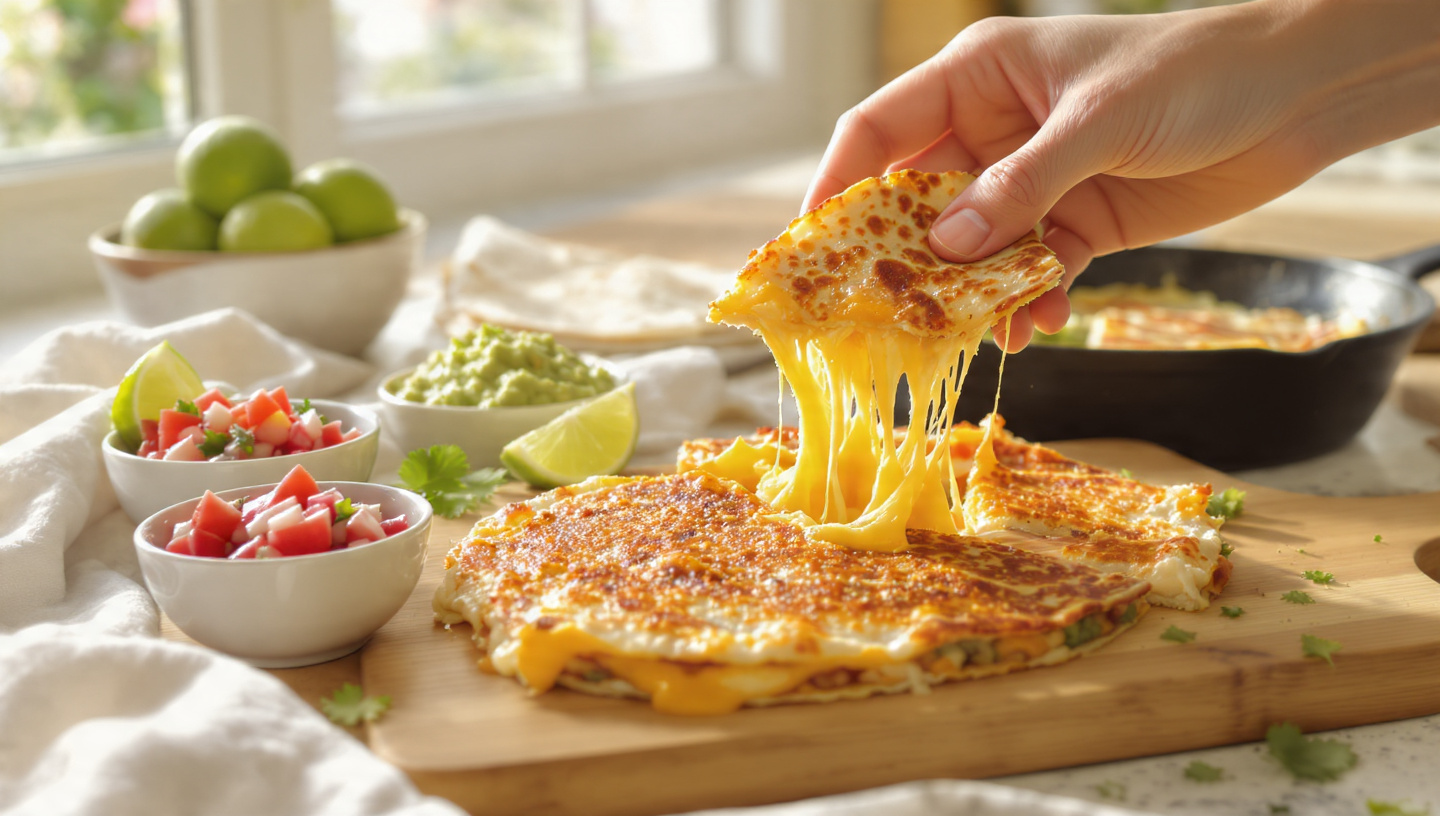
So quesadillas are the dinner I make more than any other single recipe across the whole summer, and I want to be completely upfront about that because I think it’s worth knowing. Fifteen years of professional cooking, a full pantry of techniques and recipes, and I make quesadillas at least twice a week from June through August. Not because I’ve run out of ideas. Because they’re genuinely one of the most useful, fast, flexible, crowd-pleasing things a home cook can make, and peak summer produce makes them genuinely exciting rather than just convenient, you know?
Here’s the thing about quesadillas that I think gets underestimated—the technique is dead simple, but getting it right makes a dramatic difference in the result. The difference between a pale, floppy, sad quesadilla and a golden, crispy, perfectly melted quesadilla is entirely about pan temperature and cheese quality. Medium-high heat, a dry pan or just a whisper of butter, the right cheese that melts properly, and the patience to leave it alone for two to three minutes per side. That’s the whole technique. Master it once, and every variation in this article comes out right, you know?
These eight quesadillas cover the full summer range—fast weeknight dinners, weekend lunch situations, kid-friendly classics, and a few grown-up versions that justify making quesadillas for adults who might be skeptical about whether quesadillas constitute a real dinner. They do. Every single one of these does. I can prove it with the clean plates in our kitchen every week, you know?
The Quesadilla Master Technique—Learn This Once, Use It Forever
Before the eight specific recipes, four minutes on a technique that applies to every single one of them.
The pan. Your largest non-stick skillet or well-seasoned cast iron. Preheat the oven to medium-high heat for at least two minutes before the tortilla goes in. A cold pan produces a cooked-through but pale, soft quesadilla. A hot pan produces a golden, crispy, slightly charred quesadilla with better flavor and better texture. The pan temperature is everything, you know?
The fat situation. Here’s where I’ll tell you something slightly counterintuitive—a completely dry pan actually works fine for quesadillas and produces a slightly crispier result than a buttered pan. A tiny amount of butter—I mean tiny, half a teaspoon wiped across the surface—produces a richer, slightly more golden result. Both are good. A lot of butter produces a greasy quesadilla. A lot of oil is worse. Less is more, you know?
The cheese. Freshly shredded cheese melts dramatically better than pre-shredded bags. Pre-shredded cheese contains anti-caking agents that interfere with melting and produce a grainy, slightly gummy result. Two minutes of grating on a box grater produces a quesadilla where the cheese melts into a cohesive, smooth, pull-apart situation that makes everyone at the table happy. Use Monterey Jack, pepper jack, Oaxaca, or a good mozzarella for the best melt. Cheddar is good, but it melts more slowly. Do not use parmesan alone—it doesn’t melt the right way for a quesadilla, you know?
The fold. Cheese on one half of the tortilla. Fillings on the cheese. More cheese on top of the fillings. Fold the bare half over. The double cheese layer—cheese both under and over the fillings—is what holds everything together and distributes the melt evenly. One layer of cheese and a pile of fillings on one side produces uneven melting and fillings that fall out. Two thin layers of cheese with the fillings sandwiched between them produce a quesadilla that holds together cleanly when you cut it, you know?
The cook. Two to three minutes on the first side without touching it—let the cheese start to melt and let the bottom develop a proper golden crust. Flip carefully using a wide spatula and cook another two minutes on the second side. Press gently with the spatula once or twice on the second side to encourage the cheese to melt fully and the layers to adhere. The quesadilla is done when both sides are golden, the cheese is fully melted, and it feels firm and unified when you press it lightly rather than soft and separate.
The rest. Slide it onto a cutting board and wait sixty seconds before cutting. The cheese needs this brief moment to set from fully melted to cohesive—cutting immediately produces a molten cheese waterfall situation. Sixty seconds, then cut into wedges with a sharp knife or pizza cutter.
1. The Classic Cheese—Master This First
So the first quesadilla everyone should make is the simplest one. No fillings. Just cheese. Because if you can’t make a perfect cheese quesadilla, adding fillings won’t fix the underlying technique issue. And once you can make a perfect cheese quesadilla, you understand exactly what you’re building on with every variation that follows, you know?
What you need (serves 1 to 2): One large flour tortilla, half a cup of freshly shredded Monterey Jack or Oaxaca cheese, and half a teaspoon of butter for the pan—optional.
Here’s how it goes: Heat the pan over medium-high heat for two minutes. Add the butter if using and let it foam and subside. Lay the tortilla flat in the pan. Scatter the cheese evenly across one half of the tortilla. Fold the bread in half over the cheese. Cook two to three minutes without moving it—peek at the bottom by lifting one edge with a spatula and checking for golden color. Flip, cook two more minutes, and press gently. Reserve for sixty seconds, cut into three wedges.
This is the template. Everything else is just building on this, you know?
Julia’s real tip: The single most useful quesadilla tip I have—warm your tortilla in the dry pan for fifteen seconds before adding any cheese or fillings. A slightly warmed tortilla is more pliable and folds without cracking. A cold tortilla from the fridge often cracks when you fold it, which breaks the seal and lets the cheese fall out. Fifteen seconds on both sides, then build your quesadilla. This small step prevents the frustrating crack-and-spill situation, you know?
Family verdict: Jake’s requested lunch every single summer day when he’s home. He eats his plain with sour cream for dipping and has done so for four consecutive summers without requesting any variation whatsoever. I respect the commitment to a position.
2. Summer Corn & Black Bean
Here’s the vegetarian quesadilla that tastes like July itself—sweet fresh corn, hearty black beans, melted pepper jack with a little heat, and a finish of fresh cilantro and lime. This is the one that convinced Dan that a quesadilla without meat can be a completely satisfying dinner, which represents a meaningful shift in his worldview, you know?
What you need (serves 2 to 4): 4 large flour tortillas Two cups of freshly shredded pepper jack cheese 1 cup of fresh corn kernels—off the cob if you can, frozen thawed works fine. One can of black beans, drained and rinsed. Half a cup of fresh salsa or pico de gallo o Half. A teaspoon of cumin. Half.a teaspoon of smoked paprika, Salt and pepper, fresh cilantro,o and lime wedges to serve
Here’s how it goes: Mix the corn, black beans, salsa, cumin, and smoked paprika together in a Saltbowl with a pinch of Salt. This is your filling, and it takes about two minutes to assemble.
Build each quesadilla with the double-cheese method—cheese on half the tortilla, a generous spoonful of the corn and bean mixture spread evenly over the cheese, more cheese on top of the filling, fold, and cook as described in the master technique.
Serve with extra sour cream, salsa, sliced avocado, and lime wedges. Scatter fresh cilantro over the cut wedges right before serving.
Julia’s real tip: Don’t overfill with the corn and bean mixture—a thin, even layer is what you want. Too much filling prevents the cheese from melting fully across the whole quesadilla and makes it difficult to fold without everything falling out. Less filling, more evenly distributed, every time, you know?
Family verdict: Maya’s go-to lunch quesadilla all summer. She adds sliced jalapeño to hers and eats it with what she calls “the full setup”—sour cream, guacamole, and salsa—all three alongside. Jake eats his with the beans and corn removed and the cheese remaining, which means he’s eating a cheese quesadilla that briefly met a vegetable, and I’ve decided that counts.
3. Chicken, Avocado & Chipotle
Here’s the quesadilla that I make the most for actual dinners as opposed to quick lunches—the combination of tender chicken, creamy avocado, smoky chipotle, and melted cheese is seriously satisfying and genuinely one of the better flavor combinations you can put between two tortillas, you know?
What you need (serves 2 to 4): 4 large flour tortillas T, two tablespoons of shredded Monterey Jack or cheddar O, and one and a half cups of cooked chicken, shredded—rotisserie is perfect here. One ripe avocado, sliced thin, half a chipotle pepper in adobo sauce, finely minced, plus a teaspoon of the adobo sauce—this is the flavoring that makes the whole thing, so don’t skip it. Half a cup of shredded purple cabbage for crunch, Salt,lt, and pepper
Here’s how it goes: Toss the shredded chicken with the minced chipotle and adSaltsauce and a pinch ofSalt until the chicken is evenly coated in that deep smoky red sauce. Build the quesadillas with cheese on half, then a layer of the chipotle chicken, a few slices of avocado placed flat, a small handful of shredded cabbage, and more cheese on top; fold and cook.
The cabbage adds a crunch that contrasts beautifully with the soft avocado and the melted cheese—don’t skip it or replace it with something softer because that textural contrast is doing real work, you know?
Julia’s real tip: Chipotle in adobo comes in cans that are larger than you need for one recipe. Transfer the unused portion to a small jar and refrigerate—it keeps for weeks and is one of those ingredients that improves almost any chicken, egg, or bean dish you add it to. It’s been one of my most-used summer pantry staples for years, you know?
Family verdict: Dan’s personal favorite quesadilla and the version he makes himself when he’s handling lunch on weekends, which he does with genuine pride and appropriate confidence. Maya eats this with extra chipotle sauce on the side. Jake eats the chicken and cheese parts specifically and builds his own cheese version alongside.
4. Shrimp, Corn & Lime
So here’s the quesadilla that tastes most extravagant for the effort involved—seasoned shrimp cooked in two minutes, fresh corn, lime zest, melted cheese, and the cilantro lime crema from the summer bowl article drizzled over the cut wedges. It comes together in about twelve minutes total and tastes like something you’d order at a Mexican restaurant, you know?
What you need (serves 2 to 4): 4 large flour tortillas Two cups of shredded Monterey Jack cheese 12 large shrimp, peeled and deveined, tails removed—cut each into two or three pieces so they fit in the quesadilla 1 cup of fresh or frozen corn kernels Zest of one lime Half a teaspoon of chili powder Half a teaspoon of garlic powder Salt and pepper Cilantro lime crema or just sour cream mixed with lime juice and cilantro
Here’s how it goes: Season the shrimp pieces with chili powder, garlic powder, salt, and lime zest. Cook in a hot pan with a splash of oil for two minutes, stirring once, until just pink and cooked through. Don’t cook them further—they’ll finish cooking slightly inside the quesadilla. Remove from heat.
Build the quesadillas with the double cheese method, adding the shrimp pieces and corn kernels as the filling. Cook as described. Serve immediately with the cilantro lime crema drizzled over the cut wedges and lime wedges alongside. These don’t wait around—shrimp quesadillas are best eaten the moment they come off the pan, you know?
Julia’s real tip: Cut the shrimp into pieces rather than using them whole. Whole large shrimp in a quesadilla creates uneven thickness that makes it difficult to fold cleanly and causes the cheese to melt unevenly across the surface. Bite-sized pieces are distributed evenly and ensure every wedge has some shrimp, every bite has some shrimp, you know?
Family verdict: Maya declared this “elevated quesadilla,” which I took as a real compliment. Dan ate three full quesadillas’ worth of wedges and then stood at the pan looking hopeful. Jake would not try the shrimp version, which I fully accept, and had his cheese quesadilla alongside as usual.
5. Breakfast Quesadilla—Eggs, Bacon & Cheddar
So here’s the quesadilla that works for any meal of the day, not just breakfast—it’s fast enough for a weeknight dinner and satisfying enough for a weekend brunch. It’s the quesadilla variation that both kids eat with complete enthusiasm, regardless of what time it appears on the table, you know? Scrambled eggs, crispy bacon, and sharp cheddar in a golden tortilla. It’s simple, it’s good, and it requires almost nothing.
What you need (serves 2 to 4): 4 large flour tortillas, Two cups of freshly shredded sharp chedda,r 4 large eggs, scrambled until just set—slightly underdone, they’ll finish cooking inside the quesadilla, 6 strips of bacon, cooked until crispy and roughly crumble,d 2 tablespoons of cream cheese—optional but adds a richness and creaminess that’s worth it. Hot sauce or salsa for serving
Here’s how it goes: Scramble the eggs until they’re just barely set—wet and soft, not dry. They’ll continue cooking inside the Saltsadilla. Season with salt and pepper. Build the quesadillas with cheddar on half, then a layer of the soft scrambled eggs, scattered bacon crumbles, small spoonfuls of cream cheese if using, and more cheddar on top; fold and cook.
The cream cheese melts into little pockets of richness throughout the quesadilla and makes it considerably more interesting than a standard egg and cheese situation. It’s a small addition that makes a real difference, you know?
Julia’s real tip: Cook the eggs to about seventy percent done before they go in the quesadilla—they look underdone when you take them off the heat, and that’s exactly right. The residual heat from the pan and the closed quesadilla finishes them to the perfect soft set during the two minutes of cooking. Fully cooked eggs in a quesadilla become rubbery and dry. Seventy percent is the target, you know?
Family verdict: Jake’s most enthusiastically received quesadilla variation and the only one he ever asks for by description—”the egg and bacon one.” He eats it for dinner with genuine delight. Dan makes this for himself on Saturday mornings now. Maya adds hot sauce to hers and considers it her best breakfast option.
6. Caprese Style—Fresh Mozzarella, Tomato & Basil
Here’s the quesadilla that takes the simplest summer flavor combination and puts it between two tortillas—fresh mozzarella that melts beautifully, ripe summer tomatoes, and fresh basil that perfumes the whole thing as it wilts slightly against the warm cheese. A drizzle of balsamic glaze over the cut wedges makes the whole thing taste like an Italian appetizer that somehow became a quesadilla, you know?
What you need (serves 2): 2 large flour tortillas,s 6 ounces of fresh mozzarella, thinly sliced, ed 2 ripe summer tomatoes, thinly sliced and patte, a big handful of fresh basil leaves, balsamic glaze for finishing, flaky sea salt and cracked, epper, and a very thin drizzle of olive oil inside before folding
Here’s how it goes: This one requires slightly more attention to assembly because the tomatoes release moisture during cooking and can make the quesadilla soggy if they’re not properly patted dry. Slice the tomatoes thinly, lay them on paper towels, press another paper towel on top, and let them dry for at least five minutes before assembling.
Build with mozzarella slices on half the tortilla—not shredded here, sliced, because fresh mozzarella slices melt differently than shredded cheese and create those beautiful melted pools. Lay the dried tomato slices over the mozzarella in a single layer. Scatter fresh basil over the tomatoes. A tiny drizzle of olive oil. More mozzarella slices on top. Fold carefully and cook over medium heat—slightly lower than the other quesadillas because fresh mozzarella needs a little more time to melt fully without the exterior burning.
Serve immediately with balsamic glaze drizzled generously over the cut wedge. Salt a scatter of flaky salt.
Julia’s real tip: Medium heat for this one, not medium-high. Fresh mozzarella has a higher moisture content than shredded cheese and needs more gentle heat to melt evenly without the tortilla getting too dark before the cheese is fully melted. The slightly lower heat and slightly longer cook time produce a perfectly melted result, you know?
Family verdict: This is the quesadilla Maya makes when she has friends over and wants to look like she knows what she’s doing in the kitchen. She presents the balsamic glaze drizzle with real flair and accepts the compliments graciously. Jake will eat this if I describe it as “pizza quesadilla” and he doesn’t examine the contents too carefully.
7. Pulled Chicken BBQ Quesadilla
Here’s the leftover transformation quesadilla—the one I make the day after any crockpot BBQ chicken situation to use up what remains. Pulled BBQ chicken, caramelized onions, pepper jack cheese, and a thin layer of BBQ sauce inside the tortilla before everything else goes in. It’s a twenty-minute dinner from leftover to table, and it tastes considerably better than its reheated leftover origins suggest, you know?
What you need (serves 2 to 4): 4 large flour tortillas, 2 cups of shredded pepper jack cheese, 1.5 cups of leftover BBQ pulle1/2 ken Half a cup of your 1/2auce Half a red onion, thinly sliced and cooked in a little butter over medium heat for eight to ten minutes until soft and lightly caramelized.lized
Here’s how it goes: Spread a thin layer of BBQ sauce directly on the inside of the tortilla before anything else—just a thin scrape, like buttering bread, not a thick layer, which would make everything wet and soggy. Add cheese on the sauced half, then a generous layer of pulled chicken, then the caramelized onions, then more cheese, fold, and cook.
The caramelized onion is the upgrade that makes leftover quesadillas taste intentional rather than accidental. Eight minutes of caramelizing time on the front end produces an onion that’s sweet and slightly jammy and adds a depth to the pulled chicken that a raw onion can’t, you know?
Julia’s real tip: The thin BBQ sauce spread on the tortilla is important—it seasons the whole quesadilla from the inside and adds a layer of flavor that straight pulled chicken alone doesn’t provide. But “thin” is the operative word. More than a thin scrape, and the quesadilla gets soggy, and the bottom burns before the cheese melts. A whisper of BBQ sauce, you know?
Family verdict: Dan calls these “better than the original dinner,” which I find slightly insulting and very funny simultaneously. Maya eats them with extra BBQ sauce on the side. Jake picks the chicken out and eats it separately, then eats the remaining cheese quesadilla. Same outcome, different methodology; I accept it.
8. Summer Veggie—Zucchini, Roasted Pepper & Goat Cheese
Here’s the most grown-up quesadilla on this list and the one I make when I want something that feels a little more considered than a standard weeknight dinner. Thin-sliced zucchini quickly sautéed until lightly golden, roasted red peppers from a jar, creamy goat cheese that melts into the filling most beautifully, and fresh herbs at the end. It tastes like something from a nice brunch spot and takes fifteen minutes, you know?
What you need (serves 2): 2 large flour tortillas One cup of shredded mozzarella—for the melt structure 2 ounces of goat cheese, crumbled—for the richness and tang 1 medium zucchini, thinly sliced into rounds Half a cup of jarred roasted red peppers, patted dry and roughly chopped 2 tablespoons of olive oil 1 clove Saltarlic, thinly slicedSaltt, pepper, and dried thyme Fresh basil to finish
Here’s how it goes: Heat the olive oil in a skillet over medium-high heat. Add the zucchini slices in a single layer and cook without moving for two to three minutes until golden on the bottom. Flip and add the garlic; cook one Salt minute. Season with salt, pepper, and thyme. Remove from heat.
Build the quesadillas with mozzarella on half the tortilla—the mozzarella provides the structural melt. Layer the sautéed zucchini over the mozzarella, then scatter the roasted red pepper pieces, then crumble the goat cheese over everything—it won’t melt completely, and that’s correct; you want slightly softened pockets of goat cheese throughout. Fold and cook over medium heat for the same reason as the Caprese version: gentle heat for a longer melt.
Finish with torn fresh basil scattered over the cut wedges.
Julia’s real tip: Pat the roasted peppers aggressively dry before adding them. Jarred roasted peppers carry a significant amount of brine and oil that will make your quesadilla soggy if you skip this step. Paper towels, firm pressing, thirty seconds. Dried peppers, crispy quesadilla, you know?
Family verdict: Dan ate this and immediately asked what was in it, which is his response to anything that tastes better than he expected from its description. Maya makes this her birthday lunch request every summer. It’s the quesadilla that made both of us realize that goat cheese in a quesadilla is one of those ideas that sounds odd until you taste it and then seems completely obvious, you know?
The Quick Dipping Sauce Guide
Now, no quesadilla article is complete without talking about the dipping situation, because the sauce you put alongside a quesadilla is half the experience. Here are the four I always have available.
Sour cream is the classic, and it’s classic for good reason—the cool, creamy tang against hot, crispy cheese is one of food’s genuinely great combinations. Keep a container in the fridge and put it on the table without overthinking it.
Guacamole or sliced avocado with lime and salt—every quesadilla is better with some form of avocado alongside it. This is a truth I will defend to the end.
Salsa or pico de gallo—the brightness and acidity cut through the richness of the melted cheese and make the whole eating experience feel fresher and lighter. Fresh pico specifically is worth the five minutes it takes to dice the tomatoes, onion, and cilantro, you know?
Cilantro lime crema—the one from the southwest salad article. Sour cream blended with lime juice, cilantro, garlic, and cumin. This is the sauce that turns a good quesadilla into an OH MY GOSH quesadilla, and I keep a batch in the fridge all summer specifically for this purpose, you know?
So eight quesadilla recipes prove the format is genuinely endlessly flexible and genuinely one of summer’s best quick meals. They take ten to fifteen minutes from start to table. They work for every meal of the day. They use peak summer ingredients beautifully. And they produce clean plates in our house with a consistency that very few other recipes can match.
The technique matters. The cheese matters. The pan temperature matters. Get those three things right and every variation you ever try will come out exactly the way you want it, you know?
You’ve absolutely got this. Now shred some cheese.
— Chef Julia











Discussion about this post