


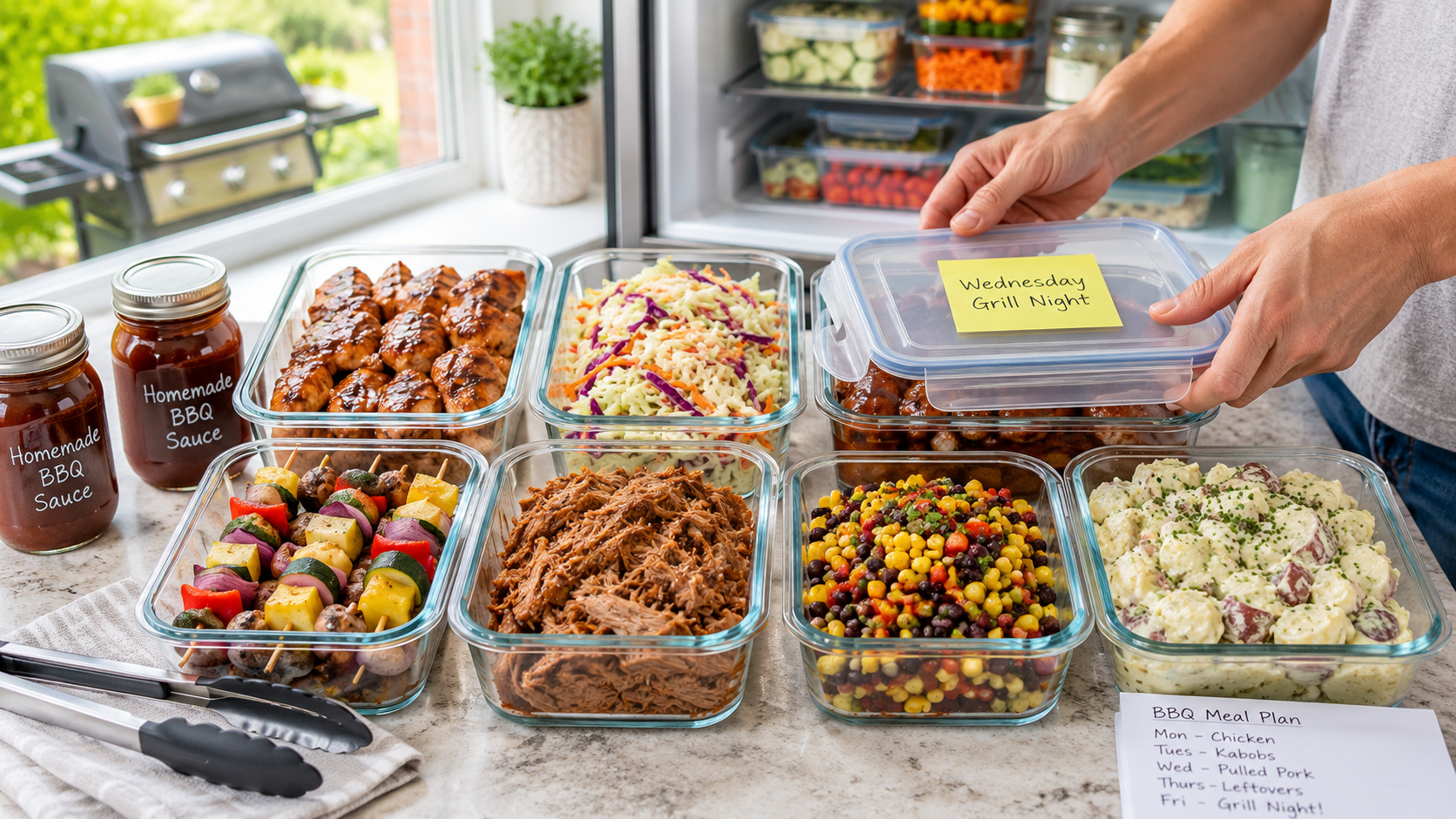
So here’s the situation that this article was born out of. It was the Friday before a long Fourth of July weekend,, and I had three cookouts on the calendar—Saturday at our place, Sunday at the neighbors’, and Monday at my sister-in-law’—threee cookouts in three days. I’m a professional cook with fifteen years of experience,, and even I stood in my kitchen on that Friday afternoon feeling slightly overwhelmed by the math of feeding that many people that many times in that short a window, you know?
Here’s the thing I figured out that weekend—BBQ meal prep is one of the highest-leverage things you can do in a summer kitchen. When you’re grilling and entertaining, you want to be present with your guests, not disappearing into the kitchen every forty-five minutes to make another side dish from scratch. The cook who preps on Friday has an easy, relaxed, genuinely fun Saturday cookout. The cook who preps nothing has a stressed, frantic Saturday morning and shows up to their own party exhausted before it even starts. I’ve been both of those people,, and I know firmly which one I prefer to be, you know?
This is the complete summer BBQ meal prep guide—proteins that marinate ahead, sides that get better overnight, sauces and condiments that live in the fridge all week, and the sequencing strategy that makes a whole weekend of BBQ feel completely manageable instead of overwhelming.
The BBQ Meal Prep Mindset — What We’re Actually Doing
Before the specific recipes, let me be clear about what BBQ meal prep is and isn’t. It isn’t making everything fully cooked and then reheating it on the day—most BBQ food doesn’t reheat wel,l, and nothing sad comes off a grill that was great two days ago. What it doing ising everything except the actual grilling in advance and marinating the proteins. Making the sides that improve with time. Prepping the vegetables for skewers. Mixing the dry rubs. Making the sauces and dressings and setting up the condiment situation. All of that can happen Thursday evening or Friday morning, and then Saturday or Sunday, you’re just lighting the grill and enjoying your guests, you know?
The goal is arriving at grill time with everything ready to g,o so the actual cooking is fast, focused, and confident rather than chaotic. That’s the whole thing.
Proteins—What to Marinate Ahead
The two-day marinade rule. Most BBQ proteins benefit from twenty-four to forty-eight hours in a marinade. The exception is anything with a lot of acid—citrus-heavy marinades start to chemically cook proteins after about four hours and produce a mushy texture. Soy sauce, oil, and herb-based marinades can go the full forty-eight hours and produce more flavorful, deeply seasoned results than a same-day marinade. Plan your marinade timing based on what’s in it, you know?
Three marinades worth having in the fridge all weekend:
The all-purpose BBQ marinade is half a cup of olive oil, a quarter cup of soy sauce, three tablespoons of Worcestershire sauce, two tablespoons of brown sugar, four minced garlic cloves, one teaspoon each of smoked paprika and onion powder, sal,t, and cracked pepper. This works on chicken, pork chops, skirt steak, and even thick-cut vegetables. Make a double batch and keep it in a jar. It holds for a week, and you’ll use all of it.
The lemon herb marinade is a third of a cup of olive oil, ju,ice and zest of two lemons, four minced garlic cloves, two tablespoons each of fresh thyme and rosemary, one teaspoon of Dijon, salt, and pepper. Perfect for chicken thighs, salmon, shrimp, and lamb chops. This one doesn’t do as well past twenty-four hours because of the lemon acid, so plan accordingly, you know?
The Asian-inspired marinade—a quarter cup of soy sauce, two tablespoons each of sesame oil, honey, and rice vinegar, three garlic cloves minced, a tablespoon of fresh ginger, and half a teaspoon of red pepper flakes. Works on everything—chicken, flank steak, pork tenderloin, large shrimp, even firm tofu. This one handles forty-eight hours beautifully.
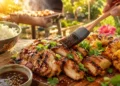
How to actually do the marinade prep: Put your proteins in labeled zip-lock bags—one protein per bag, one marinade per bag. Squeeze out the air, seal tight, and lay flat in the fridge. Label with the protein, the marinade, and the date you need to grill it. Stack the bags like files in the fridge. On grill day, pull the bag out, let the protein come to room temperature for twenty to thirty minutes, and grill. The whole setup takes about fifteen minutes on prep day and saves you thirty to forty minutes of marinade prep on grill day, you know?
Make-Ahead Sides—The Big Five
1. Make-ahead coleslaw (the overnight version)
I’ve talked about this coleslaw in multiple articles, and I’ll mention it here specifically in the BBQ context because it is genuinely the most make-ahead-friendly side in the BBQ arsenal. Made the night before, the cabbage softens just enough, the dressing absorbs completely, and the whole thing tastes significantly better than same-day coleslaw. For a, BBQ you cannot go wrong serving this—it holds up outside in the heat better than almost anything else on the table, it goes with every protein on the grill, and making it the day before means one completely handled side dish on grill day.
Shred one head each of green and purple cabbage plus three grated carrots. Whisk together half a cup of mayonnaise, three tablespoons of apple cider vinegar, one tablespoon of sugar, one teaspoon of celery salt, salt, and pepper. Toss everything together, cover, and refrigerate overnight. Done until serving time, you know?
2. Make-ahead BBQ baked beans (two days ahead)
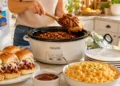
These are the baked beans from the summer cookout sides article, and I’ll tell you again here—they are dramatically better made two days ahead. The flavors develop in the fridge overnight, and by d,ay two they’re something genuinely special. Render six strips of chopped bacon, cook one diced onion in the fat, add three cans of drained navy beans, half a cup of ketchup, a quarter cup of brown sugar, two tablespoons of Worcestershire sauce, one tablespoon of yellow mustard, and one teaspoon of smoked paprika. Into a 325°F oven uncovered for two to two and a half hours. Cool, refrigerate. Reheat at the cookout in a cast iron pot on the grill edge or in the oven—twenty minutes with a splash of water, you know?
3. Corn and black bean salsa (one day ahead)
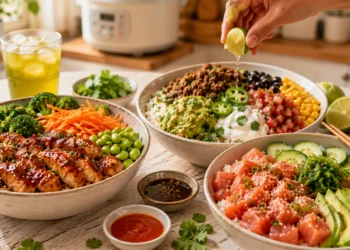
This is the no-cook side that does double duty as a salsa for chips and a salad alongside the grilled proteins. Cut kernels from four ears of fresh corn, add two cans of drained black beans, two cups of halved cherry tomatoes, one diced red bell pepper, half a diced red onion, one minced jalapeño, juice of two limes, two tablespoons of olive oil, a teaspoon of cumin, half a teaspoon of chili powder, salt, and a big handful of fresh cilantro. Toss and refrigerate. The flavors meld beautifully overnight, and it’s completely ready to go. Add the avocado right before serving—never the day before, you know?
4. Pasta salad (one day ahead, gets better overnight)
The cold pasta salad from its dedicated article, made the night before and refrigerated overnight—this is the single most useful make-ahead BBQ side in terms of how much it improves with time and how well it travels and holds up. Greek-style with rotini, cherry tomatoes, cucumber, Kalamata olives, pepperoncini, feta, and the red wine vinaigrette. Make it, refrigerate it, taste, and adjust right before serving, and it’s genuinely better on day two than day one. This is the side that always empties first at our cookouts and requires essentially zero day-of effort, you know?
5. Watermelon feta mint salad (assemble day-of, prep ahead)
The watermelon gets cubed the morning of the cookout and kept in a covered container in the fridge. The feta gets crumbled and kept separately. The mint gets washed and kept in a damp paper towel. The lime juice gets squeezed into a small jar. Thirty seconds before it goes to the table, you assemble the platter, drizzle, and finish. The appearance of complete freshness with all the prep done hours earlier—this is the move, you know?
Sauces, Condiments & Rubs — The Make-Ahead Infrastructure
So here’s the part of BBQ meal prep that most people skip, and it’s where a lot of the real efficiency lives. Sauces and condiments made ahead and kept in jars in the fridge mean that everything that comes off the grill has somewhere delicious to go immed,iately without anyone scrambling at the last minute.
House BBQ sauce—makes about two cups, keeps two weeks: One cup of ketchup, a quarter cup of apple cider vinegar, three tablespoons of brown sugar, two tablespoons of Worcestershire sauce, one tablespoon of yellow mustard, one teaspoon each of smoked paprika, garlic powder, and onion powder, and a pinch of cayenne, salt, and pepper. Whisk everything together in a small saucepan, bring to a gentle simmer over medium heat, and cook for ten minutes, stirring occasionally, until slightly thickened and deeply flavored. Cool and store in a jar. This is genuinely better than most bottled BBQ sauce, and it costs almost nothing to make, you know?
Cilantro lime crema—makes about one cup, keeps five days: Half a cup of sour cream, a quarter cup of mayonnaise, juice of two limes and zest of one, one clove of garlic grated on a microplane, a big handful of fresh cilantro blended smooth, half a teaspoon of cumin, and salt. Blend completely smooth. This goes on grilled corn, on pulled chicken sliders, on the southwest bowl, on fish tacos, and directly on everything else that comes off the grill. Make a double batch and put it in a squeeze bottle for easy service at the cookout, you know?
Charred jalapeño salsa verde—makes about one and a half cups, keeps four days: Char four tomatillos (husked), two jalapeños, and half an onion directly on the grill or under the broiler until blackened in spots. Let cool slightly, then blend with two garlic cloves, a big handful of cilantro, juice of one lime, salt, and a splash of water until smooth but with a little texture remaining. Taste it—it should be bright, slightly smoky, and boldly seasoned. This is the sauce that goes with the salsa verde crockpot chicken, with grilled chicken thighs, with carnitas, with anything that needs a bright green sauce. It’s also OH MY GOSH good as a chip dip while everything else is cooking, you know?
Two-hour quick-pickled red onions—kekeepwo weeks: Slice two red onions very thin. Combine with tthree-quartersof a cup of red wine vinegar, two tablespoons of sugar, and one teaspoon of salt in a jar. Press the onions down so they’re submerged. They’ll turn bright pink within two hours and be perfectly pickled. These go on pulled chicken sliders, on grilled chicken bowls, on tacos, and on burgers—they add a pop of color and sharp brightness to everything they touch, and they require virtually no effort. Make a big jar at the start of the summer and replenish as needed, you know?
Universal dry rub—keeps indefinitely: three tablespoons of smoked paprika, two tablespoons of brown sugar, one tablespoon each of garlic powder, onion powder, and kosher salt, two teaspoons of black pepper, one teaspoon of cayenne, and one teaspoon of dry mustard powder. Mix and store in a small jar. This dry rub works on chicken, pork ribs, pork shoulder, brisket, and even thick vegetables like portobello mushrooms. Having it pre-mixed means rubbing a protein before grilling takes thirty seconds instead of five minutes of measuring, and that kind of small efficiency adds up across a whole weekend of cooking, you know?
The Complete BBQ Weekend Prep Schedule
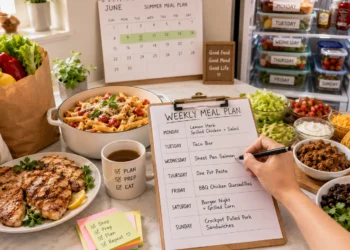
So here’s exactly how I sequence a full BBQ weekend prep to make the actual events feel effortless.
Thursday evening—about forty-five minutes: Make the dry rub and store it. Make the house BBQ sauce and let it cool while you do other things. Make the universal BBQ marinade and the Asian-inspired marinade—both go in jars. Put the proteins for Saturday’s cookout into their marinade bags. Label everything. Make the ququick-picklednions—they need at least two hours, but overnight is better.
Friday morning—about thirty minutes: Make the overnight coleslaw. Start the baked beans—these need two hours in the oven, but it’s hands-off time. While the beans are in the oven, make the cilantro lime crema and the charred jalapeño salsa verde. When the beans are done, cool and refrigerate.
Friday evening—about twenty minutes: Make the pasta salad—it needs to be left overnight in the fridge anyway. Cube the watermelon and keep it covered. Pre-crumb the feta. Make the corn and black bean salsa.
Saturday morning of the cookout—about fifteen minutes: Pull everything from the fridge and do a quick inventory. Taste the coleslaw—it’ll need a pinch more salt and maybe a drizzle of oil after the overnight rest. Put the pasta salad in a serving bowl and taste it. Get the beans into whatever vessel they’re reheating in. Cube the watermelon if it wasn’t done. Set up the condiment station—BBQ sauce, crema, salsa verde, and pickled onions, all in their serving vessels. Pull the marinated proteins out to come to room temperature.
At the cookout—just cooking, no prep: Light the grill. Everything else is done. You’re just cooking the proteins and reheating the beans. You have about four hours of prep invested across two days, and none of it is happening while guests are arriving and the grill is going and someone needs a drink and the kids are doing something that requires your attention. That exchange is the whole value of BBQ meal prep, you know?
The Proteins That Grill Best After Marinating Ahead
So let me be specific about which proteins benefit most from advanced marinade work, because not everything improves the same way.
Chicken thighs—best at twenty-four hours. The overnight marinade penetrates the meat significantly deeper than a same-day marinade and produces chicken that’s seasoned all the way through rather than just on the surface. Forty-eight hours works too, but twenty-four is the sweet spot.
Flank steak and skirt steak are best at six to twelve hours. These thin cuts actually can go mushy past twenty-four hours in an acidic marinade. Six to twelve hours in the soy-based or oil-based marinade is plenty and produces beautifully flavored, tender steak.
Pork tenderloin—best at twelve to twenty-four hours. Pork absorbs flavors beautifully from a longer marinade, and the lemon herb or Asian-inspired version produces a pork tenderloin that’s genuinely impressive off the grill with minimal technique required.
Large shrimp—four hours maximum. Shrimp is delicate, and the marinade does its work fast. Four hours in any of the marinades is plenty—more than that, and the acid starts affecting the texture. Marinate in the morning, grill that evening, you know?
Salmon—two to four hours only. Same principle as shrimp—the fish proteins are delicate, and the acid in any marinade starts changing them quickly. Morning is perfect; the night before is too long.
Setting Up the Cookout Condiment Station
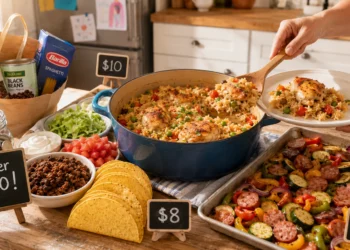
Here’s the setup detail that makes a BBQ feel genuinely well-run and impressive without any extra cooking—a proper condiment station. Small bowls or mason jars with the house BBQ sauce, the cilantro lime crema, the charred jalapeño salsa verde, the pickled red onions, sliced jalapeños, Dijon mustard, and whatever fresh herbs you have. A little card or nothing—people find their way. When everything a guest could want is laid ou,d labele,d and accessible before anyone asks for it, the whole cookout has a different energy. Considered and abundant rather than scrambled and last-minute, you know?
Every jar and bowl in that condiment station was made in the two days before the cookout. None of it requires day-of work. The whole station is assembled in four minutes from the fridge. Those four minutes represent hours of prep spread across two quiet evenings,, and it completely transforms the experience of hosting a summer BBQ, you know?
Chef’s Notes — What This System Actually Changed
I’ll be real with you—before I developed this BBQ meal prep habit, I used to show up to my own cookouts already tired. I’d be cooking sides while managing the gril,l while greeting guest,s while keeping track of where the kids were, and by the time the food was ready,, I was too frazzactually to enjoy the party I’d been planning all weekweek.
The summer I committed to the full Friday prep system was the summer I actually sat down at my own cookout. I sat in a lawn chair with a cold drink and talked to my neighbors while the chicken was on the grill because everything else was already done. Dan noticed and asked what was different. When I explained the prep system, he said, “We should do this every year,” which, coming from a man who eats the food and observes the process without participating in either prep or dishes, is a deeply validating endorsement.
Jake ate three plates of food at that cookout and fell asleep in the car on the way home, which is his personal endorsement of any cooking situation. Maya helped me assemble the condiment station and took genuine pride in the presentation. The neighbors stayed until nine PM. It was the best backyard cookout we’ve hosted.
It was also the easiest one I’ve ever cooked.
That right there is everything a good meal prep system is supposed to do. You’ve absolutely got this. Start Thursday evening, and by Saturda,y you’ll wonder why you ever did it any other way.
— Chef Julia








Discussion about this post