


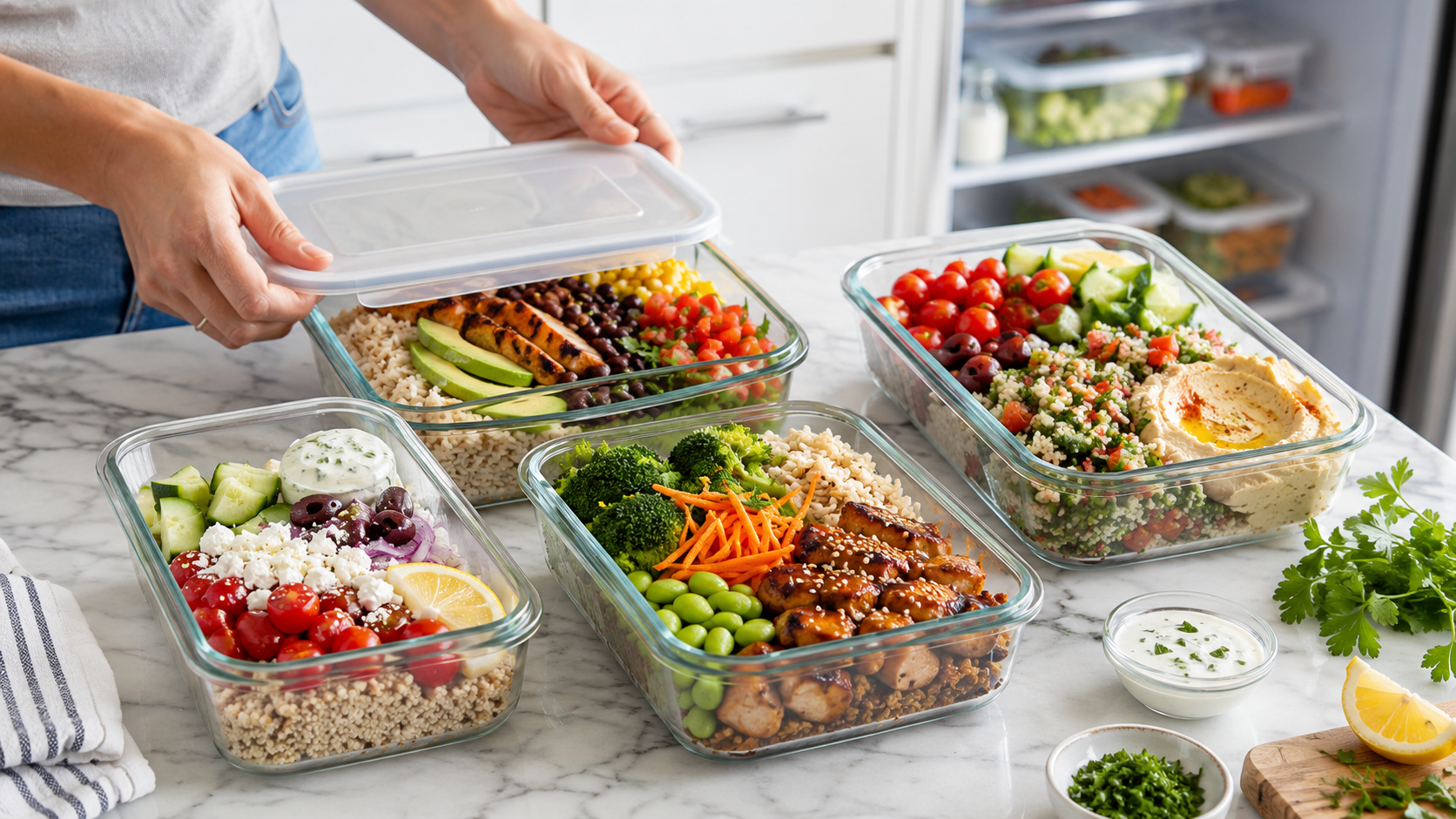
So the summer I finally committed to Sunday meal prep was the summer everything changed for our weeknights. I’m talking about the difference between standing in the kitchen at six-fifteen on a Wednesday, genuinely stressed about what’s for dinner, and opening the fridge to find four containers of prepped ingredients that need assembling into a bowl. That second scenario took me embarrassingly long to build as a habit, considering I’ve been cooking professionally for fifteen years, you know?
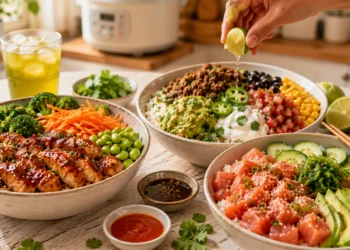
Here’s the thing about meal prep bowls that I think people get wrong when they try to start—they prep entire finished meals, which means by Wednesday, the food is either soggy or boring or both. The smarter approach, and the one that actually stuck for me, is prepping the components separately. Grains in one container. Roasted or grilled proteins in another. Washed and prepped vegetables in a third. Dressings in little jars. Then every night of the week,k you build a bowl in about five minutes from the same set of ingredients, and because you’re combining things differently and using different dressings, it never feels like the same meal twice. That’s the whole system, you know?
These five complete summer meal prep bowls—with full Sunday prep instructions and weeknight assembly guides—are the ones I’ve been running through our kitchen rotation all summer. They work for adults, and they work for feeding kids who think they have opinions about bowls. I know this from real-world testing with two real-world children.
The Sunday Prep System That Makes This Work
Before the actual bowls, twenty minutes on the Sunday prep approach that make everything else possible.
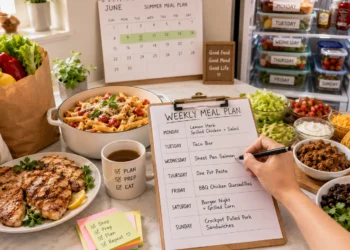
I spend about ninety minutes on Sunday doing what I call “flavor foundation prep”—cooking a big batch of grains, roasting one sheet pan of vegetables, cooking two proteins, washing all the produce for the week, and making two to three dressings. That sounds like a lot, but most of it is hands-off oven time. The actual active work is maybe forty-five minutes.
Here’s how I organise it so nothing feels overwhelming. The oven goes on first at 400°F. Whatever’s getting roasted goes on a sheet pan and into the oven. While that’s happening, I’m cooking grains on the stovetop and prepping raw vegetables at the counter. The proteins cook last, either on the stovetop or on the grill if it’s already going from the weekend. Dressings take three minutes each. By the time the oven timer goes off, everything else is usually done.
The storage rule: grains in large mason jars or containers, roasted vegetables in a flat container, raw vegetables and greens washed and stored with a paper towel to absorb moisture, proteins in their own containers separate from everything else, and dressings in small mason jars. Everything lasts four to five days in the fridge. Label with a piece of tape and a marker—I know this sounds unnecessary, but I’ve opened enough mystery containers in my own fridge at six PM to tell you that labelling is worth the three extra seconds, you know?
Bowl 1: Mediterranean Chicken & Farro Bowl
This is the bowl that started our whole meal prep bowl habit three summers ago. I’d been making individual Mediterranean-style lunches all week and realised I was doing the same five prep steps every day when I could have done them once on Sunday. The farro is nutty and satisfying in a way that rice isn’t, and it holds up beautifully in the fridge without getting mushy, which matters a lot for a prep that needs to last four days, you know?
Sunday prep — the components:
For the farro: Cook one and a half cups of dry farro according to package directions—usually about thirty minutes in salted water. Drain, spread on a sheet pan to cool quickly, then store in a container with a drizzle of olive oil to prevent sticking.
For the chicken: Season four boneless, skinless chicken thighs generously with olive oil, lemon zest, dried oregano, garlic powder, smoked paprika, salt, and pepper. Bake at 400°F for twenty-five minutes or grill until cooked through. Let cool completely, then slice thin and refrigerate. Cold chicken sliced the same day it’s cooked has the best texture for bowls—not dried out, not rubbery, just right.
For the roasted vegetables: Toss one diced zucchini, one diced red bell pepper, and one cup of cherry tomatoes with olive oil, salt, pepper, and dried Italian seasoning. Spread on a sheet pan and roast at 400°F for twenty to twenty-five minutes until tender and lightly caramelised—cool and store.
For the quick-pickled red onion: Slice one red onion very thin and combine with half a cup of red wine vinegar, two tablespoons of sugar, and a teaspoon of salt in a jar. Let sit at least thirty minutes—they’ll turn bright pink and become tangy and sweet. These keep in the fridge for two weeks and make everything better, you know?
For the lemon herb dressing, whisk together a quarter cup of olive oil, three tablespoons of red wine vinegar, one tablespoon of lemon juice, one teaspoon of Dijon, one teaspoon of dried oregano, half a teaspoon of garlic powder, salt, and pepper.
Prep-ahead items: half a cup of crumbled feta, a handful of Kalamata olives, fresh parsley, and a sliced cucumber when ready to serve.
Weeknight assembly—five minutes: base of farro, layer of roasted vegetables, sliced chicken over the top, a handful of olives and crumbled feta, a spoonful of pickled red onion, fresh cucumber, parsley, and a generous drizzle of the lemon herb dressing. Done.
Julia’s real tip: The pickled red onion is the element that makes this bowl taste fresh and bright even on day four of the week. The vinegar and sweet-tart flavour cut through the richness of everything else and kept the whole bowl from tasting like it was made four days ago. Make a jar of these every Sunday without exception, you know?
Family verdict: Dan requests this bowl by name. He eats it for lunch at his home office desk three times a week, and I consider that the highest meal prep endorsement possible. Maya adds extra feta to hers every time. Jake dismantles his into piles and eats each component separately in an order only he understands.
Bowl 2: Teriyaki Salmon & Brown Rice Bowl
Here’s the thing about this bowl — the teriyaki glaze takes three minutes to make, cooks onto the salmon in about eight minutes, and turns a basic weeknight protein into something that tastes completely intentional and restaurant-quality. Combined with nutty brown rice and fresh summer vegetables, this is the bowl that made both my kids stop asking “what’s for dinner” with a worried tone and start asking with genuine curiosity, you know?
Sunday prep — the components:
For the brown rice: Cook two cups of dry brown rice according to package instructions. Season lightly with salt and a tiny drizzle of sesame oil while still warm. Cool completely before storing.
For the teriyaki salmon: Whisk together a quarter cup of soy sauce, two tablespoons of honey, one tablespoon of rice vinegar, one teaspoon of sesame oil, two minced garlic cloves, and a teaspoon of fresh ginger. Reserve half for serving. Brush the remaining half over four salmon fillets and bake at 400°F for twelve to fourteen minutes until just cooked through and the glaze has caramelised. Cool completely and refrigerate.
For the edamame: Use frozen shelled edamame—thaw in the fridge overnight or microwave for two minutes. Season with a pinch of salt and sesame oil. Done.
For the quick cucumber: Slice two English cucumbers thin, toss with a tablespoon of rice vinegar, a teaspoon of sesame oil, and a pinch of sugar and salt. Refrigerate—they get better as they sit.
For the sesame-ginger dressing: Whisk two tablespoons of soy sauce, one tablespoon of rice vinegar, one tablespoon of sesame oil, one teaspoon of honey, half a teaspoon of fresh ginger, and one minced garlic clove together. This doubles as a dipping sauce and a drizzle.
Prep-ahead items: sliced avocado added day-of, toasted sesame seeds, thinly sliced green onions, and shredded purple cabbage.
Weeknight assembly—five minutes: Base of brown rice, flaked salmon over the top—break it into large pieces rather than keeping it whole; the texture is nicer in a bowl. Spoonful of edamame alongside cucumber slices, shredded cabbage, sliced avocado, green onions, toasted sesame seeds, and a drizzle of the sesame ginger dressing, plus any reserved teriyaki glaze.
Julia’s real tip: Flake the salmon into large chunks rather than small pieces for assembly. Large pieces have better texture, they look beautiful in the bowl, and they don’t get lost in the grain. The salmon should be a feature, not a background ingredient, you know?
Family verdict: OH MY GOSH, this bowl. Maya declared it her favourite weeknight dinner of the entire summer last year. Jake eats the salmon and the rice and the edamame and avoids the cabbage with practised precision, but the fact that he eats the salmon is an achievement I’m genuinely proud of. Dan eats this for both lunch and dinner on teriyaki salmon days without any apparent awareness that repetition might be a concern.
Bowl 3: Southwest Black Bean & Quinoa Bowl
So this is the fully plant-based bowl in the rotation, and it is absolutely not a compromise or a second-tier option—it’s the bowl that gets the most compliments from guests who try it, and the one I reach for on hot summer nights when I want something filling but not heavy. The combination of spiced black beans, fluffy quinoa, roasted corn, and that cilantro lime dressing is genuinely one of summer’s great flavour combinations, you know?
Sunday prep — the components:
For the quinoa: Cook one and a half cups of dry quinoa in three cups of salted water or vegetable broth for better flavour—bring to a boil, reduce heat, cover, and simmer fifteen minutes until all liquid is absorbed. Fluff with a fork, season with a pinch of cumin and salt, and let cool.
For the spiced black beans: Heat a splash of olive oil in a saucepan over medium heat. Add half a diced onion and cook for five minutes. Add two minced garlic cloves, one teaspoon each of cumin and chilli powder, half a teaspoon of smoked paprika, and a pinch of cayenne. Cook one minute. Add two cans of drained black beans and a quarter cup of water. Simmer ten minutes until slightly thickened and very flavorful. Season well. Cool and refrigerate.
For the roasted corn: Cut kernels from three ears of corn or use two cups of frozen corn thawed and dried. Spread on a sheet pan, toss with olive oil, salt, and pepper, and roast at 425°F for fifteen minutes until some kernels are golden and slightly charred at the edges. This concentrated roasted corn is completely different from plain corn, and it’s worth the extra step, you know?
For the cilantro lime dressing: Blend half a cup of sour cream or Greek yoghurt, juice of two limes and zest of one, one garlic clove, a big handful of fresh cilantro, half a teaspoon of cumin, salt and pepper, and a splash of water until smooth and pourable.
For the pico de gallo: Dice two ripe tomatoes, half a red onion, and one seeded and minced jalapeño; combine with the juice of one lime and a big handful of fresh cilantro, and add salt. Let it sit for at least thirty minutes. Keep for three days in the fridge.
Prep-ahead items: sliced avocado added day-of, crumbled cotija or feta, and crushed tortilla chips for crunch added right before eating.
Weeknight assembly — five minutes: Base of quinoa, warmed black beans ladled over—reheat the beans in the microwave for ninety seconds with a splash of water; they warm up beautifully. Roasted corn alongside fresh pico de gallo, sliced avocado, cotija cheese, cilantro lime dressing drizzled generously, and crushed tortilla chips scattered over the top right at the end for crunch.
Julia’s real tip: Warm the black beans before assembling—cold beans over cold quinoa makes a bowl that feels flat and slightly sad. Ninety seconds in the microwave with a tiny splash of water brings them back to life and adds warmth to the bowl that makes it feel like a complete dinner rather than a collection of refrigerator items, you know?
Family verdict: This became Maya’s requested weeknight bowl midway through last summer, and she’s made it herself twice with supervision. Jake eats the quinoa, corn, and avocado enthusiastically and eats the black beans tolerantly, which for Jake is genuinely impressive progress on legumes.
Bowl 4: Lemon Herb Shrimp & Orzo Bowl
Now this is the summer bowl that feels most like going out to eat without leaving the house—the orzo is silky and satisfying in a way that no other grain quite matches, the lemon herb shrimp are bright and fresh, and the combination of cool cucumber and warm shrimp over room-temperature orzo is one of those temperature contrasts that makes every bite interesting, you know?
Sunday prep — the components:
For the orzo: Cook one pound of orzo in well-salted boiling water until al dente, about eight minutes. Drain and toss immediately with two tablespoons of olive oil, the zest and juice of one lemon, salt and pepper, and a handful of fresh chopped parsley. Cool completely. The lemon juice goes on warm so it absorbs properly—same principle as the pasta salad, you know?
For the lemon herb shrimp: Toss one and a half pounds of large peeled, deveined shrimp with olive oil, lemon zest, two minced garlic cloves, dried oregano, red pepper flakes, salt, and pepper. Spread on a sheet pan and roast at 425°F for six to eight minutes until pink and just cooked through. Do not overcook—they’ll continue cooking slightly as they cool. Refrigerate in a single layer.
For the marinated artichoke and olive mix: Combine one jar of drained quartered artichoke hearts with half a cup of Kalamata olives halved, a drizzle of olive oil, a squeeze of lemon, fresh parsley, salt, and pepper. This keeps all week and gets better as it sits.
For the herbed yoghurt sauce: Combine one cup of thick Greek yoghurt with two tablespoons of olive oil, one minced garlic clove, two tablespoons of fresh dill or mint, lemon juice, salt, and pepper. Whisk until smooth. This is the sauce that ties the whole bowl together, and it takes four minutes to make, you know?
Prep-ahead items: cherry tomatoes halved day-of, diced cucumber, crumbled feta, fresh herbs, lemon wedges.
Weeknight assembly—five minutes: Generous base of lemon orzo—serve at room temperature, no reheating needed. The shrimp can be served cold straight from the fridge or warmed for sixty seconds in a pan with a tiny drizzle of olive oil. Artichoke and olive mix alongside cherry tomatoes, cucumber, crumbled feta, fresh dill, a generous dollop of the herbed yoghurtauce, and a lemon wedge on the side.
Julia’s real tip: The herbyyoghurtt sauce is what makes this bowl special. Don’t swap it for store-bought tzatziki—the homemade version with fresh herbs is brighter and more flavorful, and it takes literally four minutes. Make it Sunday, and it improves every day of the week as the garlic and herbs develop iyoghurtrt, you know?
Family verdict: Dan said this bowl tastes like a Greek vacation. I’ve never been to Greece with Dan, so I can’t verify this comparison, but he said it with complete confidence, and I’m choosing to believe him. Maya eats every single component without removing anything, which, for a twelve-year-old with food opinions, is remarkable. Jake ate the shrimp and the orzo and told me the yoghurt sauce “tastes like something from a store,” which he meant as a compliment.
Bowl 5: Summer Harvest Chicken & Wild Rice Bowl
Here’s the thing about this last bowl—it’s the one I make in late August when I want to capture every last bit of summer produce before the season turns. Grilled or roasted chicken, nutty wild rice blend, roasted summer squash and cherry tomatoes, sweet corn, creamy goat cheese, and a honey balsamic dressing that somehow pulls everything together into something that tastes like the very best version of a summer dinner. It’s the bowl that makes me a little sad every time I make it because it means summer is almost over, you know?
Sunday prep — the components:
For the wild rice blend: Cook one and a half cups of wild rice blend according to package directions—usually about forty-five minutes, which makes it the first thing to start on Sunday. Season with salt and a drizzle of olive oil and store.
For the roasted summer vegetables: Dice one yellow squash, one zucchini, and two ears of corn, rn cut off the cob. Toss with olive oil, salt, pepper, and a pinch of smoked paprika. Roast at 425°F for twenty to twenty-five minutes until caramelised and tender, tossing once halfway through.
For the roasted cherry tomatoes: Spread one pint of cherry tomatoes on a separate small sheet pan, drizzle with olive oil and salt, and roast alongside the vegetables for fifteen minutes until they burst and become jammy. These concentrated roasted tomatoes are a completely different ingredient from fresh tomatoes, and they add a depth to the bowl that’s hard to replicate any other way.
For the balsamic honey chicken: Season four chicken thighs with salt, pepper, garlic powder, and smoked paprika. Sear in an oven-safe skillet over medium-high heat for four minutes per side until golden. Brush with a mixture of two tablespoons of balsamic glaze and one tablespoon of honey. Transfer to the oven at 400°F for fifteen minutes until cooked through. Rest, slice, and refrigerate.
For the honey balsamic dressing: Whisk three tablespoons of olive oil, two tablespoons of balsamic vinegar, one tablespoon of honey, half a teaspoon of Dijon, salt, and pepper until emulsified. This is simple and exactly right for this bowl—don’t overthink it, you know?
Prep-ahead items: crumbled goat cheese or feta, fresh basil torn day-of, toasted pine nuts or walnuts, and arugula added right before serving so it stays fresh and peppery.
Weeknight assembly — five minutes: Base of wild rice blend, layer of arugula over the rice—the residual chill from the fridge will wilt it just slightly when warm components go on top, which is perfect. Sliced balsamic honey chicken, roasted summer vegetables, a spoonful of the jammy roasted tomatoes, crumbled goat cheese, toasted pine nuts, fresh basil, and a generous drizzle of the honey balsamic dressing over everything.
Julia’s real tip: The roasted cherry tomatoes are the soul of this bowl and the component that takes the most time to make—but they’re completely passive oven time, and you can make a big batch that lasts the whole week. They freeze well, too. Keep a container of them in your fridge from August through September and put them on everything, you know?
Family verdict: Maya cried a little when I told her this bowl was specifically for the end of summer. I’m not exaggerating. She said, “I don’t want summer to be over,” and ate two bowls. Dan went back for seconds of the wild rice blend specifically, which I noted and will remember forever. Jake ate his with the components completely separated into four distinct zones on his plate, which technically isn’t a bowl anymore, but he ate all of it, so I’m declaring it a success.
The Full Sunday Prep Game Plan
So here’s how I actually execute all of this on a Sunday afternoon without it taking over my whole day. It’s about sequencing and multitasking, which fifteen years of professional cooking has made second nature, but which I’ll break down explicitly because it wasn’t always obvious to me either, you know?
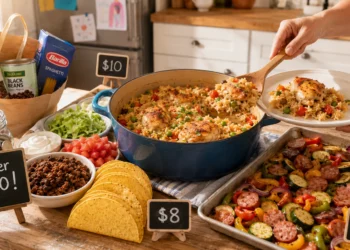
Start by reading through the whole week’s recipes and making a single unified shopping list. You’ll find overlaps—multiple bowls use cherry tomatoes, most use olive oil and lemons, and several use the same herbs. That overlap is the efficiency of the system. One shopping trip covers the whole week.
Preheat the oven first thing. Get any long-cooking grains started on the stovetop. While those run, preheat the oven and roast the vegetables. While the vegetables roast, cook the proteins. While the proteins rest and cool, make the dressings and sauces. By the time the grains are done, everything else is usually handled. The whole sequence runs in parallel, not in sequence, and that’s what makes ninety minutes feel manageable.
Storage matters more than most people realise. Everything needs to be completely cooled before it goes into a container—hot food in a sealed container creates condensation that leads to soggy, waterlogged meal prep by Wednesday. Spread things on sheet pans, open containers to release steam, and give everything a full fifteen minutes to cool before sealing and refrigerating. Those fifteen minutes are worth every second, you know?
Chef’s Notes — On Why This System Changed Our Summers
I’ll be real with you—the version of me from five summers ago would have read this article and thought, “That sounds like a lot of Sunday work.” And I get it. Sunday is also supposed to be a rest day, a family day, a day that doesn’t feel like weekday productivity in disguise.
But here’s what I’ve actually experienced doing this: ninety minutes on Sunday afternoon—which I mostly spend at the counter with a podcast on, nobody asking me anything, just me and my cutting board and a kitchen that smells like roasting vegetables—gives me five weeknights back. Five evenings where dinner is a five-minute assembly instead of a thirty-minute scramble. Five nights where I’m actually at the table with my family instead of still standing at the stove when everyone else is halfway through eating.
That trade-off is the best one I’ve ever made in this kitchen. And I’ve made it every Sunday since, you know?
You’ve got this. Now make that shopping list.
— Chef Julia










Discussion about this post