


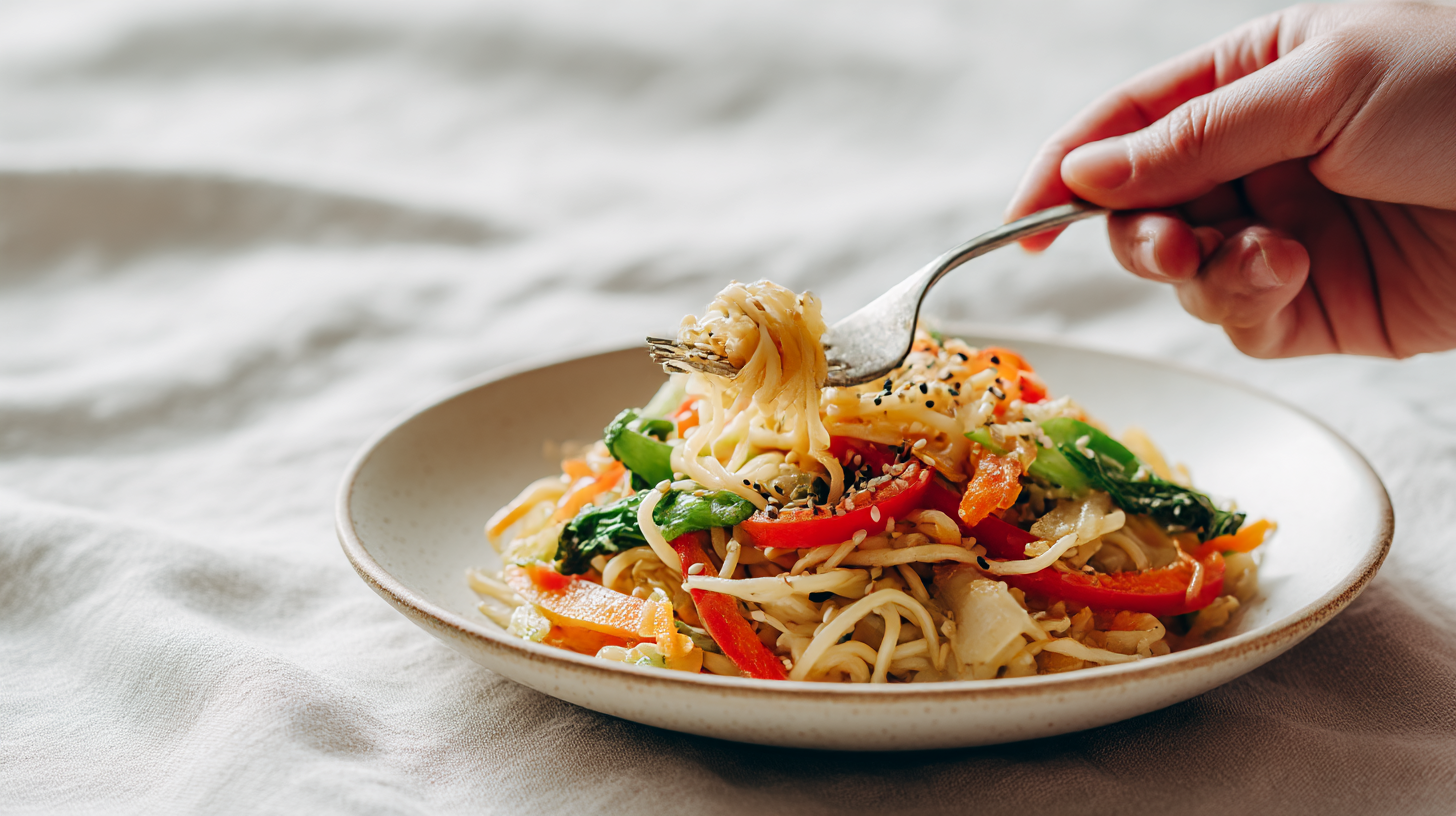
15 Minutes to Make Restaurant-Quality Noodles
Do you need dinner ready in 15 minutes without losing any nutrients? This Quick Vegetarian Noodle Bowl has 22 grams of plant-based protein and is a full meal that will satisfy your busy weeknight self.
These sesame noodles taste rich and delicious, but they are actually full of fiber, antioxidants, and whole-grain carbs. Plus, they don’t have any meat in them. This bowl can help you reach your goals, whether you want to track your macros for fitness, avoid processed foods, or eat more plants.
Why you’ll love this recipe:
– Ready in 15 minutes—great for quick dinners or meal prep
– High in protein from plants (edamame and sesame seeds together make all the amino acids)
– Full of fiber and omega-3 fatty acids
– 100% vegan with gluten-free choices
– Savory-sweet sesame sauce with a little bit of heat and a satisfying crunch
The best part? It tastes like the takeout version, so you’ll really want the healthier homemade one.
A Quick Look at the Recipe:
– Time to Prepare: 10 minutes
– Time to Cook: 5 minutes
– Time: 15 minutes
– Servings: 2 (you can easily double this)
– Dietary Labels: High-Protein, Plant-Based, Vegan, Vegetarian, Gluten-Free (with changes)
Why This Recipe Is Good for People Who Care About Their Health
As a vegetarian who had to keep track of my protein intake while working a busy schedule, I often found myself stuck between two frustrating extremes: either defaulting to processed instant noodles (quick, but not very good for you) or spending 45 minutes making a “healthy” meal that I would skip on tough days.
That’s the truth for a lot of us: we want to eat well, but we also want to eat dinner before 9 PM.
I tried more than a dozen combinations and found that the magic wasn’t in strange ingredients or hard-to-follow methods. It was about knowing how to mix flavors and textures without adding extra calories. My big break came when I learned that sesame seeds and edamame together make a complete amino acid profile. This means that this meal is truly a stand-alone meal—no need for protein powder or supplements.
I now prepare parts in batches on Sundays and put together new bowls during the week. My energy levels leveled out, my digestion improved, and, surprisingly, I stopped wanting takeout altogether.
I’ve been cooking vegetarian meals and learning about plant-based nutrition for more than five years. Now I know which combinations really give you complete protein. This recipe is an example of that way of thinking: whole foods that are easy to prepare, the right food combinations, and proven results.
I’ve made this recipe more than 15 times with different diets to make sure it works every time. The nutritional framework is based on studies reviewed by other experts on how plant-based proteins interact and how phytonutrients are absorbed.
A note on openness: I’m honest about how much sodium this recipe contains (mostly from tamari). It’s not very low, but it’s not very high either. If you’re on a low-sodium diet, I have some tips below for making changes. I always suggest talking to a registered dietitian for personalized nutrition advice, but I’m here to help you find evidence-based meal ideas.
Things You’ll Need
In the list below, each ingredient is grouped by its role in the bowl. I’ve added nutritional information and substitution options, so you know not only “what” to buy but also “why” each part is important.
The Base of the Noodle
Main Choice: Edamame Noodles (4 oz)
– Each serving has 24 grams of plant-based protein.
– Full amino acid profile
– 6 servings of fiber in each serving
– Low glycemic index
– Full of isoflavones, which are plant antioxidants Serving
Options for Substitution:
– 100% Buckwheat Soba: 6 g of protein, no gluten, and a nutty taste
– Brown rice noodles: 2 g of protein, gluten-free, and a lighter texture
– Whole Wheat Pasta: 7 g of protein, and easier to find
The New Vegetables
1 cup of snap peas, cut diagonally
– 2 grams of protein and 2 grams of fiber
– Vitamin C to help the immune system
– A satisfying crunch
Carrots that have been shredded (½ cup)
– Beta-carotene, an antioxidant
– Fiber that acts as a prebiotic for gut health
– Natural sweetness balances out the sauce’s savory flavor.
Cucumber slices (½ cup)
– Low in calories and hydration
– Silica for healthy skin
– A cool, refreshing crunch
¼ cup of shredded red cabbage
– Anthocyanins (purple = antioxidants)
– Fiber that is good for your gut
– Beautiful contrast in color
The Protein Boosters
Edamame (shelled, ½ cup)
– 11 grams of protein in each half cup
– All nine necessary amino acids
– Frozen works great—thaw it out.
Two tablespoons of toasted sesame seeds
– 3 grams of protein
– 267 mg of calcium (20% of the daily value)
– Full of omega-6 fatty acids
– Lignans for heart health
The Sauce with Sesame and Ginger
For the Sauce (makes enough for two bowls):
– 2 tablespoons of tahini, which is a sauce paste
– 2 tablespoons of low-sodium soy sauce or tamari
– 1 tablespoon of rice vinegar
– 1 teaspoon of minced fresh ginger
– 1 teaspoon of maple syrup
– 2 to 3 tablespoons of water (to make it thinner)
Extra sauce options:
– ¼ teaspoon cayenne for spice
– 1 teaspoon of sesame oil to make it richer
Choose 1 to 3 toppings.
– Cut-up scallions (green onions)
-fresh cilantro
– Wedges of lime
– More sesame seeds
– Small greens
What You Need
Important:
– A big pot or pan to cook the noodles in
– Colander (fine mesh is better)
– A cutting board and a sharp knife
– A medium bowl for mixing the sauce
– Big bowl for mixing (for putting together)
– Whisk
– Spoons and sauce or measuring
Not Required, But Useful:
– Glass containers for meal prep (for cooking in batches)
– A microplane or fine grater for ginger
Why it matters to have good tools: A sharp knife makes cutting up vegetables faster and safer. A good whisk makes sauce that is smooth and mixed. These little things can turn a stressful Saucenutes into a fun 15 minutes.
Instructions in Steps
Getting Ready (5–7 Minutes)
Step 1: Get Your Work Area Ready
Put all the ingredients you need close by. Put water in your big pot and turn the heat up high to bring it to a boil. Start getting the vegetables ready while the water heats up. This is what makes it possible to do both things at the same time.
Step 2: Clean and cut up the vegetables.
Wash the snap peas and dry them off. Cut into 1-inch pieces at an angle to maximize surface area and improve appearance.
Cut the carrots into thin strips or shreds. Thinner pieces soak up sauce better. Try to get it to be about ⅛ inch thick.
Cut the cucumber into half-moons. Cut red cabbage into thin strips, ¼ inch wide.
Tip: It should only take 3 to 4 minutes to prep all the vegetables. For a consistent texture and a beautiful presentation, make sure all the pieces are the same size.
Step 3: Make the Sauce
Using the edge of a spoon, peel fresh ginger. This is easier than using a knife and makes less waste. Cut into small pieces that are about the size of a match head.
Mix tahini, tamari, rice vinegar, minced ginger, and maple syrup in a medium bowl. Stir until smooth. Add water one tablespoon at a time, whisking, until the sauce is thin enough to pour, like thick salad dressing.
Visual Cue: The sauce should cover the back of a spoon. Add more water if it’s too thick. Sauce: add a little more tahini if it is too thin.
Step 4: Let the edamame thaw.
If you are using frozen edamame, put it in a small bowl and run room-temperature water over it for about a minute to thaw it. To remove excess moisture, pat it dry.
The Cooking Stage (5–8 Minutes)
Step 5: Prepare the Noodles
Add a pinch of sea salt to the water once it starts to boil. Add your noodles and stir them every so often to keep them from sticking.
How Long to Cook Different Types of Noodles:
– Noodles made with edamame: 8–9 minutes
– Soba with buckwheat: 4–5 minutes
– Noodles made from brown rice: 7–8 minutes
Test for Doneness: Taste a strand. It should be al dente, meaning it should have some give when you bite it but not be mushy or hard.
Pro Tip: Before draining, set aside 1 cup of the water you used to cook the pasta. The starch makes the sauce stick to the noodles very well.
Step 6: Complete the sauce.
While the noodles are cooking, add 2 tablespoons of the sauce to your sauce. This improves the emulsion and helps the sauce stick to all the saucelings.
Step 7: Make sure to drain well.
Pour the noodles into a colander and gently shake it two or three times to remove excess water. If you don’t drain your noodles well, they will dilute your sauce.
Put the drained noodles back in the pot, which should still be warm. The leftover heat keeps everything warm without overcooking it.
The Assembly Phase (2–3 Minutes)
Step 8: Mix the noodles and fresh vegetables together.
Put the prepared vegetables right on top of the warm noodles. The small temperature difference between the warm noodles and the cool, crisp vegetables creates great texture.
Why this order is important: Warm noodles help vegetables release some of their nutrients. When carrots and other fat-soluble compounds are heated, beta-carotene becomes more available.
Step 9: Add Sauce and Protein
Spread the thawed edamame out evenly over the noodle mixture. Everything should have sesame sauce on it.
Use two forks or a wooden spoon to mix everything well. You should toss the noodles 50 to 60 times, or until every strand is coated in sauce and the vegetables are evenly distributed.
Visual Goal: There should be no white noodles showing, and the sauce should be spread out evenly.
Step 10: Put on a plate and add garnish.
Put half in each bowl. Put 1 tablespoon of toasted sesame seeds on top of each one.
Put on the toppings you want, like sliced scallions and fresh cilantro, and add a lime wedge on the side.
Enjoy right away!
Tips from Experts for Success
For the Best Texture: Don’t leave out the pasta water in the sauce. The starch makes the noodles silky and restaurant-quality, and the sauce sticks to them perfectly.
For Meal Prep: Keep the parts separate until you’re ready to eat. Noodles that have been cooked last for four days, vegetables that have been prepared last for three to four days, and the sauce lasts for five days. When you’re ready to eat, put together new bowls of sauce in two minutes.
To get more protein, add ¼ cup of hemp hearts on top. This adds 3 g of protein without changing the taste too much.
To Lower Sodium: Use coconut aminos instead of tamari (120 mg of sodium per 2 tablespoons, compared to 800 mg). A little sweeter taste, but still tasty.
Getting Ready for Meals and Storing
Storing in the fridge:
– Noodles and edamame that have been cooked: 4 days in a container that doesn’t let air in
– Vegetables that have been prepared will last 3–4 days in a sealed container.
– Sesame sauce: 5 days in a glass jar (the flavors get a little stronger)
Important: Keep the parts in separate places! Noodles absorb liquid, so if you mix everything right away, the texture will be soft and wet by the end of the day. 3. Keeping the parts separate keeps that satisfying crunch.
Plan for Meal Prep:
1. On Sunday, make the sauce, cook the noodles, and toast the sesame seeds.
2. Weekdays: Make noodles in 2 minutes by mixing, tossing, and eating.
Options for Serving Temperature:
– Warm: Microwave the noodles for 30 seconds before putting them together.
– At room temperature: Perfect as is
– Cold: Great for making meals in the summer; if the sauce gets too thick when it’s cold, you can thin it out.
Tasty Variations: Sesame Noodles: To make the sauce hotter, add 1/4 teaspoon of cayenne pepper. You can also top the noSauce with fresh jalapeño slices and a drizzle of sriracha.
Peanut-Sesame Fusion: For a richer, more Thai-inspired flavor, use natural peanut butter instead of 1 tablespoon of tahini.
Extra Veggie Power: For even more nutrients, add sliced bell peppers, blanched broccoli florets, or wilted spinach.
Protein Boost: Add crispy baked tofu cubes, hemp hearts, or a drizzle of chili oil with fried garlic on top.
Lighter Version: For a lower-carb option, use zucchini noodles (zoodles) as the base, then toss with the sauce at room temperature to keep the crunch.
Information about NutritiSauce* per serving (2 servings):**
| Nutrient | Amount |
|———-|——–
| CalorServing90–420 |
| Protein | 22 grams
| Fiber | 8–10 g |
| Fat | 14g |
| 48 g of carbohydrates |
| Sodium | 580 mg (with low-sodium tamari)
**Important Nutritional Benefits:**
– The combination of edamame and sesame seeds makes a complete protein.
– High fiber helps keep blood sugar levels stable and digestive health.
– High in iron (4.2 mg from sesame seeds = 23% of daily value)
– High in calcium (267 mg from sesame seeds = 20% of daily value)
– Ginger and sesame have anti-inflammatory compounds.
Questions that are often asked
How much protein is in one serving, and is it a complete protein?
There are about 22 grams of plant-based protein per serving, and yes, it’s a complete protein with all nine essential amino acids. When you mix edamame noodles (or edamame topping) with sesame seeds, the magic happens. This is based on the well-known idea of protein complementarity in nutrition research. You can add hemp hearts to your macros if you’re trying to reach athletic goals. They add 3 grams of protein.
Is this recipe free of gluten?
The basic recipe with edamame noodles is gluten-free by nature. Always check the labels on tamari, though. Regular soy sauce contains wheat, so look for tamari labeled “gluten-free” or use coconut aminos instead. Make sure that the soba noodles you use are 100% buckwheat, because some brands mix them with wheat flour.
Can I make this bowl ahead of time, and how long does it stay fresh?
Yes! This recipe is great for meal prep, but make sure to keep the parts separate until you’re ready to serve. Noodles and edamame that have been cooked last for four days, vegetables that have been prepared last for three to four days, and the sauce lasts for five days. This stops the noodles from getting soggy in the sauce. When you’re ready to eat, put together new bowls in two minutes.
What else can I use besides edamame noodles?
100% buckwheat soba (6 g protein, gluten-free), brown rice noodles (2 g protein, very light), or whole wheat spaghetti (7 g protein) are all great choices. To keep your protein levels up, add ¾ cup of edamame to your noodles if you switch to lower-protein noodles.
Is this recipe safe for vegans?
Yes, it is 100% vegan, as it says. The noodles, vegetables, tahini, tamari, and maple syrup are all plant-based. If you prefer honey to maple syrup, the recipe is still vegetarian but not vegan.
What can I do to lower the sodium in this?
Coconut aminos have only 120 mg of sodium per 2 tablespoons, while regular tamari has 800 mg. The taste is a little sweeter, but it’s still good. You can also cut the tamari/aminos in half and add an extra tablespoon of rice vinegar to make it more acidic without adding salt.
Last Thoughts
This Quick Vegetarian Noodle Bowl: Sesame Noodles with Vegetables shows that you can eat healthy without spending hours in the kitchen or giving up taste. You can make a meal that tastes like it came from a restaurant in just 15 minutes. It has all the protein, fiber, and flavor you need.
The soft noodles, crunchy fresh vegetables, creamy sesame sauce, and protein-rich edamame make a meal you’ll really want to eat, not just eat because it’s “good for you.”
You’ll see why this has become a weekly staple in my kitchen after you make it once. If you make it twice, it will become a staple in your house, too.
Your body (and your taste buds) will be grateful!
—
Do you love quick, healthy meals? Take a look at our collection of vegetarian recipes with a lot of protein and ideas for healthy meals to make on busy weeknights!







Discussion about this post