


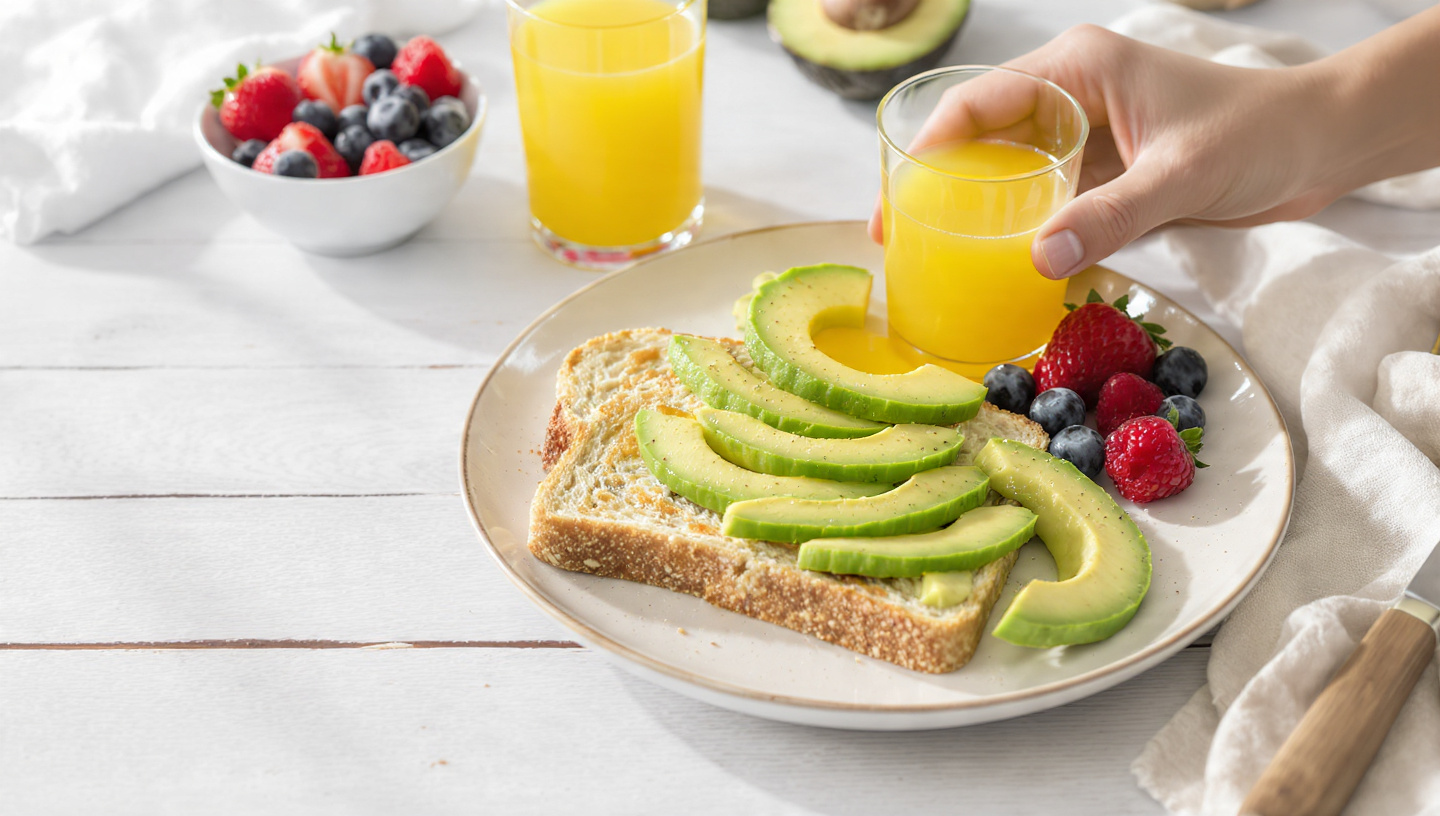
Most mornings leave you with minimal flexibility. You’re managing a schedule, possibly other people’s schedules, and breakfast often ends up being whatever’s fastest—which usually means whatever’s least satisfying. If you find yourself feeling unsatisfied by mid-morning, hungry an hour after eating, or struggling to find nutritious yet genuinely quick options, the solution likely lies in increasing your fiber intake.
This roundup covers five quick and healthy breakfast options built around fiber-rich ingredients that are easy to find, simple to prepare, and actually enjoyable to eat. No complicated techniques, no specialty ingredients from health food stores—just practical, evidence-backed choices for busy people who care about eating well.
Why Fiber Deserves a Spot at Your Breakfast Table
I’ve tested a lot of breakfast strategies over the years—high-protein, low-carb, intermittent fasting, the full spectrum. What I keep coming back to, both personally and in the recipes I develop for this blog, is that fiber is quietly doing some of the most important work of any nutrient you can eat in the morning.
My background in nutritional science shapes how I approach breakfast content, and what the research consistently shows is this: dietary fiber slows digestion, moderates blood sugar response, feeds beneficial gut bacteria, and extends satiety in ways that other macronutrients don’t replicate on their own. A 2019 study published in The Lancet found that people who ate the most fiber had significantly lower rates of type 2 diabetes, cardiovascular disease, and colorectal cancer compared to those who ate the least. The recommended daily intake is 25–38 grams for adults, and most people get roughly half that amount.
Starting your morning with a fiber-forward breakfast is one of the most effective ways to close that gap—and the options below make it genuinely easy.
What You’re Working With: Key Ingredients
Before we dive into the recipes, let’s quickly review the essential ingredients you should always have on hand.
Oats are one of the most fiber-dense breakfast staples available. They’re particularly rich in beta-glucan, a type of soluble fiber shown to lower LDL cholesterol and stabilize blood sugar. Quinoa flakes or buckwheat groats work as alternatives if you’re gluten-sensitive or want variety.
Berries (fresh or frozen) deliver antioxidants, natural sweetness, and meaningful fiber in a small package. Frozen berries are nutritionally equivalent to fresh and considerably more affordable year-round. Sliced banana, chopped apple, or diced pear are solid swaps depending on season and preference.
Chia seeds are one of the most efficient fiber sources by volume—about 10 grams of fiber per ounce, along with omega-3 fatty acids and plant protein. They also absorb liquid and naturally thicken overnight oats or chia pudding. Ground flax seeds or hemp seeds work if you don’t have chia on hand.
Nuts and seeds add healthy fats, protein, and fiber, along with a satisfying crunch. Almonds, walnuts, and pumpkin seeds are all excellent options. Nut butter works when you want the nutritional benefits without the texture.
Pantry staples worth having: dairy or plant-based milk, Greek yogurt or a plant-based alternative, cinnamon, and a light natural sweetener like maple syrup or honey, if needed. Protein powder is optional but useful if you want to boost the macronutrient profile of smoothies or oats.
Equipment needed: a blender for smoothies, mason jars for overnight oats, and a skillet for eggs. That’s genuinely the full list.
5 Quick & Healthy Fiber-Rich Breakfasts
Recipe 1: Overnight Oats with Berries & Chia
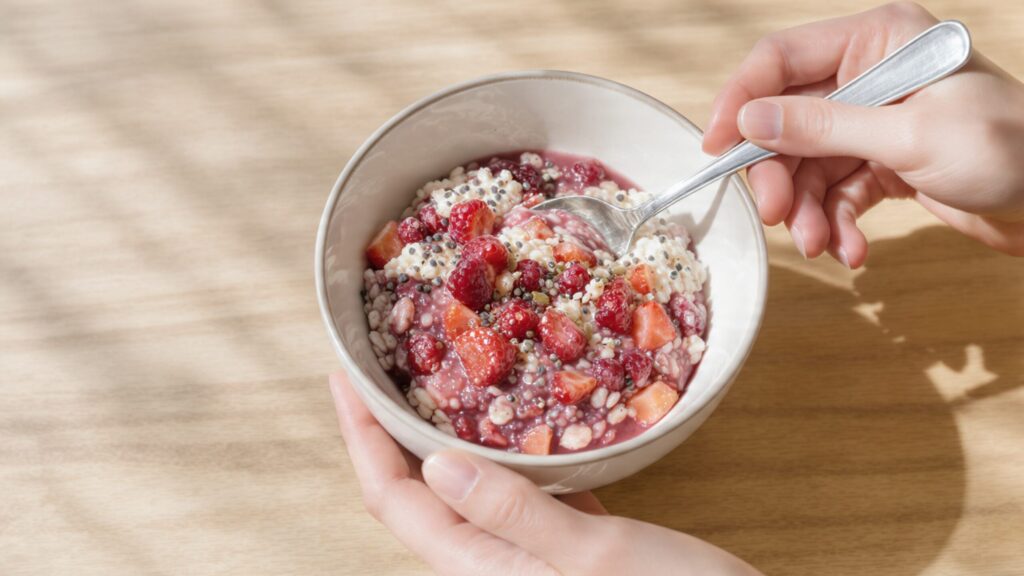
Fiber per serving: ~8–12g | Prep: 5 min | Cook: 0 min
This is the workhorse of quick and healthy breakfasts, and for good reason. You do five minutes of work the night before and wake up to breakfast that’s already done.
In a mason jar or container, combine ½ cup of rolled oats, 1 tablespoon of chia seeds, ¾ cup of milk (dairy or plant-based), and a small drizzle of maple syrup or honey if you like it sweet. Stir well, seal, and refrigerate overnight. In the morning, top with a generous handful of berries and a tablespoon of nuts or nut butter.
The chia seeds gel overnight, creating a thick, creamy texture that feels indulgent despite being entirely wholesome. The combination of oat beta-glucan and chia fiber creates a breakfast that sustains energy without any blood sugar spike. Swap the berries for sliced banana and cinnamon, or stir in a tablespoon of cocoa powder if you want something that feels more like dessert.
Recipe 2: Quick Fiber Smoothie
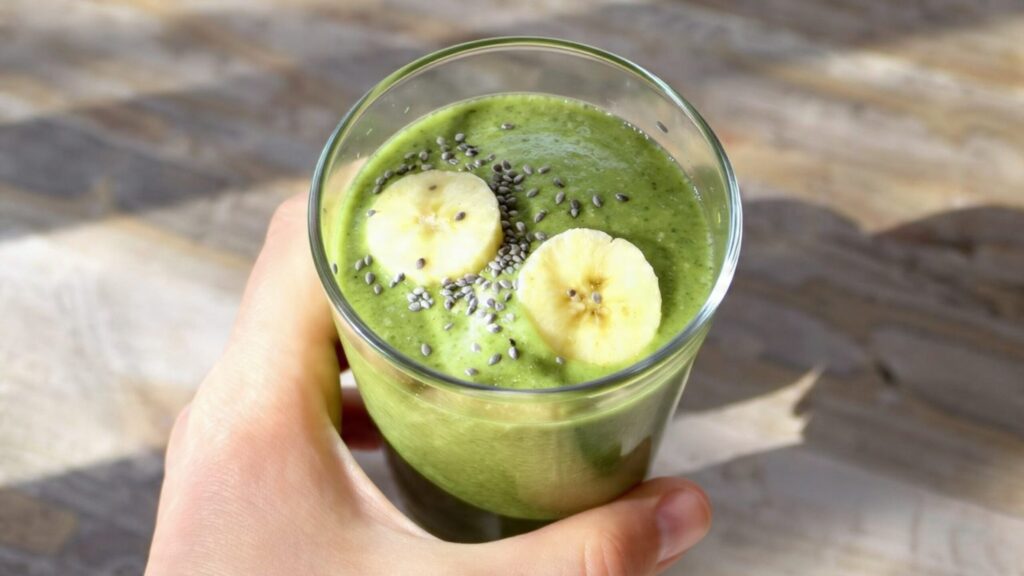
Fiber per serving: ~7–10g | Prep: 5–7 min | Cook: 0 min
A well-made smoothie is one of the fastest fiber-delivery systems available on a busy morning. The key is treating it like a meal rather than a drink—that means including protein and fat alongside the fiber, not just blending fruit and calling it done.
Combine in a blender: 1 cup of spinach or kale (you won’t taste it), 1 cup of frozen mixed berries, 1 tablespoon of chia seeds or ground flax, ½ banana, ¾ cup of milk or plant-based milk, and optionally a scoop of protein powder or a tablespoon of almond butter. Blend until smooth.
The leafy greens add fiber and micronutrients without significantly affecting flavor—the berries and banana mask any bitterness entirely. If your smoothie is too thick, add more liquid, a splash at a time. Too thin? Add more frozen fruit or a few ice cubes. Pre-portioning everything except the liquid into freezer bags on Sunday means your weekday morning smoothie takes about 90 seconds from freezer to glass.
Recipe 3: Whole-Wheat Avocado Toast with Everything Bagel Seasoning
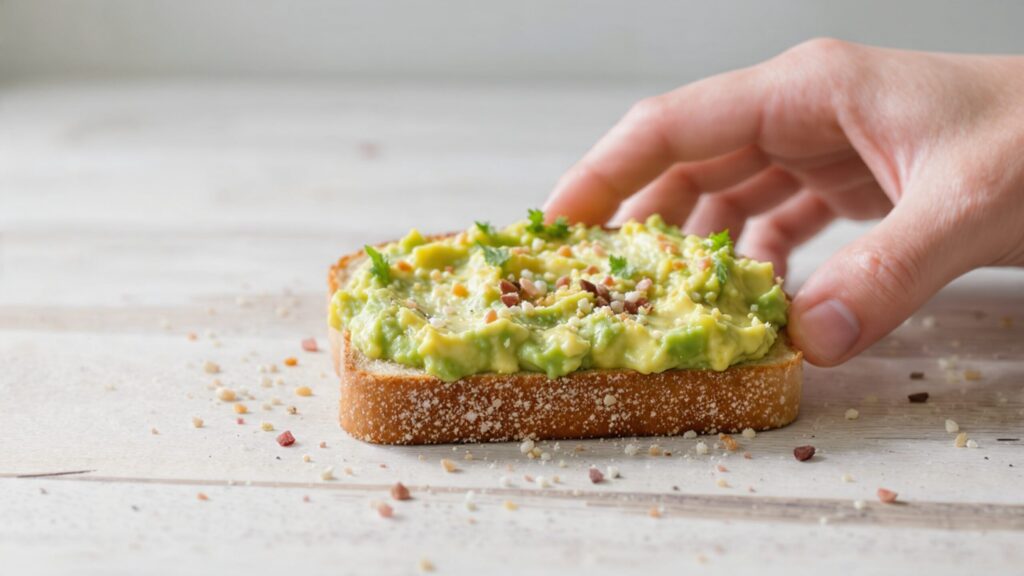
Fiber per serving: ~6–8g | Prep: 5–7 min | Cook: 0 min

Avocado toast has earned its reputation, and when it’s built on actual whole-grain bread rather than the ornamental kind, it’s a legitimately nutritious breakfast. Half an avocado provides about 5 grams of fiber along with heart-healthy monounsaturated fats. Pair it with genuinely whole-wheat bread (check that “whole wheat flour” is the first ingredient on the label), and you’ve got a fiber-rich, satiating base.
Toast one or two slices of whole-wheat bread. Mash half a ripe avocado with a squeeze of lemon juice, a pinch of salt, and red pepper flakes if you like heat. Spread generously and top with everything bagel seasoning for flavor and texture—optional additions that work well: a soft-boiled egg, smoked salmon, or sliced cherry tomatoes.
This comes together in under seven minutes and holds well enough to eat on the go if you need to.
Recipe 4: Cottage Cheese or Greek Yogurt with Fruit & Nuts
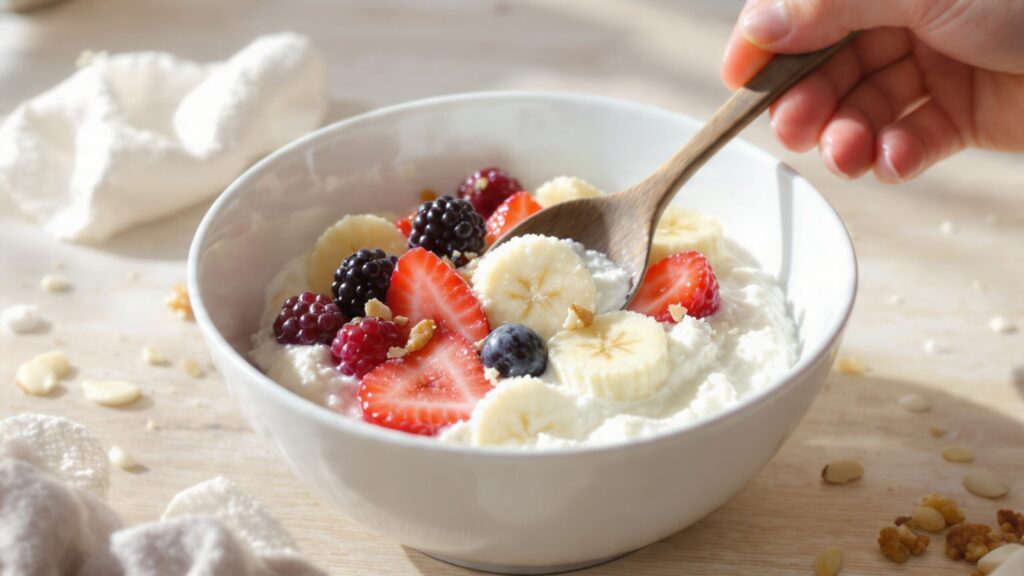
Fiber per serving: ~5–8g | Prep: 3–5 min | Cook: 0 min
No cooking, no cleanup, and genuinely high in both protein and fiber when assembled thoughtfully. This is the breakfast to reach for when you have almost no time and still want something that’ll carry you through the morning.
Spoon ¾ to 1 cup of cottage cheese or Greek yogurt into a bowl. Top with a handful of berries or chopped fruit, a tablespoon of chia or hemp seeds, and a tablespoon of walnuts or almonds. Add a drizzle of honey if desired.
The protein from the cottage cheese or yogurt works synergistically with the fiber from the fruit and seeds—protein and fiber together produce some of the strongest satiety signals the body generates. If you find plain cottage cheese texturally off-putting, Greek yogurt is an easy swap with a nearly identical nutritional profile. Plant-based protein yogurts have become a genuinely good option for dairy-free eaters.
Recipe 5: Speedy Scrambled Eggs with Spinach & Black Beans
Fiber per serving: ~7–9g | Prep: 5 min | Cook: 5–7 min
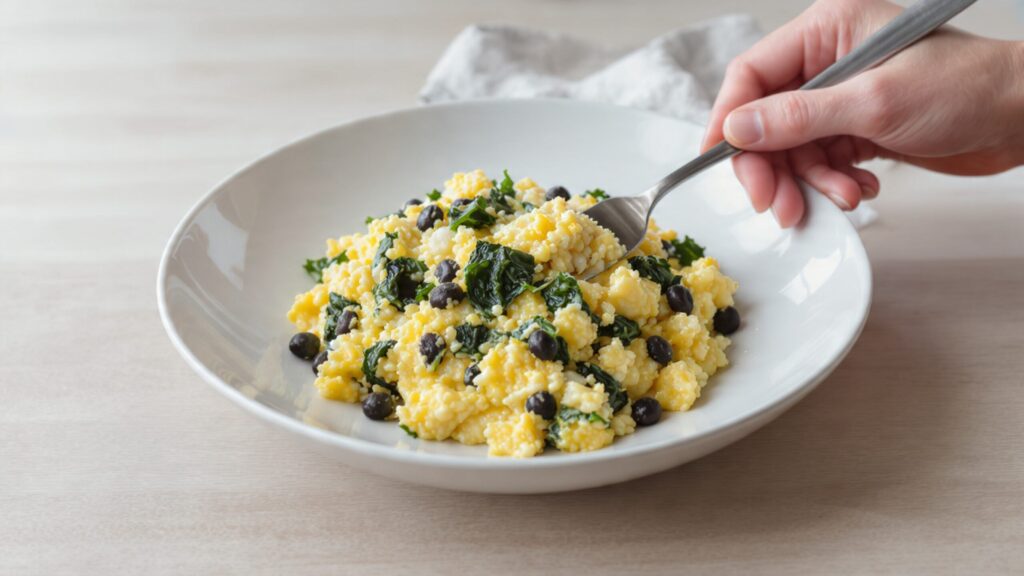
For mornings when you want something warm and savory, this is a complete breakfast that provides protein, fiber, and vegetables in about 10 minutes. Black beans are one of the most fiber-dense foods available—½ cup delivers roughly 7–8 grams of fiber—and they pair naturally with eggs and greens in a way that feels hearty rather than health-food-ish.
Heat a small skillet over medium heat with a drizzle of olive oil. Add a large handful of spinach and cook for about 60 seconds until wilted. Add ¼ cup of canned black beans (drained and rinsed) and warm them through for another minute. Push everything to the side, add 2–3 whisked eggs, and scramble until just set. Season with salt, pepper, and cumin or smoked paprika. Eat straight from the pan if you’re in a real hurry.
This is also a good meal-prep candidate—you can batch-cook the beans and vegetables ahead of time so the morning cook is just the eggs.
Quick Comparison
| Recipe | Fiber (est.) | Prep | Cook | Best For |
|---|---|---|---|---|
| Overnight Oats with Berries & Chia | 8–12 g | 5 min | 0 min | Make-ahead meal prep |
| Quick Fiber Smoothie | 7–10 g | 5–7 min | 0 min | On-the-go, portable |
| Whole-Wheat Avocado Toast | 6–8 g | 5–7 min | 0 min | Savory, no-cook |
| Cottage Cheese/Yogurt with Fruit & Nuts | 5–8 g | 3–5 min | 0 min | Ultra-fast, no-cook |
| Scrambled Eggs with Spinach & Beans | 7–9 g | 5 min | 5–7 min | Warm, protein-rich |
Bonus: Meal Prep, Customization & Nutrition
Meal Prep Strategies That Actually Save Time
The most effective thing you can do is pick two or three of these recipes and set up the ingredients for the week on Sunday. For overnight oats, pre-portion the dry ingredients (oats, chia seeds, spices) into individual jars—all that’s left each evening is adding liquid. For smoothies, portion fruit and greens into freezer bags so the morning routine is just open, dump, and blend. Hard-boil a batch of eggs to pair with avocado toast or yogurt bowls through the week.
The goal isn’t to batch-cook every meal—it’s to reduce the number of decisions and steps required at 7 AM, when your decision-making energy is lowest.
Customization Ideas
Every recipe here is a template, not a fixed formula. Overnight oats work with apple and cinnamon just as well as they do with berries. Smoothies absorb frozen mango, pineapple, or peaches without changing the preparation at all. Avocado toast is endlessly riffable—try sliced radishes and sesame seeds, or a fried egg and hot sauce, or roasted cherry tomatoes. The bean-and-egg scramble works equally well in a whole-wheat wrap if you need something more portable.
For specific dietary needs: certified gluten-free oats, plant-based yogurts, and nut-free seed substitutions make most of these accessible regardless of dietary restrictions.
What’s Actually in These Breakfasts
The nutritional through-line across all five recipes is the combination of soluble fiber, insoluble fiber, protein, and healthy fat working together. Soluble fiber (from oats, chia, berries, and avocado) dissolves in water and forms a gel that slows digestion and blunts blood sugar response. Insoluble fiber (from whole grains, vegetables, and nuts) adds bulk and supports digestive regularity. Together, they feed the beneficial bacteria in your gut microbiome, which influences everything from immune function to mood.
A reasonable target for breakfast fiber is 5–10 grams—enough to make a meaningful contribution toward the recommended daily intake of 25–38 grams without overwhelming your digestive system, particularly if you’re increasing your fiber intake from a lower baseline. Increase gradually and drink enough water—fiber needs hydration to do its job properly.
Frequently Asked Questions
What are the easiest ways to add more fiber to breakfast? The lowest-effort options are chia seeds (add a tablespoon to anything), berries (on yogurt, oats, or toast), and swapping refined-grain products for whole-grain alternatives. These changes are small individually but add up quickly.
Can I prep these breakfasts ahead of time? Most of them, yes. Overnight oats and chia puddings are designed for preparation. Smoothie ingredients freeze well in pre-portioned bags—the egg-and-bean scramble reheats reasonably well, though eggs are best fresh.
How long will prepped breakfasts keep in the fridge? Overnight oats and chia pudding keep well for 3–4 days in airtight containers. Pre-portioned smoothie bags last up to 3 months in the freezer. The egg scramble is best consumed within 2 days.
My smoothie consistency is off. How do I fix it? Too thick: add more liquid, a splash at a time. Too thin: add frozen fruit or a few ice cubes. If you’re using protein powder, note that some brands can significantly thicken smoothies—you may need to adjust your liquid-to-protein ratio.
What are the main benefits of starting the day with fiber? Digestive regularity, more stable blood sugar, longer-lasting fullness, and support for a healthy gut microbiome are the four most well-documented benefits. Over time, consistent fiber intake is associated with reduced risk of cardiovascular disease, type 2 diabetes, and certain cancers.
Are these options gluten-free? Several are naturally gluten-free: smoothies, yogurt bowls, cottage cheese with fruit, and the egg scramble. For overnight oats, use certified gluten-free oats. For avocado toast, use a certified gluten-free whole-grain bread.
How much fiber should breakfast actually include? Aiming for 5–10 grams at breakfast is a practical, achievable target for most people. That’s enough to meaningfully support digestive and metabolic health without requiring a complete dietary overhaul in a single meal.
The Bottom Line
A fiber-rich breakfast doesn’t have to be complicated, expensive, or time-consuming. The five options here represent different formats—make-ahead, blended, assembled, and cooked—so there’s something workable for any morning. Each one is built around ingredients that are easy to find and keep stocked, and all deliver real nutritional benefits you’ll actually notice in how you feel throughout the day.
Pick one recipe to try this week. Make it twice. See how your energy and hunger levels compare to your usual morning routine. That’s the experiment worth running.
And if you’re looking to carry this momentum into your midday meal, check out our “5-Minute Healthy Lunch Ideas for Busy Professionals”—because the same principles that make a great fiber-rich breakfast work just as well for lunch.








Discussion about this post