


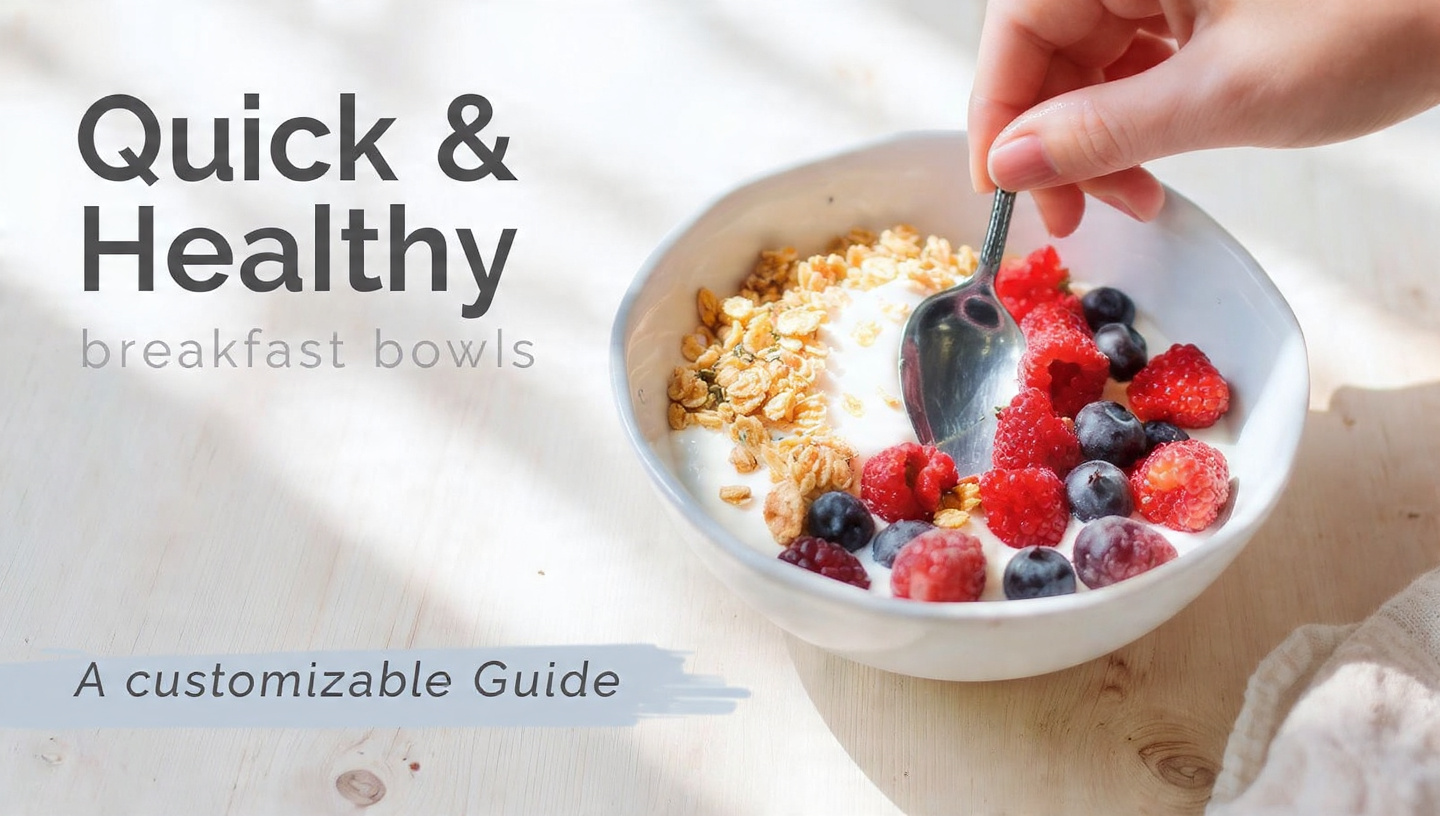
Getting Away from the Morning Rush (Without Giving Up Nutrition)
Are you sick of the same old breakfast routine, or worse, skipping breakfast because you do not have time? I used to be the kind of person who grabbed a granola bar on the way out the door. By 10 AM, I was tired and wondering why my energy levels were all over the place. Picture waking up to a breakfast that you can make in minutes that is tasty, healthy, and filling, and that meets all of your dietary needs. This personalized guide will help you change your mornings in a million healthy ways, making healthy eating both fun and easy.
Why I switched to breakfast bowls
As a food blogger who has tried many different breakfast combinations and dealt with the challenge of making healthy meals on busy mornings, I know how hard it is to balance health goals with a busy schedule. About three years ago, I started my journey when I realized that my usual rushed breakfast left me hungry before lunch and made me reach for unhealthy snacks. I started making breakfast bowls out of desperation because I needed something I could make quickly, change up to keep from getting bored, and that would actually fill me up.
This guide is not just a list of ideas; it is a collection of useful information grounded in a solid understanding of balanced nutrition and of how to make meals quickly and easily. I have also had my fair share of failures, like smoothie bowls that were too watery and did not look like they did on Instagram, overnight oats that turned into cement, and combinations that did not work. But those mistakes showed me what really works in a breakfast bowl. You can trust that the information shared here comes from real-world testing and a desire to make healthy eating available to everyone. It is based on general nutritional principles for long-term energy and health.
The Important Parts of Your Quick and Healthy Breakfast Bowl
Breakfast bowls are great because they can be made in many different ways, but knowing the basic parts will help you make meals that are always balanced and filling.
The Base: How to Pick Your Base
Your base is more important than you might think. It gives you fiber for healthy digestion and keeps your energy up all morning. I have learned that the best bases are either creamy or thick enough to hold up to toppings.
Some popular base options are
- Rolled oats (my favorite for overnight oats because they are cheap and very filling)
- Greek yogurt (high in protein and great for busy mornings when you do not have time to prepare)
- Quinoa (sounds strange, but it is great for savory bowls and gives you all the protein you need)
- Smoothie blend: frozen fruit with a little liquid, great for thick bowls you can eat with a spoon.
- Cottage cheese (really underrated—it is creamy, high in protein, and goes well with both sweet and savory toppings)
Power Players: Protein Sources
I cannot have breakfast bowls without protein. It keeps you full, helps your muscles heal, and stops that mid-morning crash that makes you want to snack. I can tell right away when I do not get enough protein; by 11 AM, I am already looking through the pantry.
Great ways to add protein:
- Nuts and seeds (almonds, walnuts, hemp seeds)
- Flax and chia seeds (bonus: they have omega-3s)
- Protein powder (I like vanilla or unflavored better because they do not taste sweet)
- Greek yogurt or cottage cheese (they serve as both a base and a protein)
- Hard-boiled eggs (great for bowls of savory food)
Important Healthy Fats
Do not be afraid of fats. They are important for your brain health, getting nutrients, and keeping you full until lunch. I learned this the hard way when my low-fat breakfast bowls made me hungry an hour later.
Good sources of fat:
- Slices of avocado (creamy texture, great in savory bowls)
- Nut butters (almond, peanut, cashew—just a tablespoon goes a long way)
- Chia and flax seeds (they work as both protein and fat)
- Coconut flakes (give it a tropical flavor and a satisfying crunch)
The Fresh Factor: Fruits and Vegetables
This is where breakfast bowls become interesting and colorful. Fruits and vegetables are rich in vitamins, minerals, and antioxidants, and their natural sweetness helps keep added sugars low.
New choices to switch out:
- Berries (blueberries, strawberries, raspberries—frozen works great)
- Banana (adds natural sweetness and creaminess when mashed)
- Slices of apple (crunchy, goes well with cinnamon)
- Spinach (I promise you will not taste it in smoothie bowls)
- Grated carrots or zucchini (great for bowls with oats)
Toppings and flavor boosters are the last step.
Toppings turn a simple bowl into something you really want to eat. They add important texture contrast and extra nutrients and make breakfast feel special instead of like a chore.
The best toppings for me:
- Cacao nibs (chocolatey without the sugar rush)
- Shredded coconut (for texture)
- Cinnamon and nutmeg (natural sweeteners)
- A few drops of vanilla or almond extract make everything better.
- Honey or maple syrup (only a little bit; the fruit should be the main source of sweetness)
- Granola (homemade is best because you can control how much sugar it has)
Things You Should Always Have in Your Pantry
Having these basic ingredients on hand will make it easy to prepare breakfast bowls: ground cinnamon, nutmeg, vanilla extract, almond extract, raw honey, pure maple syrup, and a mix of nuts and seeds, all in airtight containers.
Basic Tools You Will Need
You do not need anything special, just a blender for smoothie bowls, small mixing bowls, and measuring cups and spoons if you are keeping track of your portions.
Your Customizable Guide in Steps
Step 1: Pick Your Base for a Healthy and Quick Breakfast Bowl
Step 1: Choose the base you like best based on how much time you have in the morning and your preferred texture. You do not need to do anything to Greek yogurt or cottage cheese if you have five minutes. Overnight oats are very forgiving if you plan. Blend a fruit-and-spinach smoothie until it is thick and easy to spoon out for a refreshing drink.
Step 2: Get your base ready based on what it is. Mix ½ cup of oats with ¾ cup of milk (dairy or nondairy), then refrigerate for a few hours or overnight to make overnight oats. Use mostly frozen fruit and very little liquid for smoothie bowls. Start with just ¼ cup of liquid and add more only if needed. For bowls with grains, measure out your cooked quinoa or oats.
Step 3: When choosing your base, think about your dietary needs. Need to avoid gluten? Use oats or quinoa that have been certified gluten-free. No dairy? Switch to oat, coconut, almond, or soy yogurt, or use nondairy milk in oat bowls.
Pronounce “nondairy” and a lot of grains, like quinoa or steel-cut oats, on Sunday. Put it in a big container in the fridge, and every morning, take out a piece, add a little milk to make it easier to work with, and microwave it for 60 seconds. This savory bowl base has saved me many mornings when I was in a hurry.
Step 2: Get more energy with protein and fats
Step 1: Add a good source of protein. I usually add a scoop of unflavored protein powder to smoothie bowls, a lot of Greek yogurt (¾ cup) to oat bowls, or a handful (¼ cup) of mixed nuts and seeds. Do not be afraid to add protein; it is what makes these bowls really fill you up.
Step 2: Add healthy fats to keep your energy up. My usual recipe calls for one tablespoon of chia seeds, one tablespoon of almond or peanut butter, or a few slices of avocado if I am making a savory bowl. These fats slow digestion so that you will feel full longer.
Step 3: Carefully mix or stack these parts into the base you chose. If you want to make layered bowls that look good on Instagram, keep the parts separate. Just mix everything for everyday bowls. It tastes the same and saves time.
Pro Tip: Mix two protein sources to make a breakfast bowl with even more protein. The best combination for me is Greek yogurt with two tablespoons of hemp seeds mixed in. This gives you almost 25 grams of protein before you even add toppings.
Step 3: Add More Freshness and Flavor
Step 1: Put a lot of fresh or frozen fruits and vegetables in a pile. I try to eat at least one cup of fruit every day. This usually includes a mix of berries, bananas, and whatever is in season. Do not overlook frozen fruit here; it is picked at its peak ripeness, is often cheaper, and is great for making smoothie bowls thicker.
Step 2: Use your favorite toppings to add flavor and texture. Granola gives it a crunch, shredded coconut gives it a tropical feel, and a sprinkle of cinnamon makes it taste like dessert for breakfast. You can be creative here depending on how you feel.
Step 3: If you want, drizzle with a natural sweetener, but taste it first to see if you need it. A ripe banana is sweet enough on its own, in my opinion. If you do add honey or maple syrup, make sure to measure it out (one teaspoon is usually enough).
Tip: Buy fruits and vegetables that are in season. Berries from summer are very expensive in winter and do not taste as good. I rely on frozen berries in the winter and focus on fresh apples, pears, and citrus fruits.
How to Fix Common Problems with Breakfast Bowls
Too thin? This is the mistake I make most often when making smoothie bowls. Add more frozen fruit (especially bananas), a tablespoon of chia seeds, which will thicken as they sit, or a couple of tablespoons of oats to improve it. If your yogurt bowls look runny, switch to thicker Greek yogurt brands or strain regular yogurt through cheesecloth for 30 minutes.
Not enough flavor? Spices will help you the most here. I keep cardamom, nutmeg, and cinnamon close to where I make breakfast bowls. A little bit of sea salt makes everything taste better, and a little bit of fresh lemon or lime juice kicks it up a notch. Vanilla extract makes even the simplest combinations taste special. Begin with small amounts and adjust to suit your taste.
Common Questions
Q1: On busy mornings, how can I make my breakfast bowls really “quick”?
Smart meal planning is the key to a quick and healthy breakfast bowl. On Sundays, I cook grains in bulk (usually quinoa and steel-cut oats), wash and chop fresh fruits, divide dry ingredients like nuts and seeds into small containers, and make a big batch of overnight oats in individual jars. It takes me less than five minutes to put everything together each morning. I grab the parts I have already prepared and put them together. On my laziest mornings, I open a jar of overnight oats and eat them straight from the fridge.
Q2: What are some good dairy-free options for these bowls?
Good news for people who do not eat dairy: breakfast bowls are very flexible. Almond, soy, coconut, or oat milk yogurts work great as bases. I think coconut yogurt is the creamiest, and oat yogurt is the least flavored. You can use any nondairy milk for smoothie bowls. I like unsweetened almond milk because it has a mild flavor. You can also use cooked quinoa or gluten-free oats as the base for your bowl and add nondairy milk to change the thickness. I make nondairy bowls a few times a week, even though I am not dairy-free. They are just so good.
Q3: Is it possible to make these breakfast bowls ahead of time?
Of course! Overnight oats are the best breakfast bowl to make ahead of time because they get better the longer they sit. For other variations, it is important to prep ahead of time by storing each part separately and putting them together right before serving. On Sundays, I get ready five days’ worth of “bowl kits.” Each kit has the right amount of dry ingredients, and I keep fresh toppings in the fridge. This method keeps things fresh and textured while still being very easy to use. I do not think you should make smoothie bowls all the way ahead of time because they tend to separate and freeze when stored blended.
Q4: My smoothie bowl is always too watery. What am I doing wrong?
For months, I had a hard time with this! The key is to use mostly frozen fruit and not much liquid. Start with 1½ cups frozen fruit and only ¼ cup liquid, blending on high. Only add more liquid one tablespoon at a time if you really need to. You want the mixture to be like soft-serve ice cream, not a drinkable smoothie. Other things I do are add a tablespoon of chia seeds (they soak up extra liquid), a small piece of frozen avocado for creaminess without adding water, or a handful of frozen cauliflower (I promise you will not taste it, and it makes the bowl very thick).
Q5: Do breakfast bowls help you lose weight?
Yes, if you use the right parts and build it carefully. Start with a base that is high in protein and fiber, like Greek yogurt or oats. Then add plenty of fruits and vegetables (they are high in volume but low in calories). Add healthy fats to keep you full, and be careful with how much you eat of calorie-dense toppings like nuts, nut butters, and granola. Instead of just looking at it, I use a real tablespoon to measure my nut butter. Otherwise, it is easy to add 300 extra calories. Breakfast bowls are great for weight loss because they are filling and nutrient-dense, which means you are less likely to snack before lunch. Be careful with the extra sugars in yogurt, granola, and the sweeteners you drizzle on top.
Q6: How can I add more protein to my breakfast bowl?
There are many simple ways to get more protein! Layer in Greek yogurt or cottage cheese, add a scoop of protein powder (vanilla or unflavored blends are best), sprinkle hemp seeds (they provide 10 g of protein per 3 tablespoons), stir in chia or flax seeds, add a handful of nuts, or for savory bowls, crumble in a hard-boiled egg or two. The combination of cottage cheese, Greek yogurt, hemp seeds, and protein powder has the most protein for me. It has more than 40 grams of protein, which keeps me full for hours.
Q7: How can you make breakfast bowls more fun for kids?
Make it fun and interactive! Make a breakfast bowl bar with colorful fruits cut into fun shapes. Offer vanilla yogurt or oats with cinnamon as bases and let kids pick their own toppings. My nephew likes to add mini chocolate chips (I buy the kind with little sugar), animal-shaped granola, and rainbow sprinkles. The most important thing is to let them choose what to put in their bowl while you choose what options are available. I also think that serving breakfast bowls in fun dishes, like small, colorful bowls or even cups, makes them more appealing to young kids.
Extra Tips for Making a Great Breakfast Bowl
Sweet vs. Savory: More Choices for You
Do not just eat sweet breakfast bowls! Savory versions are very filling and give you a break from the usual breakfast flavors. Use quinoa or oats as a base, and then add sautéed vegetables, a poached or fried egg, avocado slices, cheese, and hot sauce on top. When I want something more filling, I make these at least twice a week.
Seasonal Inspiration for Maximum Flavor
Change your breakfast bowls to use what is in season and cheap. Summer brings fresh berries, peaches, and cherries. The best time to eat applesauce, a pear, and too many warm spices like cinnamon and nutmeg is in the fall. In the winter, you should eat citrus fruits, pomegranate seeds, and dried fruits. Spring offers fresh strawberries and rhubarb. Eating foods that are in season not only saves you money, but it also makes sure you get the most flavorful and nutrient-dense fruits and vegetables.
Changes to the diet
Vegan: Use plant-based yogurt and nondairy milk instead of honey. If you want to make your food nondairy, use maple syrup or date syrup instead. Make sure your protein powder is plant-based.
Keto-friendly: Use Greek yogurt or cottage cheese as a base, add plenty of nuts and seeds, plenty of avocado and nut butters, and only a few berries (they have fewer carbs). Do not use grains at all.
Low-FODMAP: Start with lactose-free yogurt or firm tofu. Stick to low-FODMAP fruits like blueberries and strawberries (in small amounts), avoid honey (use maple syrup instead), and choose nuts, like walnuts or pecans.
Meal Prep Tips That Really Work
Cooking grains in bulk: On Sundays, I make a big pot of quinoa or steel-cut oats. If you keep them in the fridge, they will last for five days. I heat a portion every morning and then build my bowl from there.
Chopping up fruits and vegetables ahead of time: Wash the berries and put them in glass containers lined with paper towels. Chop up the apples and toss them with some lemon juice to keep them from turning brown. Put banana slices in small bags.
Storage of components: Keep the dry ingredients (oats, nuts, seeds) separate from the wet ingredients (yogurt, milk) until you are ready to combine them. This keeps the texture and stops sogginess.
Learning the Basics of Nutrition
Balancing macros: Aim for about 15–25 g of protein, 10–15 g of healthy fats, and 30–45 g of complex carbohydrates in your breakfast bowl. This balance gives you energy that lasts without raising your blood sugar levels.
Fiber power: Choose oats, fruits, vegetables, and seeds for your breakfast bowl to get at least 8–10 g of fiber. This is good for your digestive health and helps you feel full longer.
Mindful sweeteners: Let fruit be the main source of sweetness. One teaspoon of honey or maple syrup adds about 20 calories and 5 grams of sugar, so be sure to measure it. Adding cinnamon and vanilla extract can make something taste sweeter without adding calories.
Begin Your Breakfast Bowl Journey Today
You now have everything you need to make your own quick and healthy breakfast bowls. This is a customizable way to have tasty, healthy, and time-saving mornings. Say goodbye to boring breakfasts and hello to a lively start to your day that is just right for you and your health goals. Try out different combinations and see what you like best. I suggest that you start this week by making two or three breakfast bowls ahead of time. Please share your own unique breakfast bowl recipes in the comments below, or check out our other healthy meal prep ideas for more ideas. Your mornings are about to get a whole lot better!






Discussion about this post