

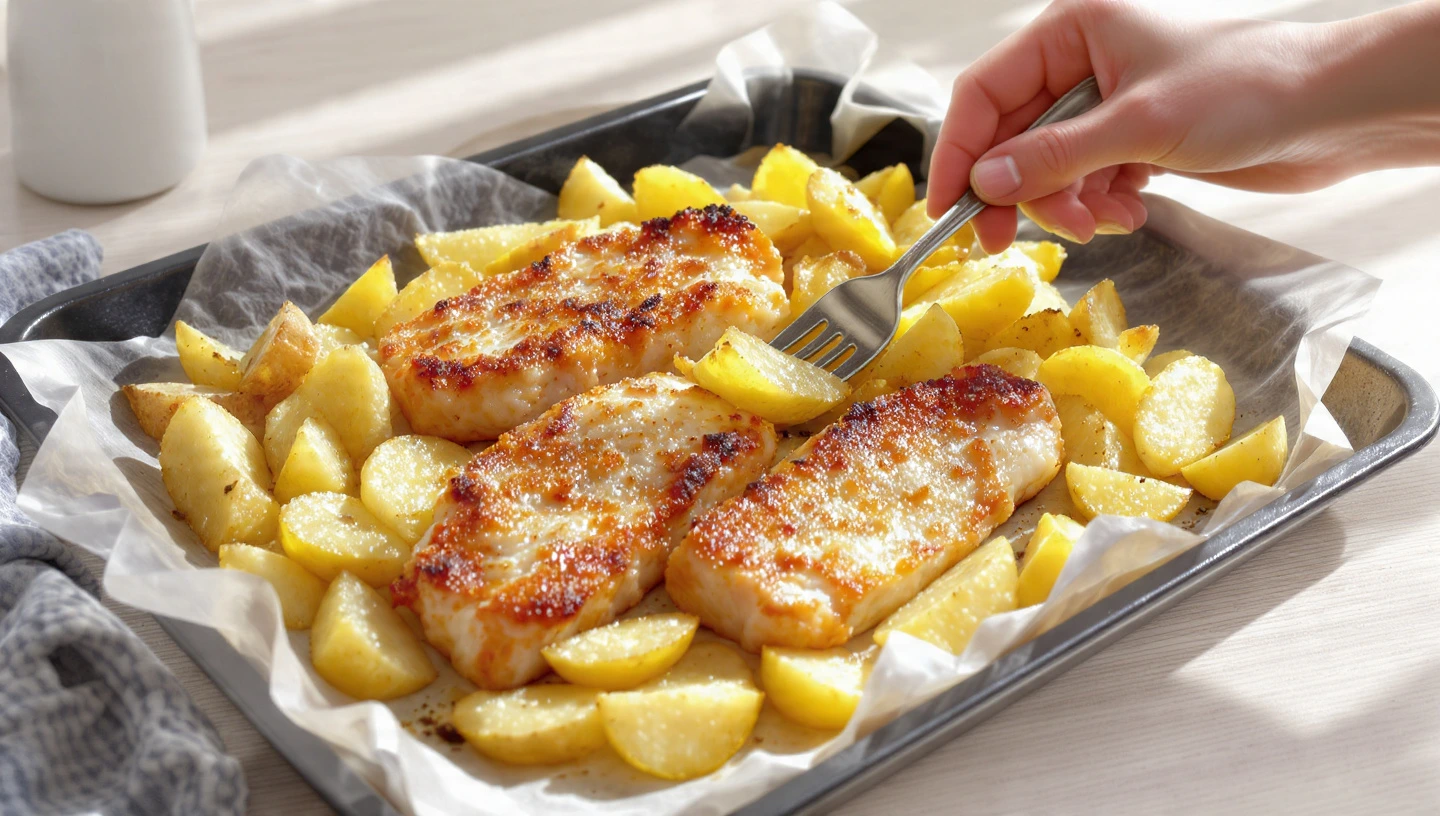
Craving the comforting crunch of fish and chips but not the heavy, greasy aftermath? We’ve all been there—that delicious dilemma between satisfying a craving and sticking to our health goals. Traditional fish and chips, while utterly delicious, come with a side of guilt: the deep-fried batter, the oil-soaked chips, and the sluggish feeling that follows.
Good news! This One-Pan Fish and Chips: A Lighter Version recipe is your ultimate solution. Say goodbye to deep-frying, excessive oil, and that uncomfortable post-meal heaviness. Say hello to a wholesome, incredibly flavorful meal that’s ready in under 30 minutes, all on a single sheet pan. No deep fryer splattering oil across your kitchen, no multiple pans to scrub—just delicious, satisfying comfort food made healthier.
Get ready to transform your weeknight dinners with this One-Pan Fish and Chips: A Lighter Version, proving once and for all that healthy eating can still be utterly delicious and completely fuss-free.
Why This Lighter Fish and Chips Recipe Is a Game-Changer
As someone who once struggled to balance a love for classic comfort foods with a commitment to healthy living, I spent years perfecting lighter versions of my favorites—fish and chips were always at the top of that list. Growing up, it was the ultimate treat—that perfectly crispy battered fish, those golden chips with malt vinegar, eaten from paper cones while walking along the seaside.
But as I became more health-conscious, traditional fish and chips became an occasional indulgence rather than a regular meal. The deep-frying, the heavy batter, the excessive oil—it just didn’t fit with how I wanted to eat most of the time. My kitchen used to be a battlefield of splattering oil and multiple pans whenever I attempted it at home, leaving me exhausted before I even sat down to eat.
Through countless experiments, I discovered the magic of oven-baking and strategic seasoning to achieve that irresistible crispy exterior and tender, flaky interior—all while drastically cutting down on unhealthy fats. This recipe is the culmination of that journey, designed specifically for busy, health-conscious individuals like you who refuse to compromise on taste or well-being.
What makes this One-Pan Fish and Chips truly special? It’s the incredible simplicity combined with an impressive nutritional profile. You get lean protein from the fish, healthy complex carbohydrates from the potatoes, and satisfying crunch from the oven-baked preparation. The minimal oil means minimal cleanup, making this a sustainable choice for your regular meal rotation.
You get all the satisfaction of the classic dish, but with a vibrant, fresh twist that leaves you feeling energized rather than sluggish. That’s the real victory here—comfort food you can feel good about eating.
Ingredients You’ll Need
Simple, wholesome ingredients for a healthier take on a classic!
For the Fish:
- 2-3 white fish fillets (cod, haddock, or pollock—about 6 oz each)
- 1 tablespoon olive oil or avocado oil
- ½ teaspoon paprika
- ¼ teaspoon garlic powder
- Salt and black pepper to taste
- Optional: 2 tablespoons panko breadcrumbs mixed with 1 teaspoon dried parsley (for extra crispiness)
For the Chips:
- 2 large Russet or Yukon Gold potatoes (about 1.5 lbs)
- 1 tablespoon olive oil or avocado oil
- ½ teaspoon onion powder
- ¼ teaspoon dried thyme
- Salt and black pepper to taste
For Serving:
- Fresh lemon wedges
- Fresh parsley, chopped
- Light tartar sauce (Greek yogurt-based is excellent)
- Malt vinegar
- Steamed green peas or a simple side salad
Equipment Needed
Minimal equipment for minimal mess!
- Large rimmed baking sheet (13×18 inches, also called a half sheet pan)
- Parchment paper
- Large mixing bowl
- Small mixing bowl
- Sharp knife
- Cutting board
That’s it! One pan, basic tools, and you’re ready to create restaurant-quality fish and chips at home.
Ingredient Notes and Easy Substitutions
Fish Options: Any firm, flaky white fish works beautifully in this recipe. Cod is the classic choice, but haddock, pollock, tilapia, or halibut are all excellent options. If using frozen fish, ensure it’s completely thawed and pat it very dry before seasoning—excess moisture prevents proper browning.
Potato Alternatives: Russet potatoes get wonderfully crispy on the outside while staying fluffy inside. Yukon Golds offer a creamier texture. For a nutritional boost, try sweet potatoes—they’ll give you a different flavor profile and extra vitamins. Just note that sweet potatoes may need slightly less cooking time.
Oil Choices: Olive oil works great and adds subtle flavor. Avocado oil is an excellent alternative with a higher smoke point, making it ideal for high-heat roasting. Either way, you’re using a fraction of the oil compared to deep-frying.
Gluten-Free Adaptation: The fish and potatoes are naturally gluten-free! Omit the optional panko breadcrumbs, or substitute with certified gluten-free panko or crushed gluten-free crackers for that extra crunch.
Step-by-Step Instructions
Follow these simple steps for lighter fish and chips in about 30 minutes!
Step 1: Preheat and Prep the Potatoes
Preheat your oven to 425°F (220°C). Line a large rimmed baking sheet with parchment paper for easy cleanup.
Scrub the potatoes clean (you can peel them or leave the skin on for extra fiber). Cut them into even ½-inch-thick fry shapes—uniformity is important for even cooking!
In a large bowl, toss the cut potatoes with 1 tablespoon of oil, onion powder, dried thyme, salt, and pepper until evenly coated.
Pro Tip: For extra crispy chips, soak the cut potatoes in cold water for 15-20 minutes before this step, then drain and pat them very dry with clean kitchen towels or paper towels. This removes excess starch, which is the secret to achieving crispy oven fries. It’s an optional step, but it makes a noticeable difference!
Step 2: Arrange Potatoes and Start Baking
Spread the seasoned potatoes in a single layer on one half of your prepared baking sheet. This is crucial—make sure they’re not overlapping or piled on top of each other. Each fry needs contact with the hot pan and exposure to the hot air to crisp up properly.
Place the pan in the preheated oven and bake for 15 minutes. This head start ensures the potatoes will be perfectly crispy by the time the fish is done.
Pro Tip: A single layer is essential for crispy chips! Overcrowding causes the potatoes to steam rather than roast, resulting in soft, soggy fries. If your pan isn’t big enough to spread everything out, use two pans—it’s worth the extra dish for the difference in texture.
Step 3: Prepare the Fish
While the potatoes are getting their head start, prepare your fish fillets. Remove them from the refrigerator and pat them thoroughly dry with paper towels—every surface, both sides. This step is critical!
In a small bowl, combine 1 tablespoon of oil with the paprika, garlic powder, salt, and pepper. Brush or rub this seasoned oil mixture evenly over both sides of each fish fillet.
If you’re using the optional panko topping for extra crunch, gently press the panko-parsley mixture onto the top side of each fillet after applying the oil and seasonings.
Pro Tip: Always, always pat fish dry! Excess moisture creates steam, which prevents the fish from developing a nice golden exterior. Wet fish steams; dry fish gets that beautiful caramelized color and slightly crispy texture we’re after.
Step 4: Add Fish and Finish Baking
After the potatoes have baked for their initial 15 minutes, remove the pan from the oven. The potatoes should be starting to get golden around the edges.
Carefully arrange the seasoned fish fillets on the empty half of the baking sheet, ensuring they’re not touching the potatoes or each other. Each fillet needs space for proper air circulation.
Return the pan to the oven and bake for another 10-15 minutes. The fish is done when it’s opaque all the way through and flakes easily when tested with a fork. The chips should be golden brown and crispy.
Pro Tip: Fish cooks faster than you think! Start checking for doneness around the 10-minute mark, especially if your fillets are on the thinner side. Overcooked fish becomes dry and loses its delicate texture. When the flesh starts to flake apart easily, it’s perfect.
Step 5: Serve and Enjoy
Remove the pan from the oven. Squeeze fresh lemon juice generously over both the fish and the chips—this brightens all the flavors beautifully.
Garnish with fresh chopped parsley, and serve immediately while everything is hot and crispy. Set out your favorite dipping sauces: light tartar sauce, malt vinegar, or even just extra lemon wedges.
A side of steamed green peas is the classic British accompaniment and adds a pop of color and extra vegetables to your plate!
Pro Tip: That squeeze of fresh lemon isn’t just for show—it adds a healthy, zesty brightness that cuts through any richness and makes every bite taste fresher. Don’t skip it!
Expert Tips for Perfect Results
Make It Even Crispier: For the crispiest possible chips, flip them halfway through their initial 15-minute bake. You can also finish everything under the broiler for the last 1-2 minutes for extra browning—watch carefully to prevent burning!
Flavor Variations: Experiment with different seasonings! Try dill or Old Bay on the fish for different flavor profiles. A pinch of cayenne pepper adds subtle heat. Lemon pepper seasoning is excellent on both fish and chips.
Healthier Dipping Options: Traditional tartar sauce can be heavy. Try mixing Greek yogurt with dill, a squeeze of lemon, and minced pickles for a lighter version that’s just as delicious. Or keep it simple with lemon wedges and malt vinegar for an authentic British experience.
Storage and Reheating
Storing Leftovers: While fish and chips are definitely best fresh, leftovers can be stored in an airtight container in the refrigerator for up to 2 days.
Reheating: For the best results, reheat in a 400°F oven or air fryer for 5-8 minutes until warmed through and crispy again. The microwave will work in a pinch, but won’t restore the crispiness. Avoid reheating fish more than once.
Meal Prep Tip: If you want to make this even faster on busy nights, you can prep the chips ahead of time—cut and soak them, then store them in cold water in the refrigerator for up to 24 hours. Drain and pat dry before tossing with oil and seasonings. The fish should always be cooked fresh for the best texture.
Delicious Variations to Try
Spiced Fish: Add a pinch of cayenne or chili powder to the fish seasoning for a subtle kick of heat.
Herb-Crusted Fish: Mix fresh or dried dill, parsley, and a bit of lemon zest into your panko topping for an herbaceous crust.
Sweet Potato Chips: Substitute sweet potatoes for regular potatoes for a different flavor profile and added nutritional benefits. They may cook slightly faster, so watch them carefully.
Cajun Style: Season both the fish and the chips with Cajun seasoning for a spicy Southern twist on this British classic.
Lemon Butter Finish: Drizzle a small amount of melted butter mixed with lemon juice over the fish just before serving for an indulgent touch that’s still lighter than deep-frying.
Frequently Asked Questions
Is baked fish and chips truly a healthy alternative to fried fish and chips?
Absolutely! Baking drastically reduces the amount of oil and unhealthy fats compared to traditional deep-frying. Deep-fried fish and chips can absorb significant amounts of cooking oil, adding hundreds of extra calories. This baked version uses just 2 tablespoons of healthy oil total, making it a much lighter, heart-healthy option that still delivers on satisfaction.
What’s the best type of fish to use for lighter fish and chips?
Firm, flaky white fish works best. Cod is the traditional choice and has a mild, sweet flavor that pairs beautifully with the seasonings. Haddock has a slightly stronger flavor and is equally authentic. Pollock, halibut, and tilapia are all excellent, budget-friendly alternatives. Avoid very delicate fish like sole that might fall apart during baking.
How do I get my oven-baked chips crispy without deep frying?
Several techniques ensure crispy chips: cut them uniformly so they cook evenly. Soak them in cold water to remove excess starch, then pat completely dry. Toss with just enough oil to coat. Spread in a single layer with space between each fry. Bake at high heat (425°F). Don’t overcrowd the pan! Following all these steps results in chips that rival deep-fried ones.
Can I make this One-Pan Fish and Chips gluten-free?
Yes, easily! The fish and potatoes are naturally gluten-free. Omit the optional panko breadcrumbs entirely, or substitute with certified gluten-free panko, crushed gluten-free crackers, or cornflakes. The fish will still develop a nice exterior from the oil and seasonings alone.
What are some good healthy side dishes to serve with this meal?
Steamed green peas are the classic, healthy British accompaniment and take just minutes to prepare. Other excellent options include a simple mixed greens salad with light vinaigrette, roasted asparagus, blanched green beans, or coleslaw made with a light yogurt-based dressing. Adding vegetables helps create a well-rounded, nutritious meal.
How long does it take to make one-pan fish and chips?
From start to finish, this recipe takes about 30-35 minutes. That includes 15 minutes for prep and the initial potato bake, plus another 10-15 minutes once you add the fish. It’s quick enough for a weeknight dinner but impressive enough for casual entertaining!
Final Thoughts
This One-Pan Fish and Chips: A Lighter Version proves that you don’t have to sacrifice your health goals to enjoy the comfort foods you love. By baking instead of deep-frying and using just a touch of healthy oil, you get all the crispy, satisfying goodness with a fraction of the fat and calories.
The beauty of this recipe lies in its simplicity. One pan, minimal prep, easy cleanup, and a result that looks and tastes like it came from a restaurant. It’s the kind of meal that makes healthy eating feel effortless rather than restrictive.
Whether you’re managing your weight, watching your heart health, or simply trying to eat better without giving up the foods you love, this recipe belongs in your regular rotation. It’s proof that comfort food and healthy eating can absolutely coexist.
So the next time that fish and chips craving hits, skip the takeout queue and head to your kitchen. In 30 minutes, you’ll have a lighter, fresher, more satisfying version on your table—and you’ll feel great afterward.
Happy cooking!
Love healthy comfort food? Check out our collection of lighter versions of classic dishes and quick, nutritious meals for busy weeknights!







Discussion about this post