


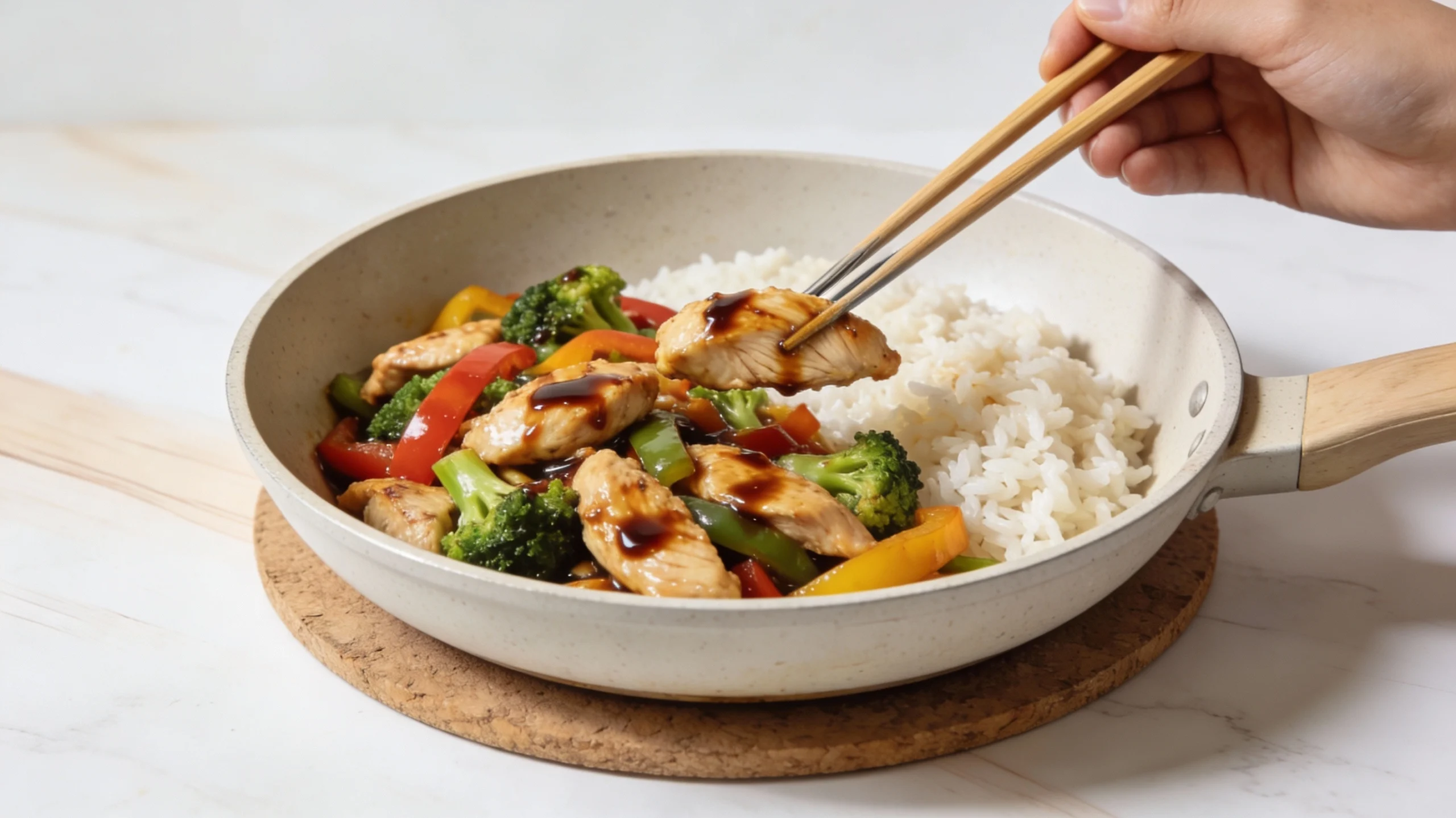
Tired of the weeknight dinner dilemma? You know the drill: everyone’s hungry, time is short, the fridge is a mystery, and the thought of tackling a sink full of dishes after cooking is enough to make you reach for those takeout menus again. Sound familiar?
What if we told you that a flavorful, healthy, and incredibly easy one-pan chicken stir-fry could be on your table in under 30 minutes, with minimal cleanup? You can put an end to the hassle of juggling multiple pots, scrubbing burnt-on sauces from three different pans, and feeling guilty about expensive takeout.
Say goodbye to dinner stress and hello to your new go-to Asian-inspired dinner! This recipe delivers all the flavors you love from your favorite Chinese restaurant—savory, slightly sweet, and perfectly saucy—but made fresh in your own kitchen with ingredients you control. It’s the kind of meal that makes everyone happy, from the adults who appreciate the bold flavors to the kids who will actually eat their vegetables when they’re coated in this irresistible sauce.
Why This One-Pan Chicken Stir-Fry Will Become Your Weeknight Hero
As a busy parent myself, I’ve had my fair share of chaotic evenings. You know the ones—soccer practice ran late, homework took forever, and suddenly it’s 6:30 PM and nobody has eaten anything substantial. I understand the struggle of wanting to feed your family something nutritious and delicious without spending hours in the kitchen or resorting to frozen pizza for the third time this week.
This One-Pan Chicken Stir-Fry recipe was born out of those very moments—a quest for a truly “quick meal” that actually delivers on flavor and convenience without cutting corners where it matters. After years of testing and tweaking, I’ve created something I’m genuinely proud to share with you.
What makes this recipe special? It’s not just about throwing random ingredients into a pan and hoping for the best. It’s about smart techniques that maximize flavor, minimize mess, and ensure a perfectly cooked meal every single time.
We’ve perfected the balance of savory soy sauce, sweet honey, and tangy rice vinegar, creating a sauce that coats every piece of chicken and vegetable beautifully. The vegetables stay crisp-tender (not soggy!), the chicken stays juicy (not dry!), and the sauce develops that glossy, restaurant-quality sheen that makes everyone reach for seconds.
Plus, the “one-pan” part isn’t just a catchy title—it’s a genuine promise. One pan, start to finish, with just a cutting board and knife to clean alongside it. Your future self will thank you.
Ingredients You’ll Need
Everything here is accessible and probably already in your kitchen!
For the Stir-Fry:
- 1.5 lbs boneless, skinless chicken breasts or thighs, cut into 1-inch pieces
- 2 tablespoons olive oil or sesame oil
- 1 head broccoli, cut into bite-sized florets
- 2 medium carrots, thinly sliced or julienned
- 1 red bell pepper, thinly sliced
- 1 cup snap peas or snow peas
- Optional: ½ cup sliced mushrooms, baby corn, water chestnuts
For the Asian-Inspired Sauce:
- ½ cup low-sodium soy sauce (or tamari for gluten-free)
- 2 tablespoons honey or maple syrup
- 1 tablespoon rice vinegar
- 1 teaspoon fresh grated ginger
- 2 cloves garlic, minced
- 1 tablespoon cornstarch
- ½ teaspoon sesame oil
For Serving:
- Cooked white or brown rice, quinoa, or noodles
- Optional garnish: sesame seeds, sliced green onions
Equipment Needed
Simple tools for simple cooking!
- Large skillet or wok (12-inch or larger)
- Cutting board
- Sharp knife
- Small bowl and whisk (or fork)
- Measuring cups and spoons
No special equipment required—a regular large skillet works just as well as a wok!
Ingredient Notes and Easy Substitutions
Protein Swaps: Feel free to substitute the chicken for shrimp (add during the last 3-4 minutes of cooking), thinly sliced beef strips, or firm tofu (pressed and cubed) for a vegetarian version. Each brings its own delicious character to the dish.
Vegetable Flexibility: Use your family’s favorites or whatever needs using up in your fridge! Frozen stir-fry vegetable mixes work great in a pinch—add them directly to the pan without thawing. Zucchini, bok choy, cabbage, or green beans are all excellent alternatives or additions.
Sauce Customizations: Adjust the sweetness by adding more or less honey to your taste. For some heat, add a dash of sriracha, sambal oelek, or red pepper flakes. A tablespoon of peanut butter stirred into the sauce creates a delicious Thai-inspired variation.
Finding Specialty Ingredients: Rice vinegar and sesame oil are key for authentic Asian flavor but are readily available in the international aisle of most grocery stores. They’re inexpensive and last a long time, making them worth having in your pantry for future stir-fries!
Step-by-Step Instructions
Follow these steps for perfect stir-fry in about 25 minutes!
Step 1: Prep Everything First (This Is Important!)
Before you even turn on the stove, get all your prep work done. Cut the chicken into uniform 1-inch pieces. Chop all your vegetables into similar-sized pieces for even cooking. In a small bowl, whisk together all the sauce ingredients until the cornstarch is completely dissolved and the mixture is smooth.
Pro Tip: This “mise en place” (everything in its place) approach is absolutely essential for stir-fry success! Stir-fries cook incredibly fast, and once you start, there’s no time to stop and chop. Having everything measured, cut, and ready to go transforms the cooking process from stressful to seamless.
Step 2: Sear the Chicken to Golden Perfection
Heat the oil in your large skillet or wok over medium-high heat until it shimmers and just begins to smoke. Add the chicken pieces in a single layer (don’t pile them up!) and let them cook undisturbed for 2-3 minutes to develop a golden sear.
Flip and stir, then continue cooking for another 3-4 minutes until the chicken is browned on all sides and mostly cooked through. The chicken doesn’t need to be 100% done at this point—it will finish cooking later. Remove the chicken to a clean plate and set aside.
Pro Tip: Don’t overcrowd the pan! If your skillet isn’t large enough to hold all the chicken in a single layer, cook it in two batches. Overcrowded chicken releases moisture and steams instead of searing, which means you miss out on all that delicious caramelized flavor.
Step 3: Stir-Fry the Vegetables
Add a little more oil to the hot pan if needed. Add the broccoli and carrots first—these are the hardest vegetables and need the most cooking time. Stir-fry for 3-4 minutes, tossing frequently, until they start to become tender-crisp and develop a few charred spots.
Add the bell pepper and snap peas (the softer, faster-cooking vegetables) and continue stir-frying for another 2-3 minutes until everything is bright, colorful, and crisp-tender.
Pro Tip: Cooking harder vegetables first, then adding softer ones later, ensures everything reaches the perfect texture at the same time. This prevents the common stir-fry tragedy of mushy broccoli and crunchy carrots!
Step 4: Bring Everything Together
Return the seared chicken to the pan with the vegetables. Give your sauce a quick re-whisk to redistribute the cornstarch (it settles!), then pour it over everything in the pan.
Pro Tip: The cornstarch in the sauce will start thickening immediately once it hits the heat, so work quickly. Keep everything moving in the pan to ensure the sauce coats the chicken and vegetables evenly.
Step 5: Simmer, Thicken, and Serve
Bring the mixture to a gentle simmer, stirring constantly. The sauce will thicken and become glossy within about 1-2 minutes, beautifully coating every piece of chicken and vegetable.
Remove from heat immediately once the sauce reaches your desired consistency. Serve hot over steamed rice, quinoa, or noodles. Garnish with sesame seeds and sliced green onions if desired.
Pro Tip: Cook just until the sauce thickens—don’t keep it on the heat after that point! Overcooking will make your perfectly crisp-tender vegetables turn mushy. Serve immediately for the best texture.
Expert Tips for Perfect Stir-Fry Every Time
High Heat Is Essential: Stir-frying is all about quick cooking over high heat. This creates that characteristic slightly charred flavor and keeps vegetables crisp. If your pan isn’t hot enough, everything will steam and become soggy.
Cut Everything Uniformly: Pieces that are the same size cook at the same rate. This applies to both the chicken and the vegetables—uniformity is the key to evenly cooked stir-fry.
Don’t Walk Away: Stir-frying requires your attention for the 10-15 minutes it takes. Stay at the stove, keep things moving, and watch for visual cues rather than relying solely on timers.
Season the Chicken: For extra flavor, lightly season the raw chicken pieces with a pinch of salt and pepper before searing. This builds flavor from the very first step.
Storage, Reheating, and Meal Prep Tips
Meal Prep Marvel: This stir-fry is fantastic for meal prep! Cook a double batch and portion it into individual containers for quick lunches or dinners throughout the week. Store the rice separately to prevent it from becoming soggy.
Storage: Leftovers can be stored in an airtight container in the refrigerator for up to 3-4 days. The flavors actually deepen overnight, making leftovers taste even better!
Reheating: Reheat gently in a microwave (cover loosely, heat in 1-minute intervals) or on the stovetop over medium heat. Add a splash of water or chicken broth to loosen the sauce, which will have thickened in the fridge.
Freezing: While the vegetables lose some crispness when frozen, this stir-fry can be frozen for up to 2 months. Thaw overnight in the refrigerator and reheat gently.
Delicious Variations to Try
Spicy Kick: Add a pinch of red pepper flakes along with the garlic and ginger, or drizzle sriracha over the finished dish. For serious heat lovers, add sliced fresh jalapeño or Thai chilies.
Noodle Stir-Fry: Instead of serving over rice, toss cooked ramen noodles, lo mein noodles, or rice noodles directly into the pan with the sauce for a satisfying noodle stir-fry experience.
Peanut Sauce Version: Stir 2 tablespoons of creamy peanut butter into the sauce for a Thai-inspired twist. Add a squeeze of lime juice at the end for brightness.
Teriyaki Style: Increase the honey to 3 tablespoons and add 1 tablespoon of mirin for a sweeter, more teriyaki-like flavor profile.
Low-Carb Option: Serve over cauliflower rice or zucchini noodles (zoodles), or simply enjoy the stir-fry on its own as a delicious, satisfying low-carb dinner.
Cashew Chicken: Add ½ cup of roasted cashews during the last minute of cooking for crunch and extra protein.
Frequently Asked Questions
Can I use frozen vegetables for this One-Pan Chicken Stir-Fry?
Absolutely! Frozen stir-fry vegetable mixes are a fantastic time-saver for busy weeknights. Add them directly to the hot pan after cooking the chicken—no need to thaw first. Stir-fry until heated through and tender-crisp, which may take a minute or two longer than fresh vegetables due to the moisture they release as they cook.
How do I prevent my stir-fry chicken from being tough or dry?
The key is avoiding overcooking! Sear the chicken quickly over medium-high heat until just browned and mostly cooked through, then remove it from the pan immediately. It will continue cooking slightly from residual heat, and it finishes in the sauce at the very end. Cutting chicken into uniform pieces also ensures even cooking—no dried-out small pieces while bigger ones are still raw.
What are the best side dishes to serve with One-Pan Chicken Stir-Fry?
This stir-fry pairs perfectly with steamed white or brown rice, which soaks up the delicious sauce beautifully. Quinoa is a nutritious alternative. For noodle lovers, try serving over quick-cooking ramen, lo mein, or rice noodles. For a lighter option, serve with a simple green salad or extra steamed vegetables.
Can I prepare the sauce ahead of time?
Yes! Whisk together all the sauce ingredients up to 2-3 days in advance and store in an airtight container or jar in the refrigerator. Give it a good shake or whisk before using, as the cornstarch will settle to the bottom. Having the sauce ready to go makes weeknight cooking even faster.
My stir-fry sauce isn’t thickening. What should I do?
First, ensure your cornstarch is well mixed into the sauce before adding it to the pan. The sauce needs to come to a simmer (not just warm) for the cornstarch to activate and thicken. If it’s still too thin after simmering for a minute or two, make a quick slurry by mixing 1 teaspoon cornstarch with 1 teaspoon cold water, then slowly stir it into the simmering sauce until you reach your desired consistency.
Can I make this stir-fry vegetarian?
Definitely! Substitute the chicken with extra-firm tofu (pressed and cubed) or add extra vegetables and some canned chickpeas for protein. Use vegetable broth if your soy sauce contains fish products (some do). The cooking method stays exactly the same—brown the tofu first, then proceed with the vegetables.
Final Thoughts
This One-Pan Chicken Stir-Fry: Asian-Inspired Dinner is everything a busy family needs—quick to prepare, packed with flavor, loaded with protein and vegetables, and requiring only one pan to clean afterward. It’s the kind of recipe that makes you feel like you have your life together, even on the most chaotic weeknights.
The magic lies in the perfectly balanced sauce, the restaurant-quality searing technique, and the smart approach of cooking vegetables in stages for ideal texture. These small details add up to a dish that tastes far more impressive than the effort required to make it.
So the next time you’re staring into your fridge wondering what to make, or reaching for that takeout menu out of exhaustion, remember this recipe is waiting for you. Better than takeout, ready in 25 minutes, and with only one pan standing between you and a satisfied family.
Happy cooking!
Love quick Asian-inspired meals? Check out our collection of easy weeknight dinners that bring global flavors to your family table!







Discussion about this post