

Staring Into an Empty Fridge? Your Pantry’s Got Your Back!
Do you find yourself staring into an empty fridge while your stomach is in a state of turmoil? Wallet feeling lighter than a feather? You’re not alone, college fam! We’ve all been there—it’s Thursday night, you’ve got $7.43 to your name until next week’s paycheck, and the dining hall closed an hour ago—cue dramatic music.
But here’s the thing: this post isn’t just about throwing together another sad bowl of instant ramen (though no judgment—we’ve all had those nights). This is your ultimate guide to transforming those forgotten cans and dry goods lurking in the back of your cabinet into genuinely delicious, budget-friendly quick meals. No fancy ingredients. No chef skills. You don’t need to feel guilty about inheriting an expired jar of mystery spice from your roommate.
We’re unlocking the power of pantry staples to save you money, time, and the dreaded ramen fatigue. Think of this as your crash course in survival cooking that doesn’t actually taste like survival mode. And the best part? Once you nail this framework, you’ll be whipping up cheap college food and easy dinner hacks like a total pro.
Why You Should Trust My Pantry-Raiding Advice
I have personally experienced these challenges and have acquired the infamous grease-stained T-shirt! During my first year of college, I endured a culinary disaster consisting of instant noodles, sad sandwiches, and a truly regrettable incident involving burnt scrambled eggs and a fire alarm at 2 AM. (Sorry, third-floor residents of Morrison Hall.)
But faced with a tight budget and even tighter deadlines, I became a pantry ninja out of necessity. Using what I already had, I learned to create satisfying and genuinely tasty meals, which significantly improved both my budget and my sanity. This isn’t just theory pulled from some fancy cookbook; it’s tested, student-approved survival cooking born from countless “Oh crap, I have no groceries” moments.
This isn’t just one recipe; it’s a versatile framework that teaches you how to build endless student meal ideas using common pantry staples. Once you master it, you’ll be able to look at a can of chickpeas, some pasta, and a random tomato can and actually see dinner instead of confusion.
The Hero Recipe: Quick & Zesty Lemon-Herb Chickpea Pasta
Total Time: 25 minutes | Serves: 4 (or 2 hungry college students)
Your Pantry Power Players (Essential Pantry Items)
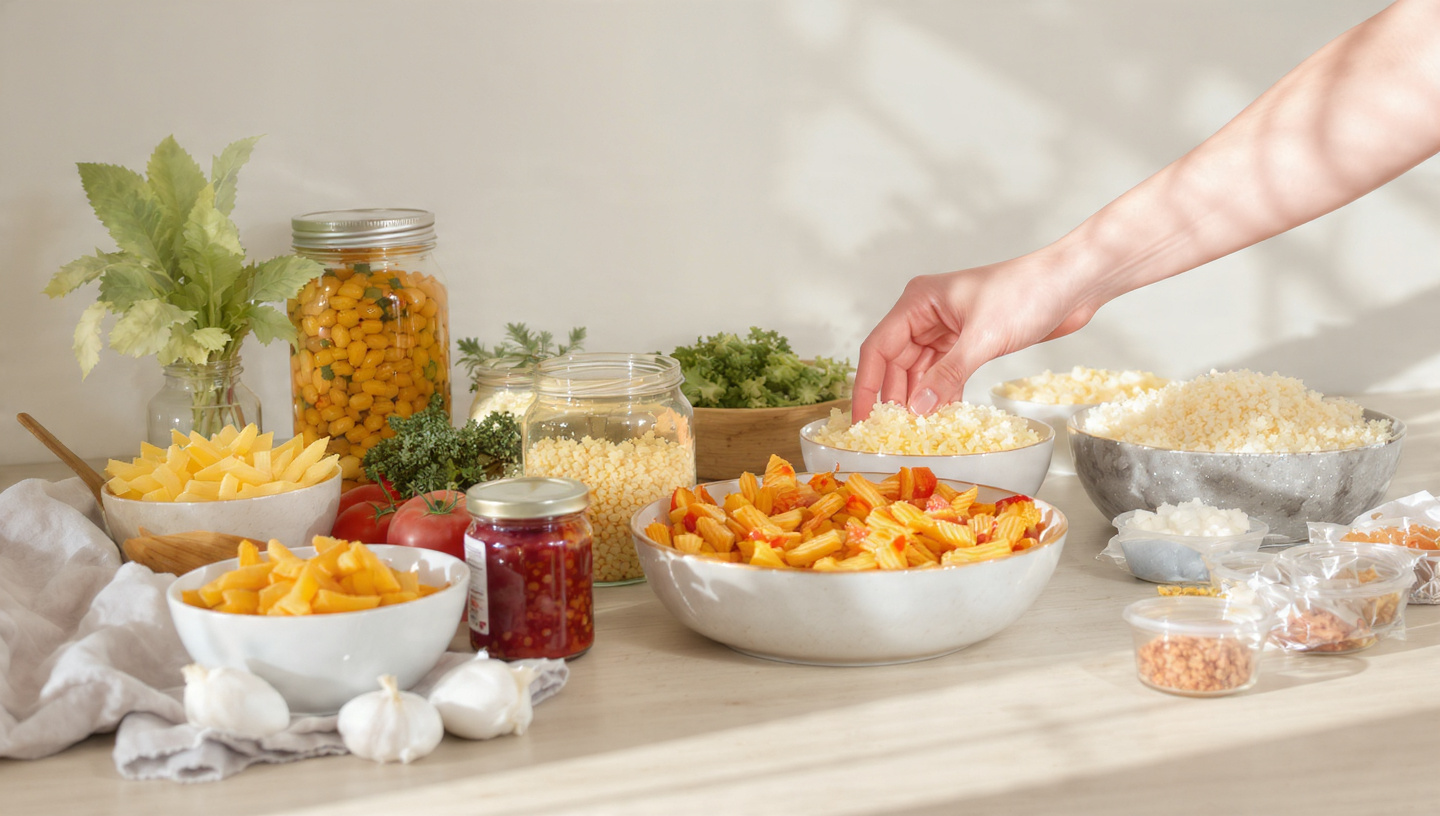
Here’s what you need—and I promise, you probably have most of this already:
The Main Cast:
- 1 can (15 oz) chickpeas, rinsed and drained (these little protein bombs are about to become your best friend)
- 8 oz pasta—any shape works! Spaghetti, penne, rotini, those weird elbows you bought on sale
- 1 can (14.5 oz) diced tomatoes, undrained (the liquid is flavor gold!)
- 2-3 cloves garlic, minced (or 1 tsp garlic powder if fresh feels like too much effort)
- 1/2 onion, chopped (or 1 tsp onion powder—we don’t judge shortcuts here)
- 2-3 cups fresh or frozen spinach (frozen is actually easier and lasts forever)
The Flavor Squad:
- 2 tbsp olive oil (or any cooking oil you’ve got)
- 1/2 cup vegetable broth (or just water + half a bouillon cube)
- Juice of 1/2 lemon (this is the secret weapon!)
- 1 tsp dried oregano (or Italian seasoning)
- Salt and black pepper to taste
- Optional but awesome: Red pepper flakes for a kick!
Smart Swaps (Because Flexibility is Key)
- Chickpeas: Cannellini beans or any white bean work great
- Pasta: Whole wheat adds fiber; use whatever’s on sale!
- Spinach: kale, frozen mixed greens, and even that bag of salad mix that’s about to turn.
- Herbs: Dried basil, thyme, or a pinch of rosemary all work
Kitchen Tools for Beginners (No Special Equipment!)
- Large pot or deep skillet
- Cutting board
- A sharp knife, or even a sturdy butter knife, works in a pinch.
- Colander (or just carefully drain pasta using the pot lid—I won’t tell)
- Spatula or wooden spoon
- Measuring spoons/cups (optional—”eyeballing” it is totally fine once you get the hang of it!)
Let’s Make This Magic Happen: Simple Cooking Instructions
Step 1: Prep Your Power Players (5 minutes)
Chop your onion and mince your garlic. If using fresh spinach, give it a quick rinse. Pro tip that changed my life: Get all your chopping done before you turn on the stove. I used to start cooking and then realize I hadn’t chopped anything, leading to burnt garlic and mild panic. Learn from my mistakes!
Step 2: Pasta Time! (8-10 minutes)
Cook your pasta according to package directions in your large pot. When it’s done, drain it and set it aside. Here’s an insider tip: Reserve approximately half a cup of that starchy pasta water before draining. This liquid gold is essential for creating a silky sauce.
Don’t rinse your pasta after draining—I know it’s tempting, but that starch helps the sauce stick better. This is beginner cooking tip #1 that’ll level up literally every pasta dish you make.
Step 3: Sauté the Aromatics (4 minutes)
In the same pot (yes, the same pot—less dishes!), heat your olive oil over medium heat. Add that chopped onion and cook until it’s softened and starting to smell amazing, about 3-4 minutes. Toss in the minced garlic and cook for another minute until your kitchen smells like an Italian restaurant.
Critical warning: Don’t burn the garlic! Be vigilant, as burnt garlic has a bitter taste and cannot be salvaged. Ask me how I know. (Spoiler: I’ve ruined this step approximately 47 times.)
Step 4: Build Your Flavor Base (5 minutes)
Stir in the drained chickpeas, those diced tomatoes (don’t drain them!), dried oregano, salt, and pepper. Bring everything to a gentle simmer and let it bubble away for a few minutes. This phase is where the flavors get to know each other and become friends. Don’t rush this part!
Step 5: Wilt the Greens (2 minutes)
Add your spinach to the pot. If it is fresh, it will wilt within approximately 30 seconds (remarkably, it contracts significantly in such a short period). If it’s frozen, heat it through. Pro tip for frozen spinach: Squeeze out excess water before adding, or you’ll end up with spinach soup instead of pasta. Not ideal.
Step 6: The Grand Finale (2 minutes)
Add the cooked pasta back to the pot. Pour in the vegetable broth and that lemon juice—this is where it all comes together. Stir everything until it’s combined and beautiful. If it looks too thick, add a splash of your saved pasta water until it reaches that perfect saucy consistency.
Now here’s the most important step: Taste it! Need more salt? Add it. Want more lemon? Go for it. Feeling spicy? Toss in those red pepper flakes. This dish is your dinner—make it exactly how you like it.
Next-Level Tips & Meal Prep Strategies
Meal Prep Master Move: Double this recipe on Sunday and portion it into containers. This will provide you with convenient lunches or dinners for half the week. This pasta holds up great in the fridge and actually tastes better the next day after the flavors have married.
Flavor Boosters When You’re Feeling Fancy:
- Spicy Kick: Red pepper flakes with the garlic (game changer)
- Cheesy Goodness: Nutritional yeast for plant-based cheesy flavor, or real Parmesan if that’s your jam
- Freshness Factor: A handful of fresh parsley or basil, if you happen to have it
Storage Savvy: Leftovers last for 3–4 days in an airtight container in the fridge. Reheat gently on the stovetop with a splash of water, or microwave in 30-second bursts.
Recipe Customization Ideas:
- Grain Swap: Try this with rice, quinoa, or couscous instead of pasta
- Veggie Power-Up: Canned corn, frozen peas, or chopped carrots all work beautifully
- Protein Punch: Cooked chicken or canned tuna can be stirred in at the end (if you’re not keeping it plant-based)
Your Pantry Staples Questions, Answered
Q: What are the absolute essential pantry staples for college students on a budget?
A: Great question! Start with these affordable groceries: dried pasta, rice, canned beans (chickpeas and black beans are MVPs), canned tomatoes, frozen vegetables, oats, peanut butter, and a basic spice lineup (salt, pepper, garlic powder, onion powder, and oregano). These form the backbone of countless budget-friendly quick meals and will save you SO much money compared to ordering takeout. Check out our [Top 10-Minute Dinners for Busy Nights] for more ideas using these same staples!
Q: How can I make quick meals without fresh ingredients when my fridge is empty?
A: This is literally the secret! Accept canned goods and frozen produce as indispensable companions. Canned beans, tomatoes, and vegetables are just as nutritious and way more convenient. Frozen fruits and veggies are picked at their peak and last for ages—no more sad, wilted lettuce at the back of your fridge. Learn to season well with dried herbs and spices to add tons of flavor. For more inspiration, check out our [5 Speedy Black Bean Recipes You Need to Try].
Q: Is it healthy to eat mostly pantry-based meals?
A: Absolutely! Healthy budget meals are totally doable with pantry staples. Whole grains, legumes, and frozen vegetables are packed with fiber, protein, and essential nutrients. The key is balance—aim for a variety of these staples and minimize the heavily processed stuff (though sometimes that instant mac and cheese is necessary for your soul, and that’s okay too). Our quick vegetarian recipes often highlight how nutritious these simple ingredients can be.
Q: How long do common pantry staples actually last with proper food storage?
A: Most dried goods (pasta, rice) and canned goods can last for years past their “best by” date if you store them in a cool, dry place. Those dates are usually about quality, not safety. Always check for warning signs, though—rust on cans, bulging lids, weird smells, or anything that looks sketchy. When in doubt, throw it out!
Q: What’s an effortless vegetarian meal? Can I make it with just pantry items and no special equipment?
A: You just read one! Our Quick & Zesty Lemon-Herb Chickpea Pasta is literally designed for this exact situation. Other solid options: black bean tacos (canned beans + salsa + tortillas), lentil soup made from dried lentils, or a simple rice-and-bean bowl jazzed up with whatever spices you have. For breakfast options that use similar principles, check out our [Healthy Breakfast Ideas for College Students].
The Bottom Line on Budget Cooking
Look, I’m not going to pretend that pantry cooking is always glamorous. Sometimes you’re eating chickpea pasta for the third time this week, and that’s life. But mastering the power of pantry staples means you’re never truly broke and hungry. You’ve got options. You’ve got dinner. And you didn’t have to stress about it or blow your budget.
These essential pantry items serve as your safety net and money-saving recipe arsenal, and honestly, they are indispensable. Once you get creative with them, they’re pretty dang delicious. So next time you’re staring into that empty fridge, remember: your pantry’s been waiting to show you what it can do all along.
Now go forth and conquer those cans!






Discussion about this post