


Most people don’t even think about what their gut does. It breaks down your food, absorbs nutrients, communicates with your brain, and hosts trillions of microorganisms that affect everything from your mood to your immune system. And like any system that works hard, it works best when you give it the right fuel, which you should do first thing in the morning.
The things that are good for your gut aren’t rare or expensive. Fermented foods like yogurt, kefir, and miso put good bacteria directly into your gut. Foods high in fiber, like oats, flaxseed, berries, and legumes, feed the good bacteria already present. When you know how to mix them, these two groups—probiotics and prebiotics—make up the foundation of a diet that supports gut health. They also make a really tasty, quick, and healthy breakfast.
This guide shows you four gut-friendly breakfast recipes, tells you which key ingredients to always have on hand, and explains the habits that will help your digestive health get better over time. No need for complicated protocols or stacks of supplements—just real food that works.
Learning the Basics of Gut Health at Breakfast
People who talk about gut health often use the words “probiotics” and “prebiotics.” They sound the same, but they do different things.
Fermented foods like plain yogurt, kefir, miso, sauerkraut, kimchi, and kombucha all have probiotics, which are live bacteria that are good for you. Eating these foods often helps keep your microbiome healthy and diverse.
Prebiotics are foods high in fiber that feed the good bacteria. Oats, bananas, garlic, onions, asparagus, flaxseed, and legumes all contain significant amounts of prebiotics. When there is enough food for the good bacteria in your gut, they grow and push out the less helpful ones.
A quick, healthy breakfast that combines both, like plain yogurt with oats and a banana, is a two-in-one gut health plan in a single bowl. The best part is that these combinations taste great and don’t take much work.
Your Pantry for Gut Health Breakfast
If you have these ingredients on hand, you can always make any of the recipes below:
Foods High in Probiotics
– Regular plain yogurt or plain full-fat Greek yogurt (with live active cultures—check the label)
– Kefir, a drinkable fermented dairy product that you can find near yogurt in most stores
– White or yellow miso paste
– Sauerkraut or kimchi (in the fridge, not on the shelf)
– Kombucha (to drink with breakfast)
Foods high in fiber and prebiotics
– Quick oats or rolled oats
– Bananas that are ripe or slightly overripe (the resistant starch in bananas grows as they ripen)
– Ground flaxseed (keep it in the fridge to keep it fresh)
– Seeds of chia
— Berries, especially blueberries, raspberries, and blackberries
– Onion and garlic
Items that help the pantry
– Raw honey (has some prebiotic properties and goes well with yogurt)
– Almonds and walnuts
– Sourdough or whole-grain bread (real sourdough made with a live starter has some probiotic properties).
– Canned white beans or chickpeas
– Vanilla and cinnamon extract
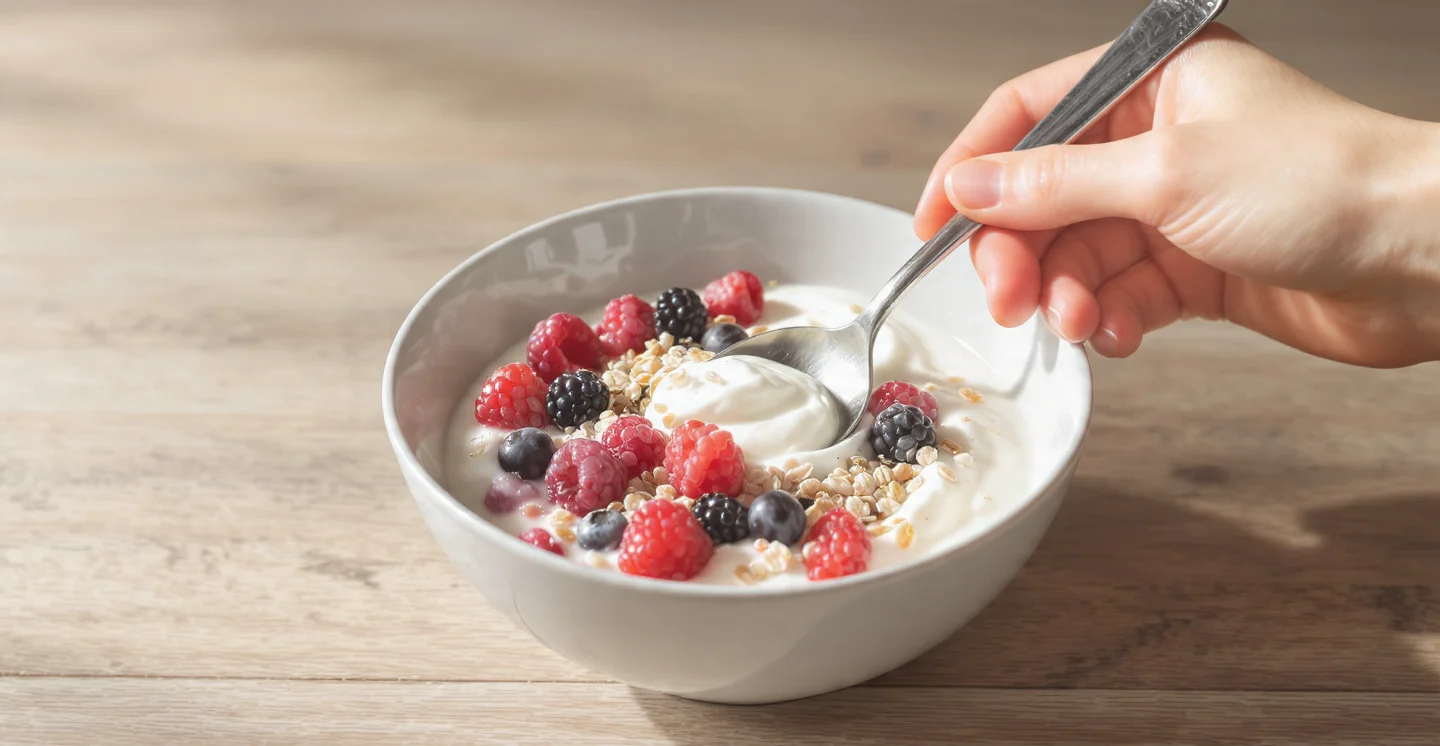
Probiotic Yogurt Bowl with Oats, Berries, and Flaxseed (less than 10 minutes)
This is the simplest version of the gut health breakfast: creamy yogurt with fiber-rich toppings that work together to feed and support your microbiome. This bowl is great for your digestive system because it has live cultures from the yogurt, resistant starch from the oats, and polyphenols from the berries.
Ingredients (for one person):
– 3/4 cup of plain, full-fat Greek yogurt with live active cultures
– 1/4 cup of rolled oats, either raw or lightly toasted
– 1/2 cup of mixed berries, either fresh or thawed from frozen
– 1 tablespoon of ground flaxseed
– 1 tablespoon of chia seeds
– 1 teaspoon of raw honey
– A few walnuts and a little cinnamon are optional. namon
How to do it:
1. Put the Greek yogurt in a big bowl and spread it out a little.
2. Spread the rolled oats over the yogurt. Raw oats are a good prebiotic food for gut bacteria because they add a nice chew and resistant starch.
3. Spread the berries evenly on top.
4. Sprinkle the chia seeds and ground flaxseed on top.
5. Put the honey on everything.
6. If you’re using walnuts and cinnamon, add them at the end and eat right away.
Probiotics from live-culture yogurt, prebiotic fiber from oats and flaxseed, and polyphenols from berries that protect gut lining cells from damage are all good for gut health.
Miso soup with tofu, spinach, and a soft-boiled egg (less than 10 minutes)
A warm, tasty breakfast can be just as good for your gut as a bowl of yogurt, especially if it contains miso. Miso is a paste made from fermented soybeans, rich in beneficial bacteria and enzymes that support digestion. This is a quick and healthy breakfast that has everything you need, including fiber from spinach and protein from tofu and eggs.
Ingredients (for one person):
– 1.5 cups of water or light vegetable broth
– 1 tablespoon of white miso paste
– 1/3 cup of soft or silken tofu, cut into cubes
– One big handful of fresh spinach or one tablespoon of frozen spinach
– 1 soft-boiled egg, cut in half
– 1 scallion, cut into thin slices
– Optional: some sesame oil and dried seaweed flakes
How to do it:
1. Put the water or broth in a small pot over medium heat and let it come to a gentle boil. Don’t let it get to a full boil.
2. Add the tofu and spinach and let them cook for one to two minutes, or until the spinach is wilted.
3. Take it off the heat. Whisk the miso paste with two tablespoons of the hot broth in a small bowl until smooth. Then, stir this back into the soup. Don’t boil miso; high heat kills the good bacteria.
4. Put the soup in a bowl and put the soft-boiled egg on top.
5. If you’re using scallions, sesame oil, and seaweed, add them as a garnish and serve right away. ly.
Unpasteurized miso contains live cultures and enzymes, spinach provides plant fiber, and tofu and eggs provide protein to help repair the walls of the intestines.
Recipe 3: Banana and Kefir Smoothie with Ground Flaxseed (5 Minutes)
Kefir is one of the foods with the highest levels of probiotics. It has more types of good bacteria than most yogurts, and its tangy taste makes it a great addition to smoothies. This smoothie is a full gut-health drink you can make in just 5 minutes. It has a ripe banana for prebiotic fiber and ground flaxseed for omega-3s and extra fiber.
Ingredients (for one person):
– 1 ripe banana (bananas with a few spots on them have more prebiotic resistant starch)
– 3/4 cup of plain kefir (dairy or coconut-based for a non-dairy version)
– 1 tablespoon of ground flaxseed
– 1/2 cup of frozen blueberries
1/4 teaspoon of cinnamon
– Optional: a teaspoon of raw honey and a tablespoon of almond butter for more fat and energy. ower
How to do it:
1. Put everything in a blender.
2. Blend on high for 30 to 45 seconds, or until the mixture is smooth and creamy.
3. Pour into a glass and drink right away, or put it in a container with a lid and drink it within an hour. The flaxseed will keep thickening the smoothie as it sits, so if it has been sitting for more than a few minutes, shake or stir it before you drink it.
Highlights for gut health include a variety of probiotic strains from kefir, prebiotic fiber from bananas and flaxseed, and anthocyanins from blueberries that help keep the gut lining healthy.
Recipe 4: Toasted sourdough bread with mashed avocado, kimchi, and a fried egg (12 to 15 minutes)
This one is for days when you want a more filling, savory breakfast that is still good for your gut. Real sourdough bread, made with a live fermentation starter rather than commercial yeast, has a lower glycemic response than regular bread and contains organic acids that support digestion. Kimchi adds a strong probiotic kick, and avocado adds healthy fats and prebiotic fiber.
Ingredients (for one person):
– One or two slices of real sourdough bread (look for “made with sourdough starter” on the label).
– half of a ripe avocado
– 1/4 cup of kimchi that has been roughly chopped and is live-culture and kept in the fridge
– 1 egg, cooked the way you like it
— A squeeze of lemon juice
– Add salt, pepper, and red pepper flakes to taste.
– Optional: a few sesame seeds and a little sesame oile oil
How to do it:
1. Toast the sourdough until it is as crispy as you like.
2. While the bread is toasting, put the avocado in a small bowl and mash it with a fork. Add the lemon juice, salt, and pepper, and stir until everything is mixed but still a little chunky.
3. Put a small skillet on medium heat and coat it lightly with olive oil or butter. You can fry the egg however you like; sunny-side up works great here.
4. Spread the avocado mash all over the toast.
5. Put the kimchi on top, and then put the fried egg on top of that.
6. If you’re using sesame oil, add red pepper flakes, sesame seeds, and a drizzle of oil at the end.
Fermentation-derived organic acids from sourdough, live bacteria from raw kimchi, and prebiotic fiber from avocado are all good for gut health.
How to Make a Morning Routine That Is Good for Your Gut
Quality is more important than quantity. A healthy microbiome is one that contains many different types of bacteria. Eating a wide variety of plant foods over time is one way to get this diversity. Instead of eating the same breakfast every day, try to change up the fruits, grains, and vegetables you eat each week.
Heat kills good bacteria. This is true for yogurt, kimchi, and miso. Always add fermented foods at the end of cooking, or serve them with hot foods rather than cooking them directly in the heat. If you stir miso into a bowl of soup off the heat, it’s still good for your gut. But not if you do it while the soup is boiling.
Start slowly by adding high-fiber foods. If you don’t eat much fiber right now and then suddenly add a lot of flaxseed, chia seeds, and raw oats, your gut may take a few days to adjust. Add new sources of fiber one at a time and slowly increase the amount to avoid temporary bloating.
Mix fiber with water. When you drink a lot of water, fiber works best. A glass of water with your gut-health breakfast helps everything work better.
Carefully read the labels on yogurt. Many store-bought yogurts, especially flavored ones, are heated after fermentation, which kills the live cultures. To make sure you’re getting the probiotic benefit, look for “contains live and active cultures” on the label.
Ideas for serving to make your gut-healthy breakfast complete
– Serve the probiotic yogurt bowl with a cup of warm ginger tea, which is good for digestion and makes the whole morning feel planned.
– For a more traditional Japanese breakfast, serve the miso soup with a small bowl of plain steamed rice and some pickled ginger slices.
– Make two batches of the kefir smoothie and put the second one in a mason jar in the fridge for a quick breakfast the next day. Shake well before drinking.
– For an extra probiotic boost and to satisfy a craving for something fizzy, serve the sourdough and kimchi toast with a small glass of kombucha on the side.
Your stomach will thank you for starting here.
You don’t need a complicated plan or a lot of expensive supplements to improve your digestion, stabilize your energy, and support a healthier microbiome. It all starts with what you eat in the morning. One of the best and tastiest ways to invest in your long-term health is to eat a quick and healthy breakfast that starts with probiotics and fiber-rich foods. These recipes show that it only takes fifteen minutes or less to make. This week, try one recipe and see how you feel. Then, add more recipes as you go.
Go to QuickMealsuide (http://quickmeals.guide) to find more quick recipes.
















Discussion about this post