
Do not Feel Bad About the Bags in Your Freezer.
Do you ever feel like you cannot make healthy, quick meals because you are busy and do not have much money? Do not worry, you are not alone! I used to think that using frozen vegetables was like cheating at cooking. I should go to farmers’ markets every day and chop up fresh vegetables while my guests sipped wine and laughed at my jokes. That is not how most of us live in real life.
Discover how a simple bag of frozen vegetables can transform your kitchen, enabling you to prepare quick, tasty meals that are affordable, even on your busiest days. We mean vegetables that don’t spoil before use, don’t need chopping, and are often cheaper than “fresh” ones that have been in a truck for a week.
Prepare to discover the hidden tool for effortless cooking and cost-effective savings: the power of frozen vegetables. You will not believe how much better frozen vegetables are once you get used to them.
My Frozen Vegetable Awakening
As a food blogger who has tried many quick meal recipes and worked within my budget, I know firsthand how frozen vegetables can change a meal. They have been my go-to for adding nutrition without spending a lot of money or spending hours in the kitchen, whether I forgot to go grocery shopping (again) on a weeknight or planned meal prep sessions. I remember exactly when I stopped saying sorry for using frozen vegetables: it was when I realized I was actually eating vegetables instead of throwing away wilted ones.
As I have learned about cooking, I have looked into smart ingredient choices and efficient cooking methods. Frozen vegetables are always a hero in the world of cheap, quick meals. They have kept me from ordering takeout more times than I can count, and they have made cooking on weeknights possible instead of something I want to do.
I am here to share proven ways to get the most out of frozen vegetables, based on research into reducing food waste, improving nutritional value, and planning cheap meals. Did you know that frozen vegetables often contain more nutrients than “fresh” vegetables that have undergone storage? Science backs up what we already know about money.
This guide is based on real-life kitchen experiments and a desire to help you eat well, save time, and stay within your budget, thanks to the versatility of frozen vegetables. This guide is not intended to be judgmental or food snobby but rather to provide practical advice for individuals who must prepare dinner after a demanding workday.
Your Frozen Vegetable Arsenal: What You Really Need
The Powerful Frozen Vegetable: Why They Should Be Respected
Variety is your friend: For budget-friendly quick meals, it is important to have a variety of vegetables in your freezer because each one has its own flavor, texture, and nutrients. I always have peas (sweet and kid-friendly), corn (adds bulk and natural sweetness), broccoli florets (hearty and filling), spinach (disappears into everything), and mixed veggie blends (for when I cannot decide) in my freezer. Because I have so many different kinds, I can make everything from stir-fries to pasta dishes without going to the store.
Convenience that really saves time: Frozen vegetables that are already chopped and ready to use really do save time and effort. You do not have to wash, peel, chop, or cry over onions. All you have to do is open the bag, dump it out, and cook. This is worth its weight in gold on a Tuesday night when you are tired. It is the difference between making dinner and getting pizza.
Nutritional value is real: Let us put an end to the myths right now. Frozen vegetables retain their vitamins and minerals very well because they are flash-frozen at peak ripeness. That broccoli that looks “fresh” but has been in the produce section for days? It probably has less nutrition than the frozen stuff. Picking and processing frozen vegetables within hours of harvest helps retain their nutrients. Yes, they are really good for you.
Pantry staples that go well with frozen vegetables
Grains: Always have rice, pasta, and quinoa on hand. Minute rice and thin spaghetti are great quick-cooking options for budget-friendly quick meals. Dinner in 15 minutes: a bag of frozen vegetables, a pot of rice, and some soy sauce.
Proteins: Your main sources of protein are canned beans, dried lentils, eggs, and frozen chicken or fish (if you eat meat). I always have chickpeas and black beans in my pantry because they last a long time, are cheap, and taste great with any frozen vegetable.
Flavor boosters: This is where the magic happens. Get a lot of broth or bouillon cubes, soy sauce, your favorite spices, garlic (fresh, jarred, or powdered—no shame), and onions (fresh or powdered). These turn boring vegetables into real meals.
Important Kitchen Tools (No Need for Fancy Stuff)
You probably already have everything you need:
- Big skillet or pot—One pan is usually enough
- Spatula or spoon—For stirring
- Only if you are adding fresh ingredients, use a cutting board and knife.
That is all. No special tools or expensive gadgets are needed. Just the basic tools you already have.
Learn How to Cook Frozen Vegetables Like a Pro
Phase 1: Fill Your Freezer Smartly
**Step 1: Find out which vegetables you use the most and buy them in bulk when they are on sale. When frozen vegetables go on sale for $1 a bag, I check the weekly ads and stock up. I have 8 bags of peas in my freezer right now because they were on sale. That is 8 dinners I do not have to plan for.
Step 2: Pick plain kinds to get the most use out of them. Do not buy “broccoli in cheese sauce.” “Just get plain broccoli. You can control the taste, and it is cheaper. Those bags that are already seasoned cost two to three times as much and limit what you can make with them.
Step 3: Put things in your freezer in a way that makes them easy to get to. I keep all of my frozen vegetables in one place so I can see what I have right away. It is the worst to buy peas when you already have three bags hidden in the back.
Pro tip: Mark the date on your bags when you buy them to make sure they stay fresh. Move older bags to the front to keep your stock fresh. Vegetables that have been frozen last for months, but the best quality is when you use them within 8 to 12 months.
Phase 2: Quick Cooking Methods That Really Work
For stir-fries, sauté from frozen: Put your pan or wok over medium-high to high heat, add some oil, and then add your frozen vegetables. Do not worry about the ice crystals; they will go away. Keep the pan hot and stir it often. Your vegetables will be perfectly cooked and slightly browned in 5 to 7 minutes.
Roasting straight from the freezer: This changed my life. Put frozen vegetables on a baking sheet, drizzle them with oil, and season them with salt and pepper. Roast them at 425°F for 20 to 25 minutes, stirring halfway through. You get caramelization and crispy edges without thawing them. Roasting frozen broccoli and cauliflower is amazing.
Steaming or boiling for easy additions: In the last 3–4 minutes of cooking, add frozen vegetables directly to the boiling pasta water. Put everything in one place and drain it. Vegetable pasta that cooks right away. This goes great with corn, peas, or chopped spinach.
Adding to soups, stews, and sauces: Throw them in frozen. In the hot liquid, they will thaw and cook. In the last 10 minutes of cooking, add frozen vegetables to the soup. Add to the tomato sauce in the last 5 to 7 minutes: no planning, no thawing, no stress.
Pro tip: When you sauté or roast, do not crowd the pan. If you add too many vegetables at once, they will steam rather than sear, and you will end up with mushy vegetables instead of caramelized ones. If you need to, cook in groups.
Phase 3: Make a full meal in just a few minutes
Step 1: Pick your base. You can use a grain (like rice, quinoa, or pasta) or a protein (like chicken breast, tofu, or beans). Follow the package directions or your usual way of cooking this first.
Step 2: Add frozen vegetables right away. No need to thaw them first! If you are cooking a stir-fry, put the vegetables in the hot pan. You can even add frozen vegetables to the rice cooker during the last 10 minutes if you are making rice. Put the pasta in the boiling water with the other ingredients if you are making it.
Step 3: Add flavor. This is where you turn “food” into “dinner.” For Asian flavors, use soy sauce and ginger; for Mexican flavors, use cumin and salsa; for Mediterranean meals, use garlic and Italian seasoning. A little broth, a squeeze of lemon, and a sprinkle of cheese make everything taste better.
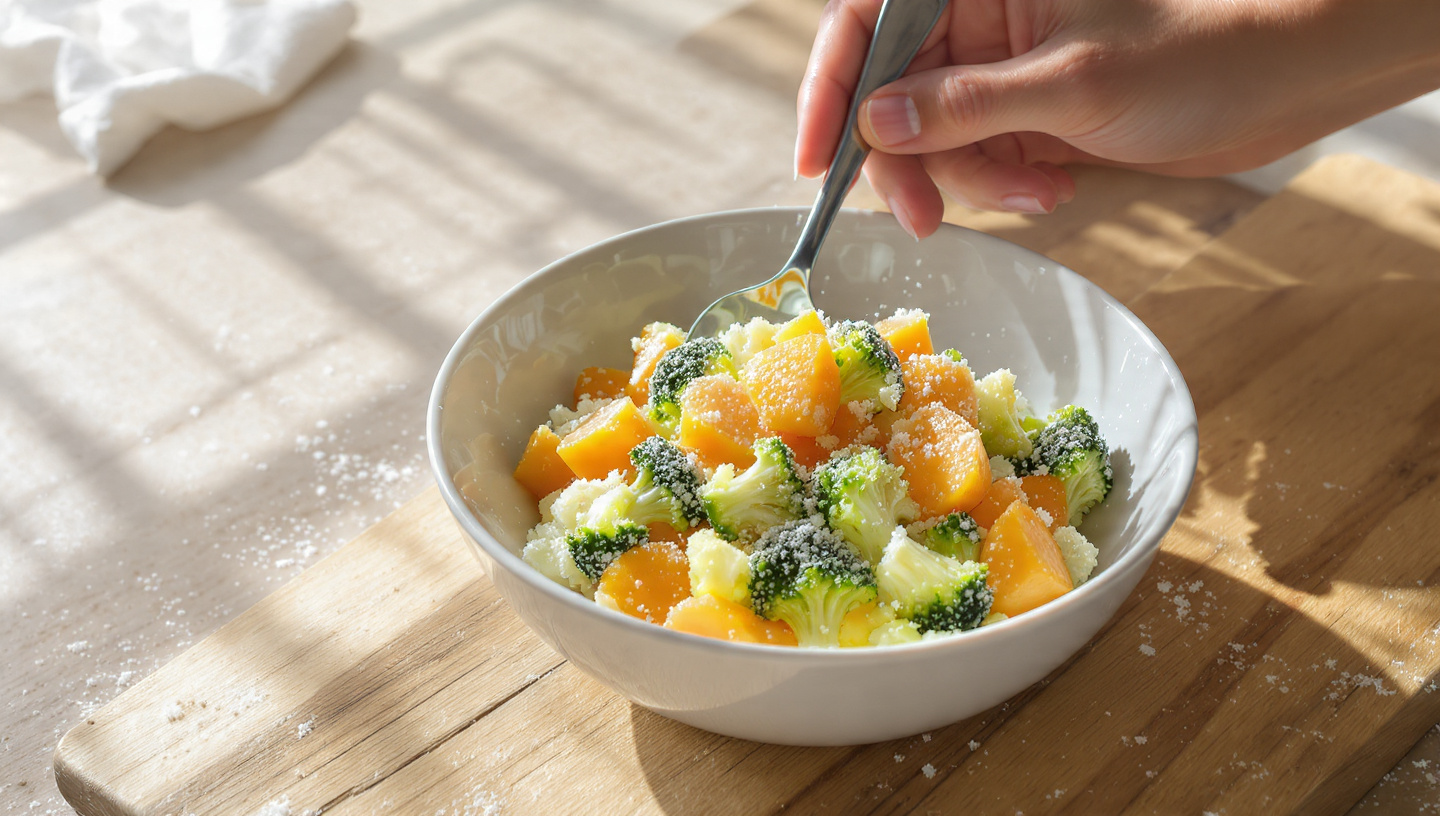
Step 4: Mix everything. Put your cooked base, vegetables, and spices in a bowl and mix them. Taste and make changes. It might need more salt, a little vinegar to brighten it, or some red pepper flakes to make it hotter.
Tip: Taste the food often and change the seasonings as needed. Start with less seasoning than you think you need. You can always add more, but you cannot take it away. Adding a little acid, like lemon juice or vinegar, at the end often makes everything taste better.
How to Fix Things When They Go Wrong
**Issue: Mushy Vegetables
*Solution:* Use a lot of heat and do not cook too long. You might not think it, but frozen vegetables cook faster than you think. Most of the time, it only takes 5 to 7 minutes. They are done as soon as they are tender-crisp. If you keep cooking them, they will turn to mush.
Problem: Meals that are dull and boring
Solution: Add herbs (fresh or dried) and acid (lemon, lime, or vinegar). Salt is your friend; frozen vegetables need it. You could also add a pat of butter or a splash of good olive oil at the end to make it richer.
Problem: The pan has too much liquid in it
Solution: When you cook frozen vegetables, they let out water. If your pan gets watery, increase the heat and let the water evaporate, or drain off the excess liquid before adding sauces.
Everything You Need to Know About Frozen Vegetables
Q1: Are frozen vegetables really as good for you as fresh ones when you need to make quick meals on a budget?
Yes! People often pick frozen vegetables at peak ripeness and freeze them right away, which helps preserve their nutrients. This means that they can be just as healthy, if not more so, than fresh fruits and vegetables that have been shipped long distances, stored in warehouses, and wilted in your fridge for a week. For example, studies have shown that frozen broccoli can contain more vitamin C than “fresh” broccoli stored for a few days. Using frozen food is a smart and healthy choice, so do not feel bad about it.
Q2: Is it okay to use frozen vegetables in recipes that call for fresh ones?
Yes, for the most part! Frozen vegetables are great for quick meals on a budget because they work well in stir-fries, soups, casseroles, pasta dishes, and fried rice. The texture will not be quite the same for raw foods like salads, because frozen vegetables are blanched before freezing, which makes them softer. But if you thaw and pat dry some frozen vegetables, like corn or peas, they can work in cold salads.
Q3: How long can you keep frozen vegetables in the freezer for quick, cheap meals?
Most frozen vegetables will stay good for 8 to 12 months if you keep them in a sealed bag or container. Always look at the package to see when it is “best by.” I have used frozen vegetables that were past their best-by date, and they were fine. The quality might drop slightly, but they are still safe and healthy.
Q4: Why do my frozen vegetables sometimes get mushy when I try to make quick meals that do not cost too much?
If you overcook them or thaw them before cooking, they can get mushy. To get the best results, cook frozen vegetables straight from the freezer over high heat with as little water as possible. Only cook them until they are tender-crisp. When you can stab them with a fork, they are done. Also, do not put too many things in the pan at once. This steams the vegetables instead of browning them, which makes them mushy.
Q5: What frozen vegetables are the cheapest to keep on hand?
Peas, corn, broccoli florets, spinach, and mixed vegetable blends are usually the cheapest and most flexible options for making a variety of budget-friendly quick meals. These five cover most of your bases: sweet (peas and corn), hearty (broccoli), leafy (spinach), and mixed (mixed blends). When I buy store brands or shop sales, I usually only pay $1 to $1.50 per bag.
Q6: Do I need to thaw frozen vegetables before cooking them for quick, inexpensive meals?
No, not usually! Adding frozen vegetables directly to your pan or pot is the best way to cook most things. Sometimes, thawing can make your food mushier and add more water. The only time I thaw frozen vegetables is when I am putting them in a cold dish like pasta salad. Even then, I only do a quick thaw and then pat them dry.
Q7: Can I freeze cheap, cooked, quick meals that contain vegetables?
Yes, you can freeze cooked foods that have already been frozen. Just make sure the food is completely cool before freezing it, and then heat it all the way through when you are ready to eat. I do this all the time when I make meals in bulk. The texture might change a little, but it is safe and easy to use for meal prep.
Make Your Frozen Vegetables Even Better
Changes and Additions to Keep Things Fun
Asian-inspired flavors: Soy sauce, sesame oil, ginger, garlic, and a splash of rice vinegar make any frozen vegetable mix into a stir-fry. If you like heat, add sriracha. Mix with cooked rice or noodles.
Mexican vibes: Cumin, chili powder, lime juice, and cilantro turn frozen corn and peppers into taco filling or burrito bowls. For a full meal, add salsa and black beans.
Mediterranean magic: Garlic, olive oil, lemon, and dried oregano make frozen vegetables taste fresh and bright. Put the chickpeas in and serve them over quinoa or couscous.
Protein choices: You can add tofu (cut into cubes and fried), cooked chicken (leftover rotisserie chicken works well), canned chickpeas (drained and rinsed), or a fried egg on top. You can use frozen vegetables with anything.
Peanut sauce, teriyaki, marinara, pesto (from a jar is fine!), or even just butter and garlic are all good options. The sauce is what makes frozen veggies fun.
How to Prepare Meals for Maximum Efficiency
Make a lot of grains on Sunday: Make a big pot of quinoa, rice, or pasta. Put it in the fridge. Reheat portions and add frozen vegetables during the week for quick meals.
Pre-portion frozen vegetables: If you live alone or only cook for one person, put frozen vegetables into smaller bags or containers. This stops the whole bag from thawing and refreezing.
Make freezer meals: Put frozen vegetables, cooked grains, proteins, and sauce in freezer-safe containers. Just microwave or reheat on the stovetop when you are ready to eat.
Keep a running list: Write down the frozen vegetables you use most and those that sit in the freezer. Buy more of what you use and skip the kinds you do not like.
Other Ways to Save Money Besides Buying Frozen
Shop sales every week: Frozen vegetables go on sale for $0.88 to $1.00 per bag all the time. When they do, buy a lot. During a big sale, I bought 15 bags of frozen vegetables and felt like a millionaire.
Buy store brands: Generic frozen vegetables are usually the same as name-brand ones but cost 30–50% less. Try a blind taste test. I have never been able to tell the difference between plain frozen vegetables.
Buy in bulk at warehouse stores: If you have room, Costco or Sam’s Club has bulk bags of frozen vegetables that are much cheaper per pound than regular grocery stores.
Plan meals around what is on sale: Before you plan your meals, look at the weekly ads. Plan to make broccoli stir-fry if broccoli is on sale. Make soup if mixed vegetables are cheap.
Mix frozen and pantry staples: A meal of rice, frozen vegetables, and a can of beans costs about $2 and feeds a family. Learn how to make meals with cheap, long-lasting ingredients.
The Start of Your Frozen Vegetable Revolution
For anyone who wants quick meals that will not break the bank, frozen vegetables are a game-changer. They are the best in terms of convenience, nutrition, and cost-effectiveness, showing that eating healthy need not be expensive or time-consuming. You are not “cheating” or “taking shortcuts.” You are being smart, practical, and, to be honest, more likely to eat vegetables.
So, fill your freezer, get creative, and tell us about your favorite frozen vegetable meals in the comments! What quick meals that will not break the bank will you make next? What frozen vegetable do you always buy? Are there any combinations we did not talk about?
Check out our other guides, “One-Pan Dinners for Busy Weeknights” and “Mastering Pantry Staples for Easy Meals,” for more ideas to make weeknight cooking easier and less expensive.
Keep in mind: The best vegetables are the ones you eat. Fresh is great when you have the time and money, but frozen vegetables are always better than wilted ones that are going bad in your crisper drawer. No need to feel bad or say you are sorry; eat good food that fits your life.
Pin this guide for your next trip to the store, and join the frozen-vegetable movement. Your health, your wallet, and your schedule will all be happy!








Discussion about this post